Category Archives: Konkani Recipes

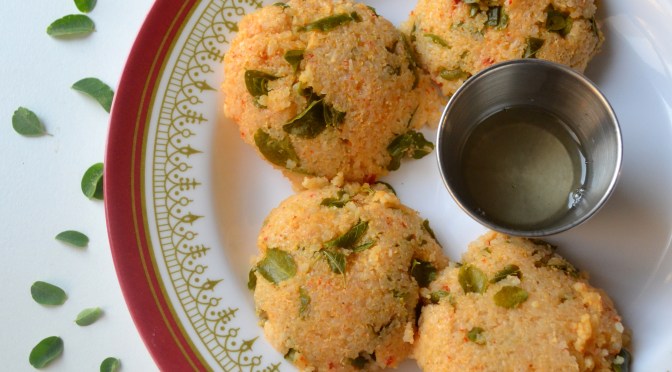
Mashinga palle sannamuddo | Drumstick leaves spicy idlis Konkani style

I love cooking alone in the kitchen and look for the time when my kids are super busy with their naughtiness, then sneak myself into the kitchen to cook. When I cook, some dishes bring back such beautiful nostalgic memories that they bring so much happiness in my heart. Memories are really a wonderful way to relive those precious moments which can never come back but will be a treasure in us forever, bringing us joy when we think of them. ❤️

Sannamudhos were regularly made by my grandmother and I used to wait for it to be steamed to enjoy them as soon as it came out of the pedavan or steamer with coconut oil. Even now, when I make them, I eat them the same way just to relive those childhood memories. Here is a glimpse of the sannamudhos from the pedavan which my father had gifted me many years back when I was coming here to Qatar. Love it so much. Also, see how cute it looks. 😍

Here, even though we live in Industrial area, the residents have planted many variety of trees and one among them is drumstick tree. My husband plucks the leaves from a large tree near our house and I make sannamudhos as soon as I get them. The aroma of these idlis are one of it’s kind. The whole house smells heavenly when it steams. ❤️

Hope you all try and love them. Drumstick leaves are very healthy and medicinal. So I always try to add it regularly in our diet. Konkanis know this recipe but sharing for those who are new to it. Happy and healthy cooking! ❤️

RECIPE:

Ingredients: {Makes about 13 idlis}

2 Cups Drumstick leaves/ Moringa leaves/ Mashinga pallo

1 Cup Idli Rava/ Rice Rava

Salt to taste

For the masala paste:

1/2 Cup fresh or desiccated Coconut

1 tsp Tamarind paste

5 to 6 Kashmiri long red chillies or to taste (fried in 1 tsp oil)

Coconut oil to grease the idli plates

Step by step recipe:

1. Remove the leaves from the stems. Add to a bowl. Wash well. Drain and keep aside.

2. Take idli rava in a bowl. Wash well, drain and keep aside.

3. Now grind together coconut, fried red chillies and tamarind paste with little water to a smooth paste. Add this to the idli rava mixture.

4. Add about 1/2 Cup water (I wash the mixer and add that water.) to form a thick batter. Add salt and mix well.

5. Now mix in the drumstick leaves. It is a thick mixture just like how it is shown below.

6. Grease idli moulds with coconut oil and add the mixture evenly in the moulds.
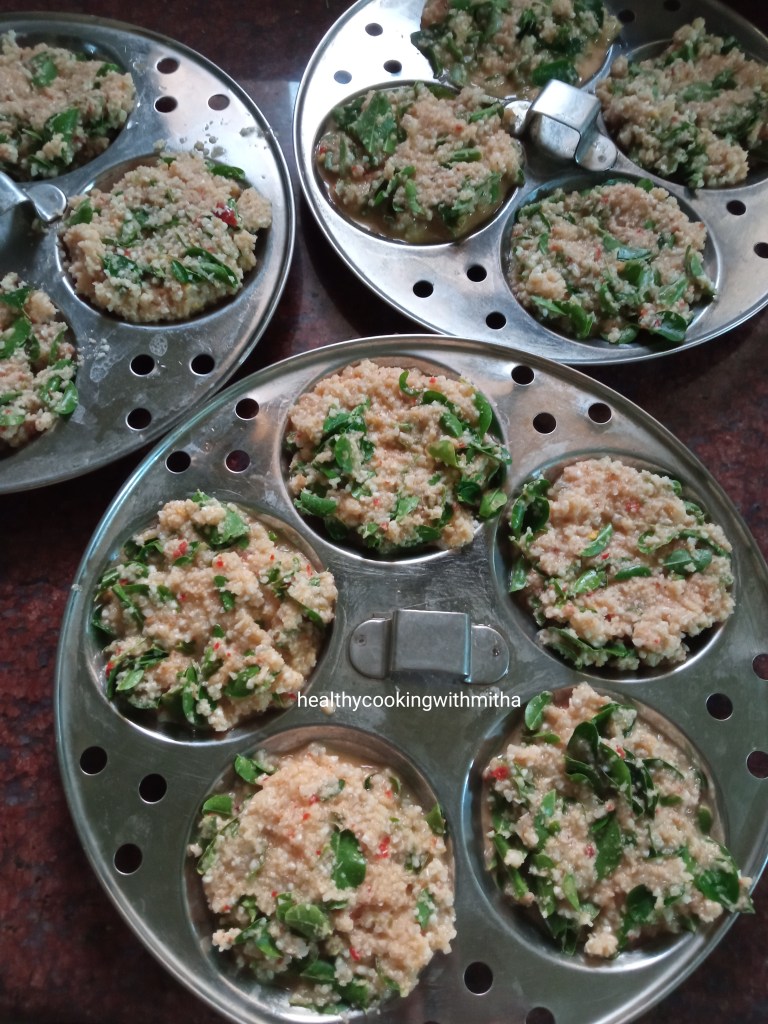
7. Steam for 20 to 25 minutes or till a knife inserted in the center of the idli comes out clear.

Just love this pedavan or steamer gifted to me by my dad 😍

8. Enjoy it piping hot with coconut oil or with rice and dalitoy or rasam. Makes such an heavenly combo!

Notes:

* You can substitute drumstick leaves with Methi leaves or finely chopped palak leaves. This sannamudho can be made adding only onion or a mix of onion plus cabbage too.

* I add two cups of leaves for 1 Cup of idli rava. You can reduce the amount of leaves if you don’t have that much available but this quantity gives an amazing aroma as well as flavour to these idlis.

* The amount of red chillies I have mentioned is apt for us as the idlis turn out medium spicy. If you like them more spicy, then you can also add chilli powder before you mix in the leaves.

* Do steam them well atleast for 20 mins on high flame, else there can be rawness in the idli rava.

* Idli rava absorbs water when kept for a while. So if you keep the mixture to rest, it will absorb all the water and you might need to add a little more water to bring it to thick consistency. If steamed immediately, only 1/2 Cup water is needed.

* These idlis are traditionally had with rice and any curry like dalitoy (Konkani style dal) or rasam. You can also enjoy them as it is but don’t forget to dip in it coconut oil or drizzle over it for that heavenly flavour.

Magge Sasam | Konkani style Mangalore Cucumber curry

My husband loves gardening and that’s his most favorite pastime too. He waters the plants atleast 4 times everyday even during the peak summers here in Qatar and waters them as soon as he comes back from work even without entering the house (have to add: even after night shift 😬). That’s his dedication towards plants and I tease him that his first love are his plants and not me. 😅

Couple of years back, he had grown Mangalore Cucumbers out of the seeds that I discarded from store bought ones. The creeper had spread all over the garden and we had a yield of over 50 of them. It was really amazing and even our relatives were surprised to see them grow specially in a desert land like Qatar. All credits go to his green thumb. Here is a picture of some of them.

Since they were so many in number, we shared some with our friends who eat these. I also made Mangalore cucumber sweet dosas or Surnalis but still many were left. That’s when I got the idea of making Magge Sasam just the way we make Kuvale Sasam with Ashgourd. It tasted so yummy that it became a regular at our place and all the magges got over in no time.

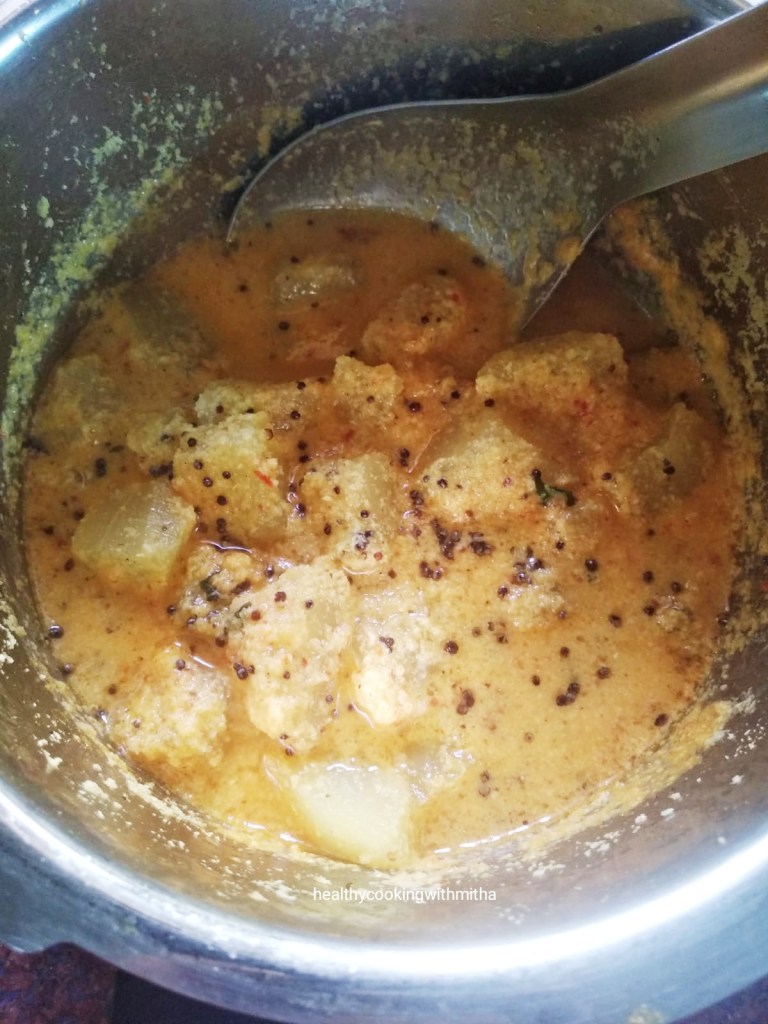
So, when I got Mangalore Cucumber from our grocery store last day, I thought I must share this recipe with my readers who have not tried this yet and clicked the pictures of this curry. With my husband on vacation, he too came and held the curry bucket and said it reminded him of the temple meals in our native which we missed this whole year. I loved the click and had to share it here.

Hope you all try and love this curry too. Tastes very good with white rice and lemon pickle. Happy and healthy cooking!

RECIPE:

Ingredients:

1 regular sized Mangalore cucumber/ Magge/ Vellarikka

1/2 tsp Turmeric powder

Salt to taste

For the masala:

1 Cup fresh/ desiccated Coconut

4 Kashmiri long red chillies (OR 4 green chillies)

1 tsp Tamarind paste

1 tsp Mustard seeds (to be spluttered before adding)

For the seasoning:

1 Tbsp Coconut oil

1 tsp Mustard seeds

Few curry leaves

Step by step recipe:

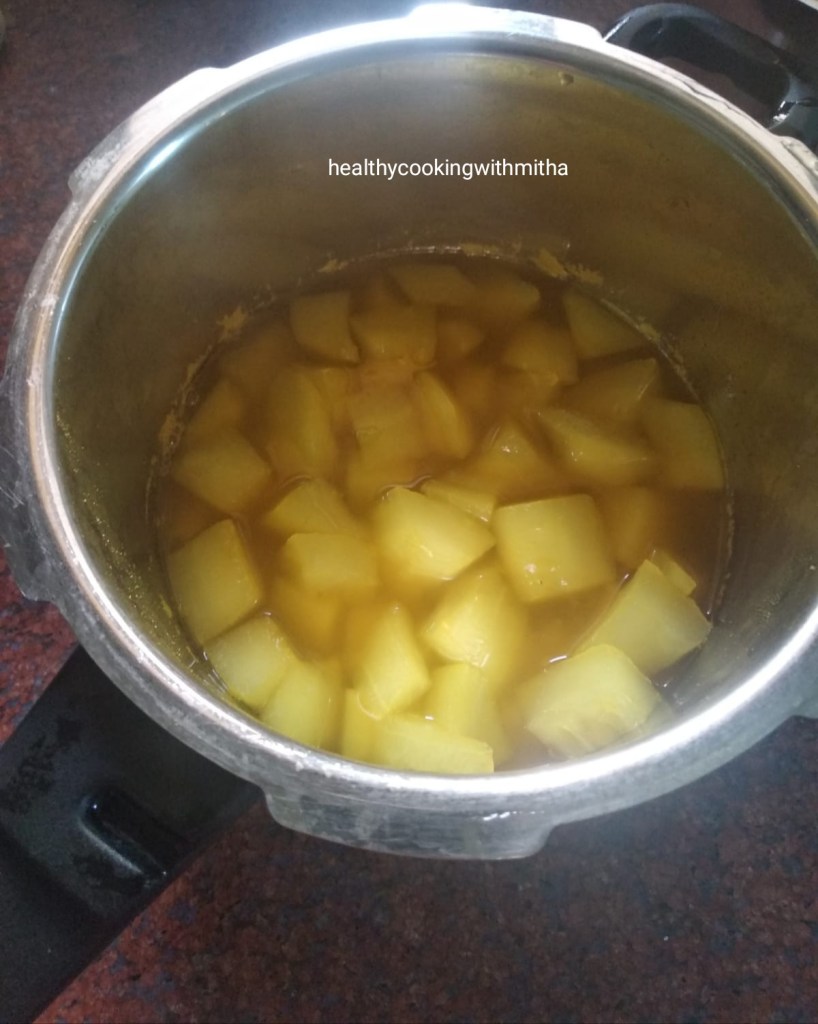
1. Cut both the ends of the mangalore cucumber and peel it’s skin off. Cut and discard it’s core. Chop it into cubes. Now pressure cook with turmeric powder, salt and water enough to soak it till it turns soft. It took two whistles for me in my electric stove top.

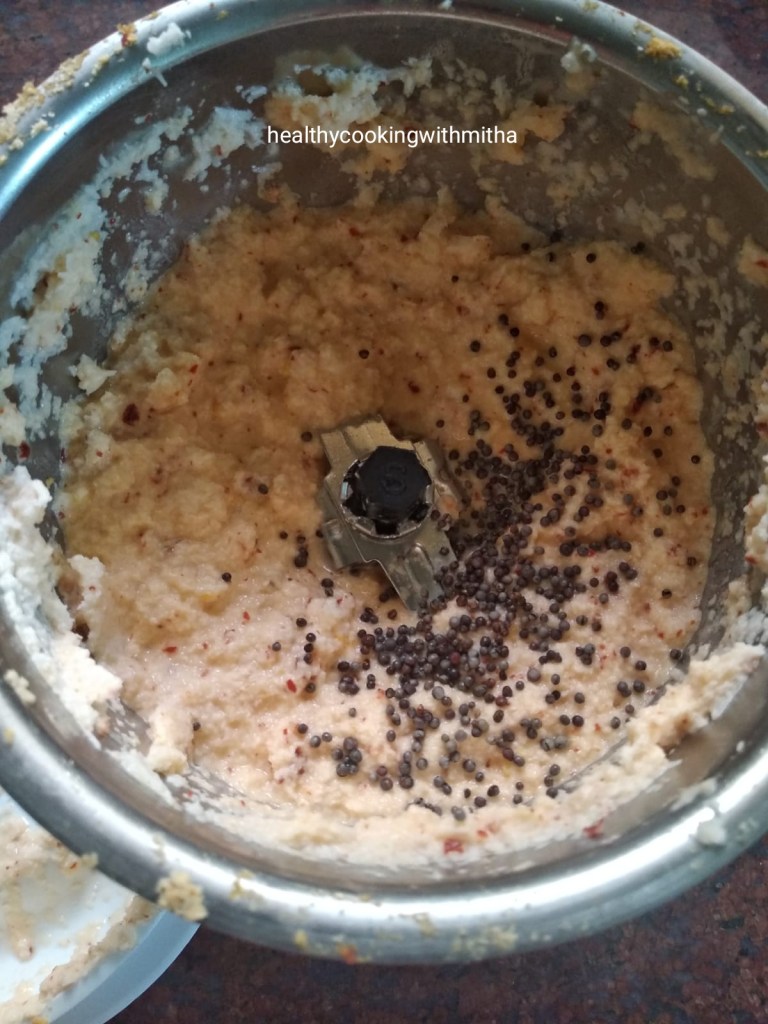
2. Take coconut, red chillies, tamarind in a mixer with little water. Grind to a coarse paste.

3. Now heat mustard seeds in a pan (without oil) and allow it to splutter. Add it to the masala.

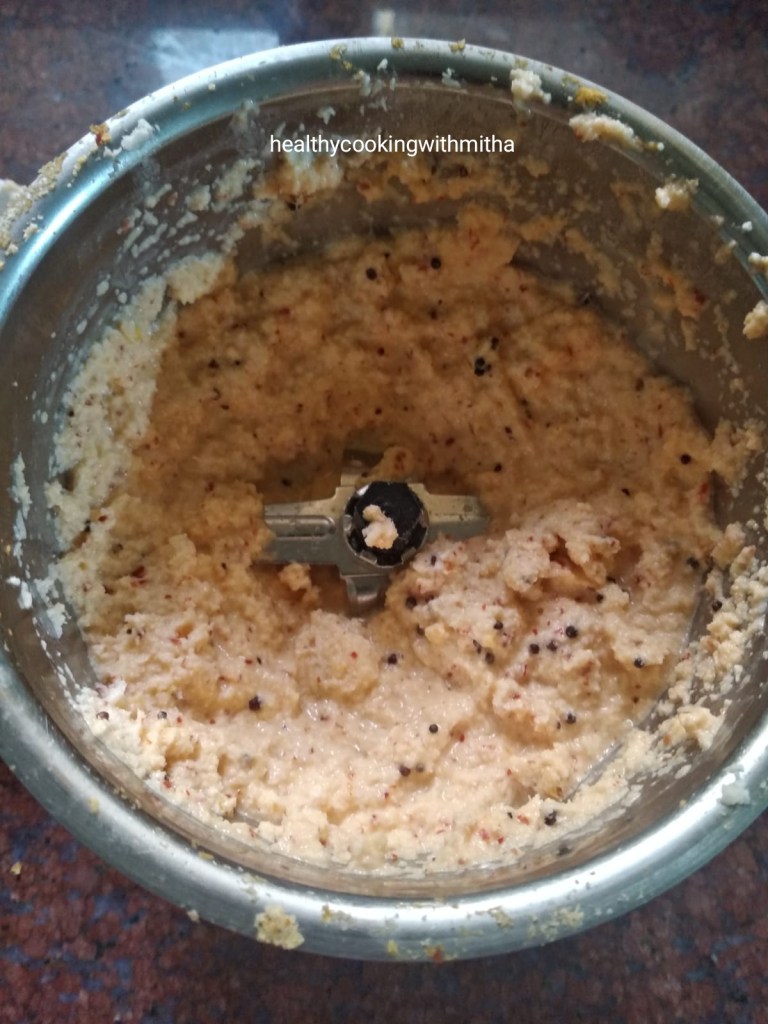
4. Pulse in the mixer two to three times. No need to grind to smooth paste after adding mustard seeds. Grind to a slightly coarse paste.

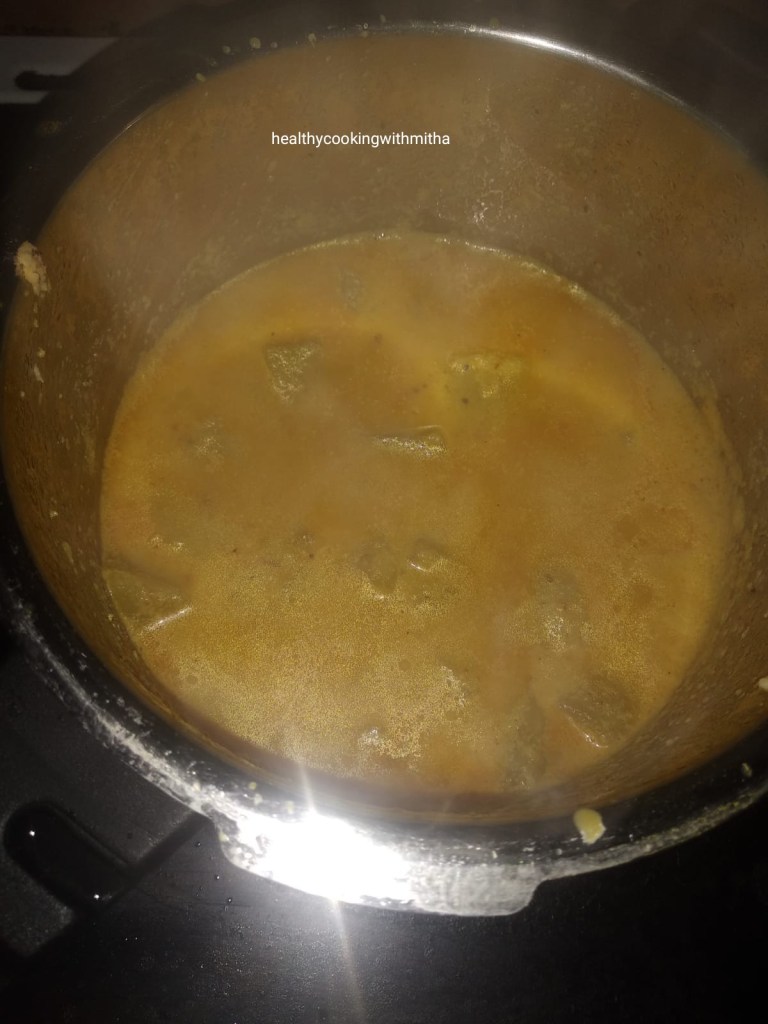
5. Now add this mixture to the cooked mangalore cucumber and bring it to boil. Cook for about 10 mins on medium flame. Also check for salt and add if needed.

6. Now heat oil in a pan. Splutter mustard seeds. Add curry leaves and fry for few seconds. Pour the seasoning over the curry. Mix well. Remove from flame.

7. Serve hot with rice meals.

Notes:

* Don’t add a lot of water while pressure cooking the mangalore cucumbers or the curry turns watery. This is a thick curry. So add water only to soak it and pressure cook.

* Also, don’t overcook it. Mine gets done in two whistles on high flame in my electric stove top.

* I make this curry three ways. One is using green chillies alone which turns greenish white in colour. Second is this which I have shared ie using red chillies alone. Third is adding both green and red chillies in equal quantities. Three of these taste different and tasty. You can try the different variations each time for a change.

* Don’t grind the paste to smooth paste. Just add a little water and grind to a semi coarse paste. Also, don’t grind too much after adding the spluttered mustard seeds. Just pulse twice or thrice till it’s crushed.

* Remember that you have added salt while cooking the mangalore cucumber. So add only if needed later.

* This curry makes a good combination with white rice and lemon pickle.

* You can also make this Mangalore cucumber sweet dosas or Surnalis which taste very delicious.

Peanut Ubbatti | whole wheat jaggery holige

Being homebound since many months now, I truly realize the value of our home town visits which were atleast twice a year. Along with that, I really miss the fun meeting my loved ones, the non stop chatter, going to temples, shopping with my cousin and also (importantly) indulging in sweets without a care in the world. 😅😍

I have been an ardent devotee of sweets since a child and my dad knowing that, spoils me to the core when I visit them. My favourite sweets are brought and stored before I come, all awaiting me to devour them 😬. One among them are Kayi holiges or coconut filled sweet Ubbattis which are a speciality of Udupi Shree Venkateshwara sweets near the famous and our dearest Shri Krishna’s temple.

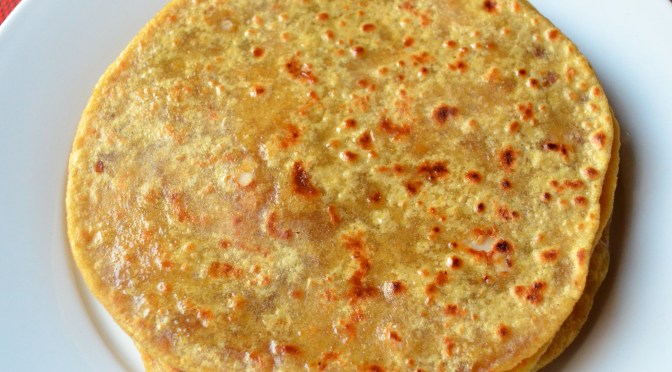
So, when I miss those holiges, I make chapati dough, fill it with coconut and jaggery to make my own “jugad” kind of holiges 😀 which tastes yummy too. As I started making them, I realized I could make different varieties of it and these peanut Ubbattis came into being. It tasted so good that we make it regularly.

So glad to share this recipe. Hope you all try it for Diwali. It’s as easy as making parathas and hope my step by step recipe along with notes will help you all. Happy and healthy cooking.

Also, wishing my readers a very happy Diwali. May the festival of lights brighten your lives and fill it with happiness. ❤️

RECIPE:

Ingredients: { Makes 5 Ubbattis }

For the outer dough:

2 Cups Wheat flour/ Atta { I use Pillsbury brand }

About 3/4 Cup Water {to knead the dough}

1/4 tsp Turmeric powder or Haldi

Salt to taste

For the inner filling:

1 Cup Peanuts { skin removed }

1/2 Cup Jaggery

2 Tbsp Water

1/4 tsp Cardamom powder

To roll the Ubbatti: Dry wheat flour as needed

Ghee to cook the Ubbatti

Step by step recipe:

1. Add wheat flour, turmeric powder and salt in a bowl. Add water and knead to a soft dough. It took me about 3/4 Cup of water for 2 Cups of flour. Might vary as per your brand. The dough should be soft and smooth. Keep aside.

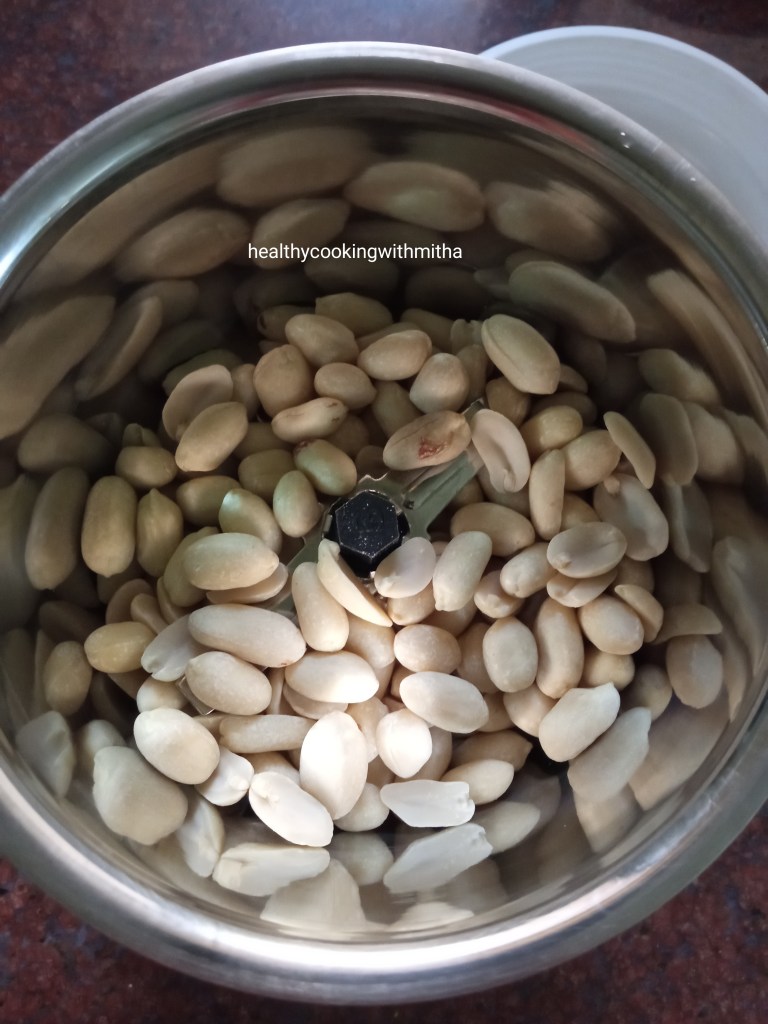
2. Now take the skinned peanuts in a mixer.

3. Powder it by pulsing it every two rounds. Don’t run the mixer continually as peanuts can leave oil. Just pulse for 4 to 5 times and it will turn into fine powder. If tiny bits of peanuts remain, it’s okay as it gives nice bite to the Ubbatti.

4. Now add jaggery along with water in a pan. Allow jaggery to melt and come to a boil. No need to make it into syrup.

5. Now add the peanut powder and mix once. Switch off the flame after mixing once or the mixture will harden.

6. Transfer it into a plate immediately. Allow it to cool slightly. Don’t cool it completely as it will turn hard. When it is warm, make small balls of it as shown. Also make balls of same size as filling from the wheat dough.

Note: It is important to make both inner and outer balls of equal size so that the Ubbatti turns perfect.

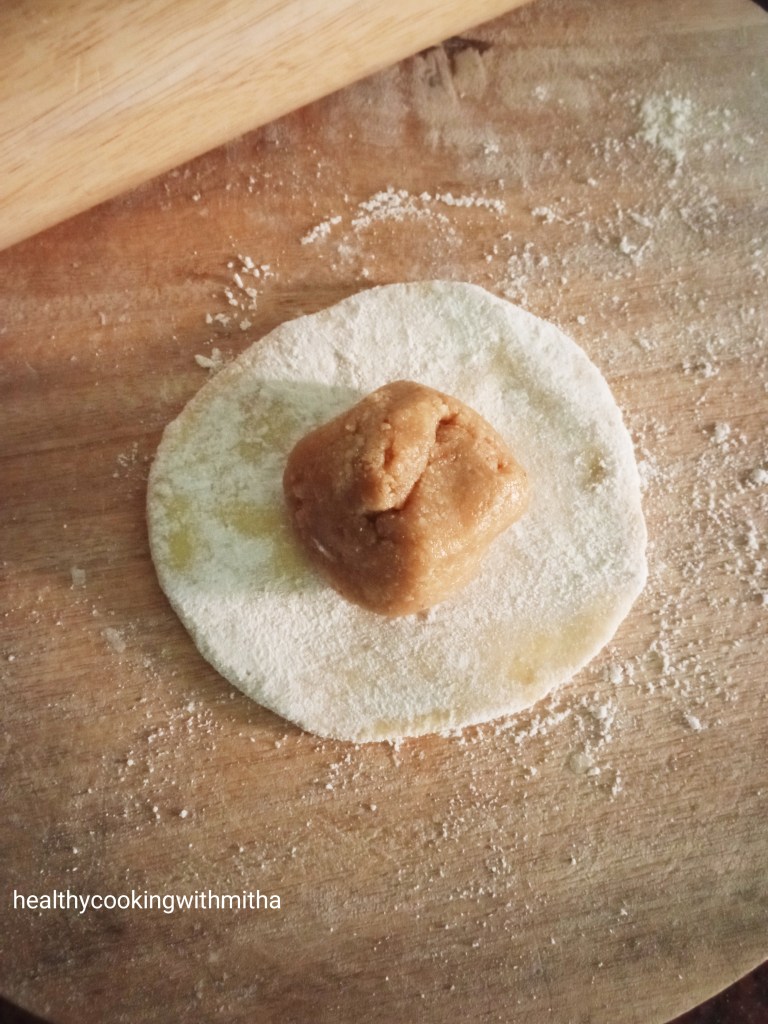
7. Now keep a chapati tawa to heat on the flame. Take a wheat ball and dip in dry wheat flour. Roll to a small Puri (small circle as shown). Keep the inner ball of filling inside.

8. Now take the sides of the wheat dough and cover it over the filling sealing it completely.

9. Roll it using little dry wheat flour to as thin and evenly as possible.

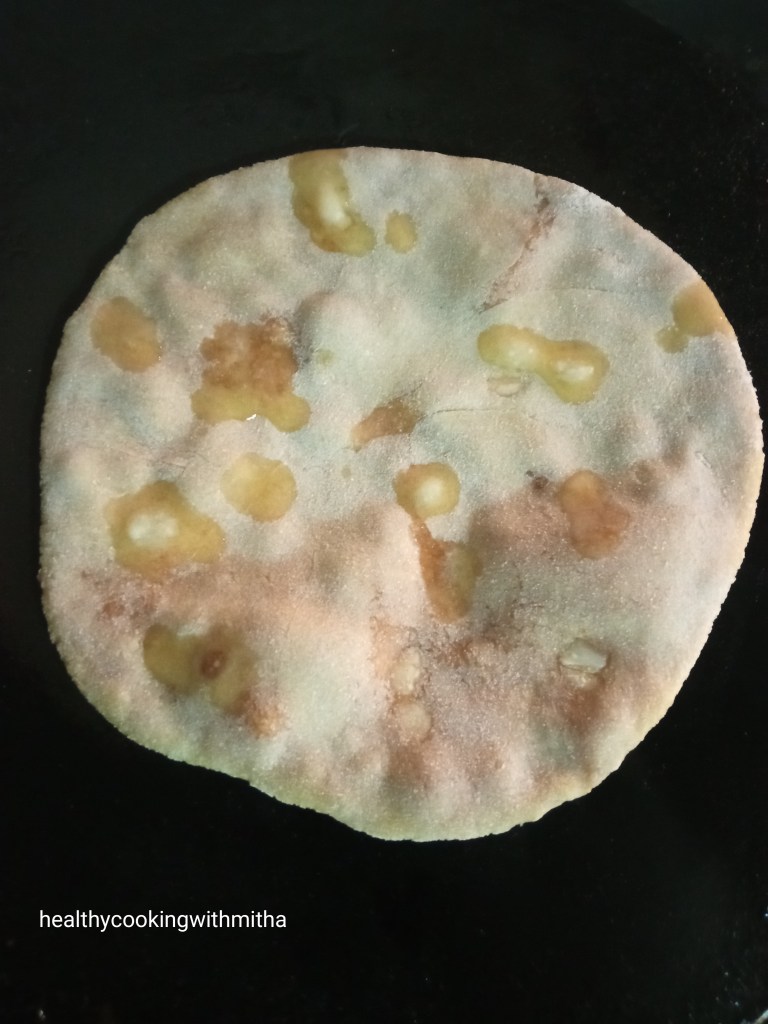
10. Place this over the heated tawa and cook till bubbles appear over the surface. Add ghee over it.

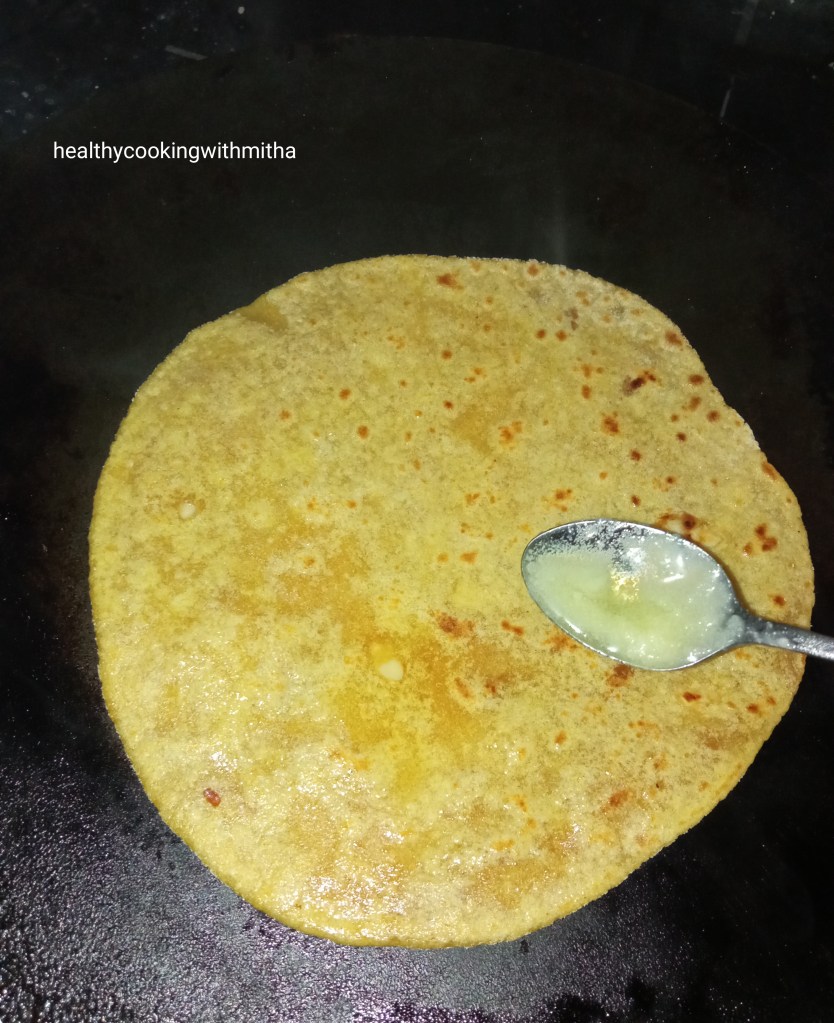
11. Flip and cook for about half a minute adding ghee over that side too.

12. Remove and repeat the same with the rest of the dough.

Notes:

* The water quantity while making the wheat dough can vary with your brand. Just make into a soft and smooth dough. Keep for rest for about 30 mins if you have time. Else it’s fine.

* We get readymade skinned peanuts here and I use that. If you have regular ones, you might need to roast it on low flame, cool it and remove the skin.

* While powdering the peanuts, be careful to not grind continually as it may leave oil. Just pulse and powder it. Even if little bits of peanuts remain, it’s fine. Adds a good crunch to the Ubbattis.

* Don’t make jaggery syrup. Just melt it and bring to a boil.

* Switch off the flame immediately after adding and mixing the peanuts. Else it may turn hard. Also, don’t keep the mixture to cool for long. Make balls when the mixture is still warm.

* Make both the inner and outer dough balls of equal size. Else the Ubbattis may not taste as good or might become like parathas. Making both balls of equal size ensures the outer layer is thin and we get good flavour of the filling.

* As these Ubbattis are kept at room temperature, they turn crisp on the outside but soft on the inside. That’s exactly how we love it. If you love soft Ubbattis, consume them immediately after making it.

* Since it is easy to make, I make it fresh each time. The measurements I have mentioned above yields 5 Ubbattis which are sufficient for us to last a day.

* Also, with the above measurements, I get two balls of wheat dough leftover ie it makes 7 wheat balls. I make chapati with it.

Raw Banana moong curry | Kerala style recipe

I get many messages from my readers about which place I really belong to, as I keep mentioning both Kerala and Karnataka in my write ups. Actually I am from a beautiful village named Katapady near Udupi. When I was 9 years old, we shifted to Ernakulam and thus started my life as a Keralite. After shifting many rental houses, we bought our own house in a place called Elamakkara. It was in midst of many temples and we loved the area very much. That house still brings back many beautiful memories as I did my schooling and college life, spent my pregnancies and days with my newborn babies in that house. Many nostalgic memories to cherish forever. ❤️

My parents shifted back to Udupi two years back and are enjoying themselves in their dream flat which is in midst of nature. You can see so many varieties of birds and butterflies there with every morning welcomed by their chirping. I love chatting with Amma lying on her bed looking at the beautiful birds. Right now I am in Qatar (settled here after marriage since 9 years) and honestly, it feels really homesick not being able to travel even if I want to (not risking with the present situation). Hope next year brings more happiness. ❤️

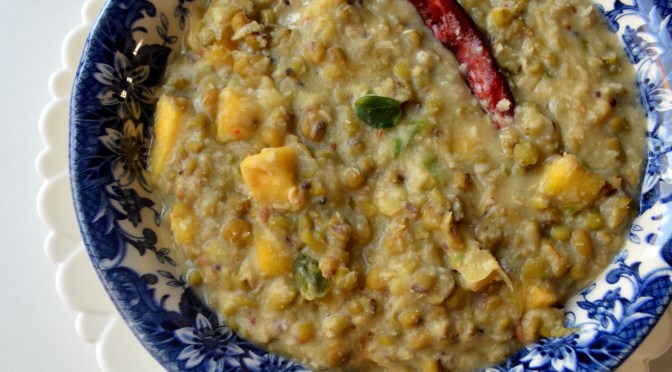
Coming back to this recipe (got emotionally carried away like always 😅), I had shared a recipe of Sprouted moong methi sukke earlier which I had learned from the Konkani community in Elamakkara. Many of my readers and relatives had tried and loved it so much. So here’s sharing one more recipe which is commonly made by them. They actually use banana stem and whole moong but I replace with raw bananas as stem is not available here.

Hope you all try it and love it too. Happy and healthy cooking!

RECIPE:

Ingredients: { The below measurements serve 5 to 6 people, so halve the quantity of moong and raw banana and adjust chillies if making for 2 people }

2 medium sized Raw Bananas

1 Cup dried whole moong/ green gram

Salt to taste

For the ground masala:

1 Cup Coconut

1 tsp Jeera or Cumin seeds

4 to 5 Green chillies or to taste

1/2 inch Ginger piece

For seasoning:

1 Tbsp Coconut oil

1 tsp Mustard seeds

A sprig of Curry leaves

2 long red chillies

Step by step recipe:

1. * Soak dried moong in atleast double the water overnight or for atleast 8 hours. Drain the water completely. Wash well. Pressure cook with water a little above it’s level for 2 whistles (or as per your cooking range) till it turns soft.

* Also chop both ends of raw Banana. Peel the skin off and finely chop the raw Banana and add to water.

2. Heat oil in a pan. Splutter mustard seeds. Add curry leaves and red chillies. Now add raw bananas and fry for few minutes till it cooks halfway.

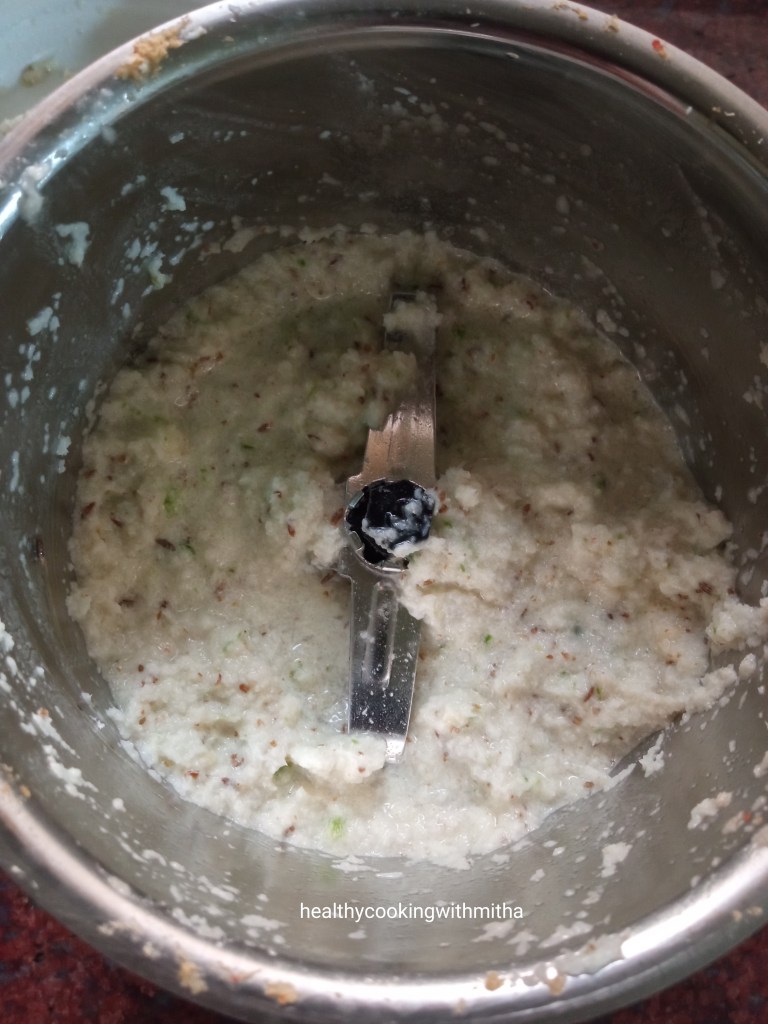
3. Now grind coconut, green chillies, Jeera and ginger along with about 1/4 Cup water to a coarse paste. Don’t make a smooth paste.

4. Now add this paste along with salt, cooked moong to the raw bananas and cook together till the raw bananas turn soft. Also add water as needed. This a thick gravy.

5. Serve hot with rice meals.

Notes:

* This curry thickens as you keep it. So add water as much as you like it. We prefer it dry as we eat with matta rice gruel for dinner. Adjust thickness using water.

* You can substitute raw bananas with Banana stem (gabbo) too. That’s how it’s made among Kerala Konkani people.

* Do remember to grind the coconut mixture to a coarse paste to get the best flavour.

* Also add couple of more green chillies if you like spicy curries.

* If you want to make the curry in less quantity, soak only 1/2 Cup moong and use 1 raw Banana in the curry. This will serve 2 people for 1 meal.

* I make Easy Raw Banana tawa fry as an accompaniment with this curry along with rice. The meal turns out very tasty.

* You can also try this Sprouted moong methi sukke. Tastes Amazing!

Kharbas dosa | no fermentation dosa

My husband is on vacation since two weeks now and has been looking out for new recipes to try for me. It has actually made my job easier as I no longer have to think what to cook (which is a huge task in itself 😅). He searches for unique recipes (his current hobby 😀) and sends it to me. I just have to make it (which I don’t mind at all as I love cooking ❤️)

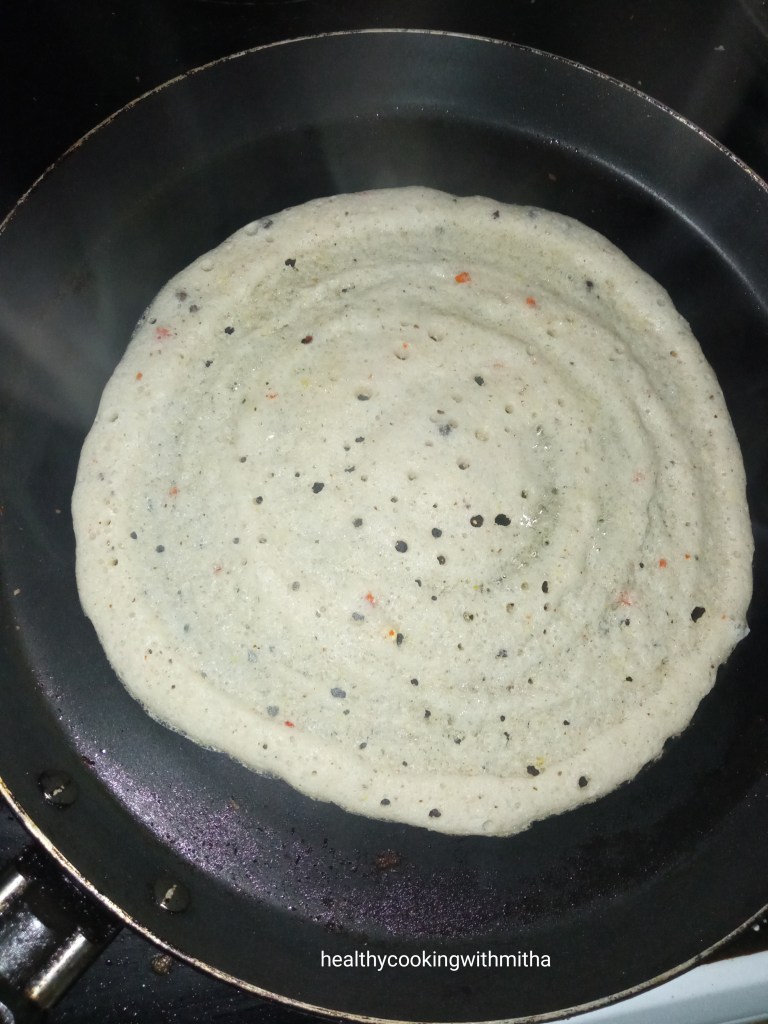
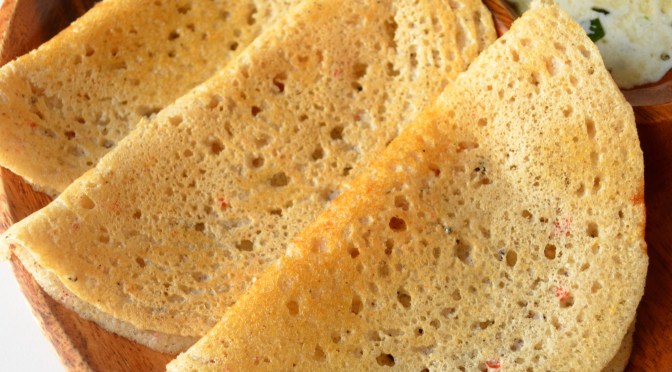
So last week he sent me this recipe of Kharbas dosa which he found in a video. I was amazed as it did not need fermentation at all and even then turned out super crispy. It also came out so tasty that I had to share the recipe with all of you. 😍

Hope you all try and love this dosa too. Our dosa loving family could not get enough of it and I made it again today for them. Happy and healthy cooking! ❤️

RECIPE:

Recipe credits: jyoth youtube channel

Ingredients: {Gives about 12 to 14 dosas}

2 Cups Raw white rice or Idli rice (I use any variety of short grain white rice available here)

1 Cup Urad dal (I used split ones)

2 tsp Methi or Fenugreek seeds

2 tsp Peppercorns or to taste

2 Kashmiri long red chillies

Salt to taste

Ghee or oil to cook the dosa

Step by step recipe:

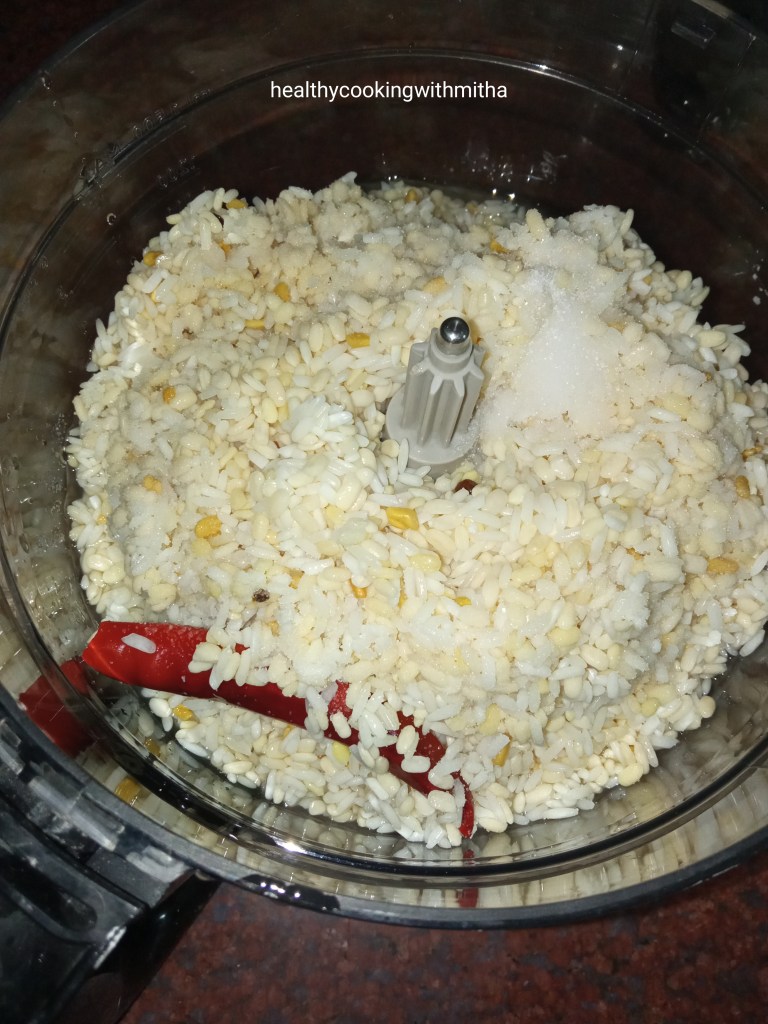
1. Wash well and soak the rice, Urad dal, Methi along with pepper corns and red chillies for atleast 4 hours.

2. After it gets soaked, drain water completely and add to the mixer jar along with salt.

3. Add about 1 to 1 1/2 Cups water and grind to a smooth paste. Pour into a bowl.

4. Now the batter is ready to make dosas. Heat a dosa pan and pour a ladle of the batter. Spread into a large circle. Cook till the surface looks cooked and the underside turns crispy adding ghee or oil in between..

5. Serve hot with a chutney of your choice.

Notes:

* Methi is a very important ingredient in this dosa as we are not fermenting it. Do not skip Methi.

* The amount of pepper is to taste. If you don’t like pepper, you can skip it but I suggest to add atleast 1 tsp of pepper and 1 red chilly for the great flavour.

* Since I am a huge fan of fermentation as it increases the nutritional value in manifold, I do ferment this dosa batter as well but it makes no change to the texture of the dosa. It is crisp even before fermentation. The taste is also the same. So I suggest if you have time, ferment it for few hours. Else it’s okay as this dosa really does not need fermentation.

* The chutney I make with this dosa is ginger chutney. Just grind coconut with green chillies, ginger and tamarind paste along with salt and water to a fine paste. Pour into a bowl and add little water to bring it to chutney consistency. Season with spluttered mustard seeds and curry leaves in coconut oil.

Churmundo with jaggery | easy wheat flour jaggery ladoos

Even though I am good at making pedas, ladoos are one sweet I had never attempted much. When I did attempt few months back, it had got such weird shapes 😆 that I thought my hands were not meant to make those perfect, droolworthy round round ladoos.

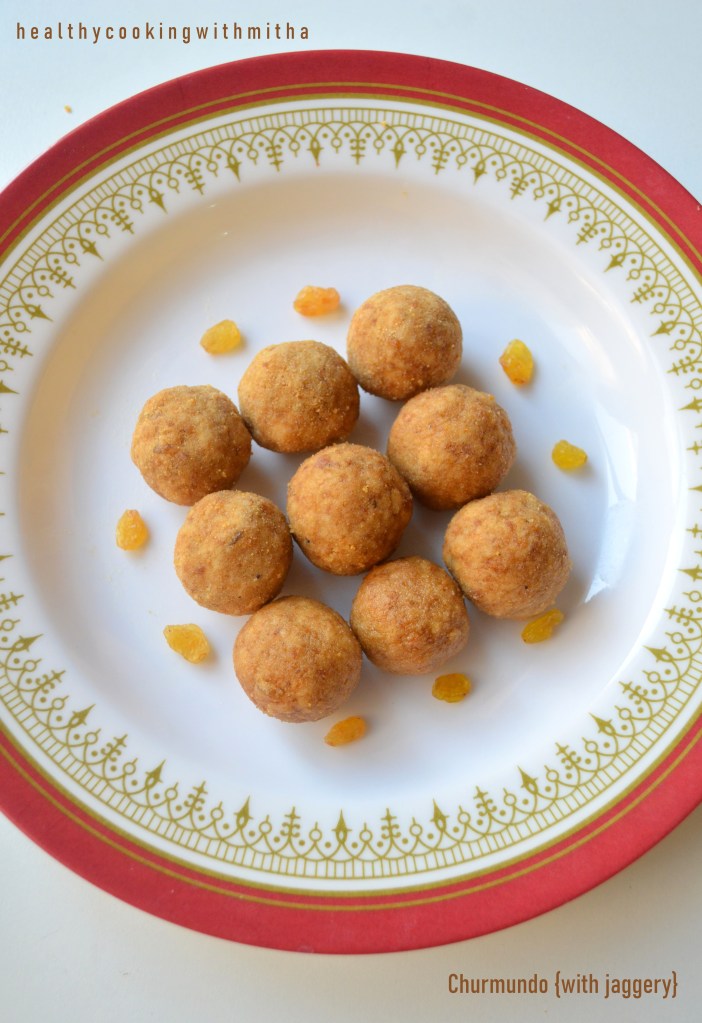
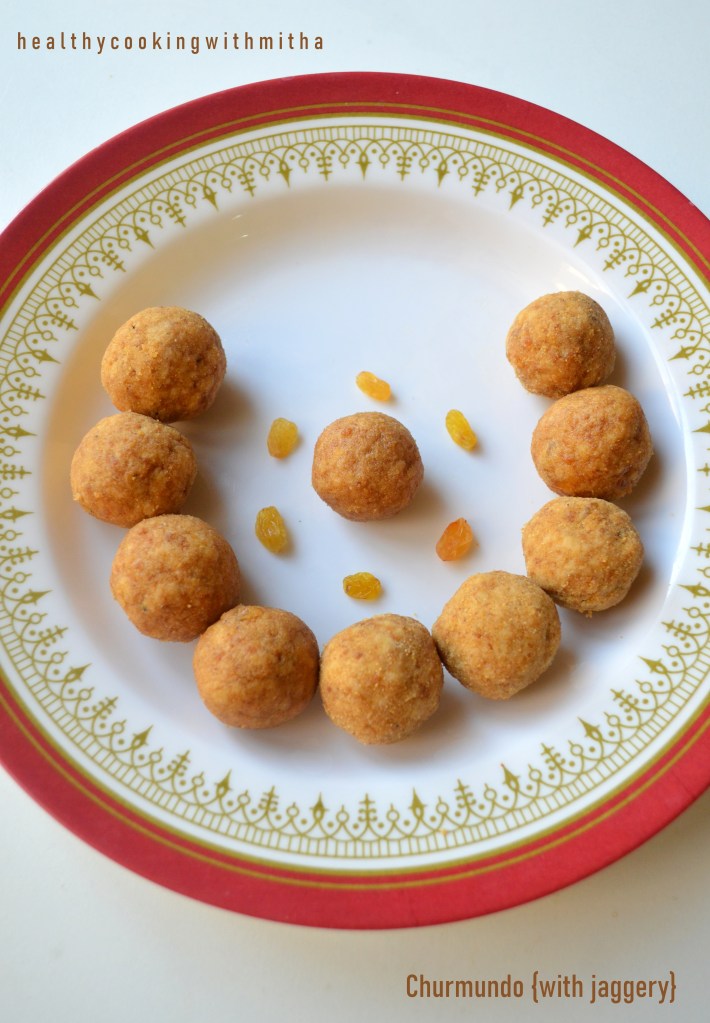
And guess which ladoos proved me wrong? Our own amchi Churmundos.❤️ Churmundos are usually made with wheat flour and sugar powder but I have used jaggery here. My fondest memory with these ladoos are both my grandmothers making lovingly for me during childhood.

My paternal grandmother or Annama and my aunt Chandriakka still make big boxes of these ladoos and give it to me when I return back to Qatar after vacation. Those ladoos are loaded with love and I eat each bite remembering them.

So this time since we could not visit them, I decided to make them myself (“no matter what shape they turn out!!” was my thought). And imagine my happiness when it turned out so perfect. My husband said it was the best Churmundo he had ever eaten. The kids too loved it very much and it got finished off quickly.

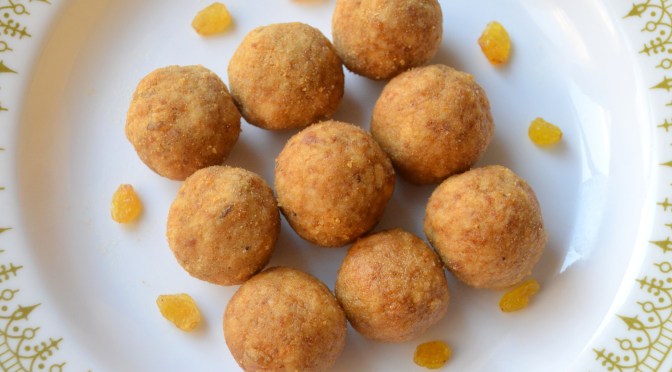
So I thought why not share this easy recipe of Churmundos. I make with jaggery as my family prefers jaggery sweets to sugary ones. Even though I am not very creative, I decorated them like a lamp as Diwali is less than a week away and I am all set for the festival. How do they look? 😬😍

As an after note, how many of you remember the small colourful liquid bindis that we used to decorate as kids during festivals? Don’t these ladoo designs resemble it? It was very unintentional but I was reminded of those bindis after I saw these designs. Such good memories they were. Childhood was definitely special. Happy festive season to all of you! ❤️

RECIPE:

Ingredients: {Makes about 10 to 12 small ladoos}

1 Cup Whole wheat flour/ Atta (I use Pillsbury brand of wheat flour)

3/4 Cup powdered Jaggery

1/4 Cup Ghee (plus 1 Tbsp to fry raisins)

2 Tbsp Raisins or as per your taste

1/4 tsp Cardamom powder

Step by step recipe:

1. Heat 1 Tbsp Ghee in a pan and add raisins. When they plump up, remove into a bowl. Keep aside.

2. In the same pan, melt ghee (don’t make it very hot. Just melt it on low flame.) Add wheat flour and start sauteing on low flame.

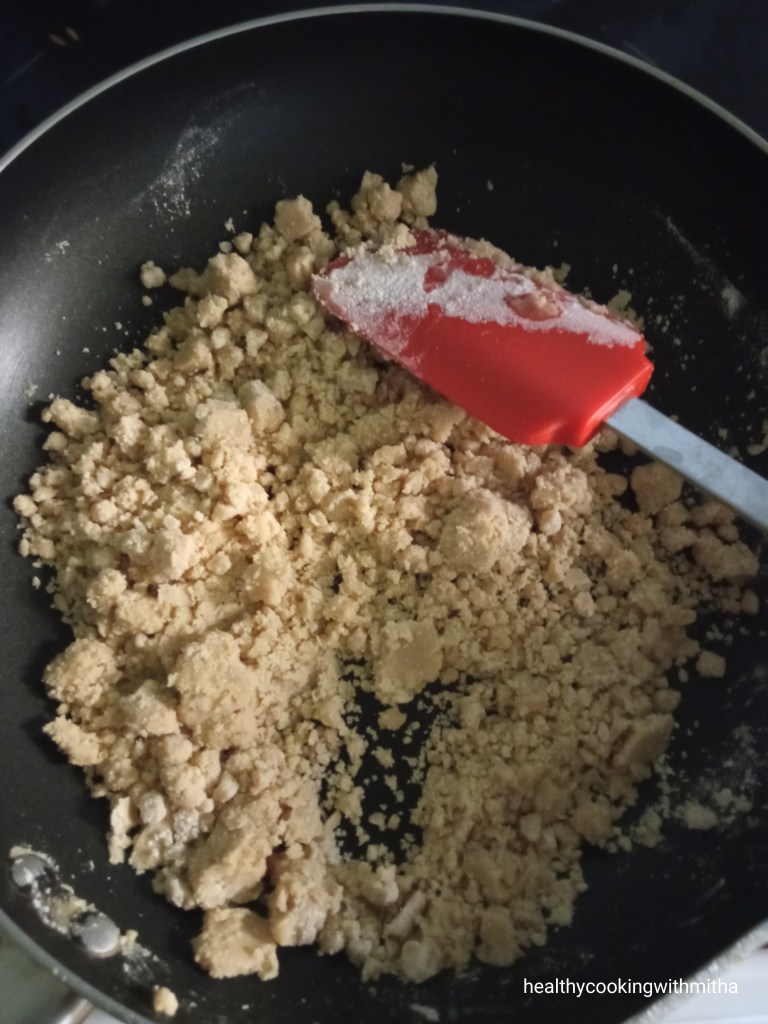
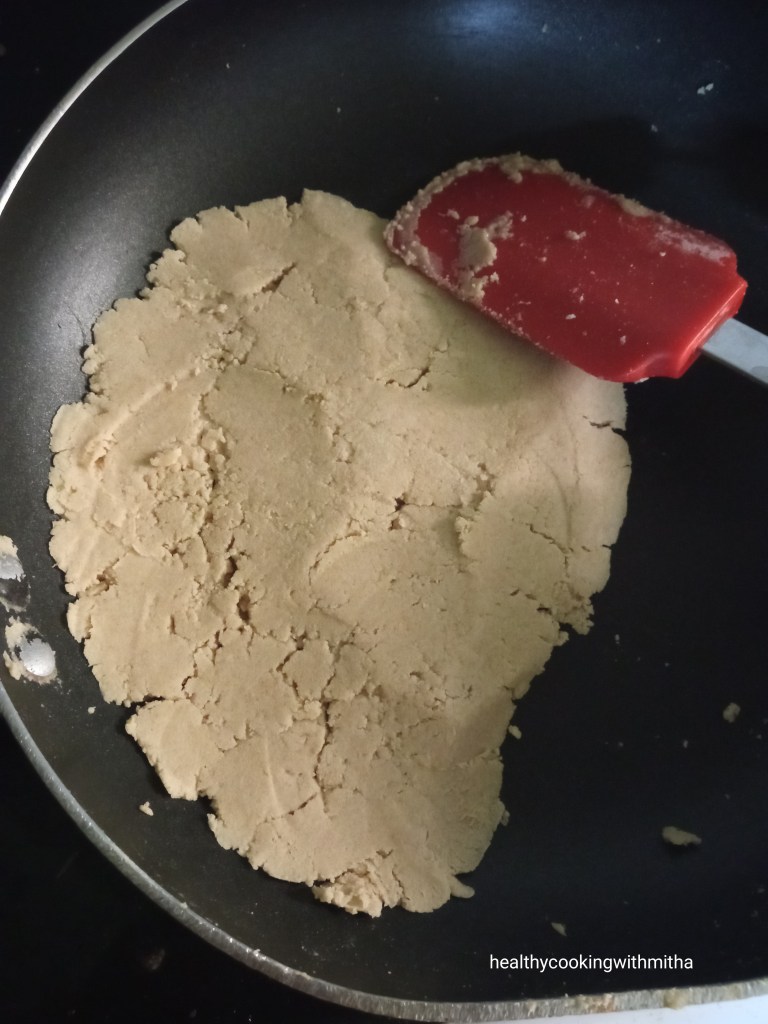
3. Initially it will be in small lumps but as you continue sauteing on low flame while patting the lumps using the spatula (as shown in the below picture), it will be a smooth mixture. (This is after about 5 mins of sauteing)

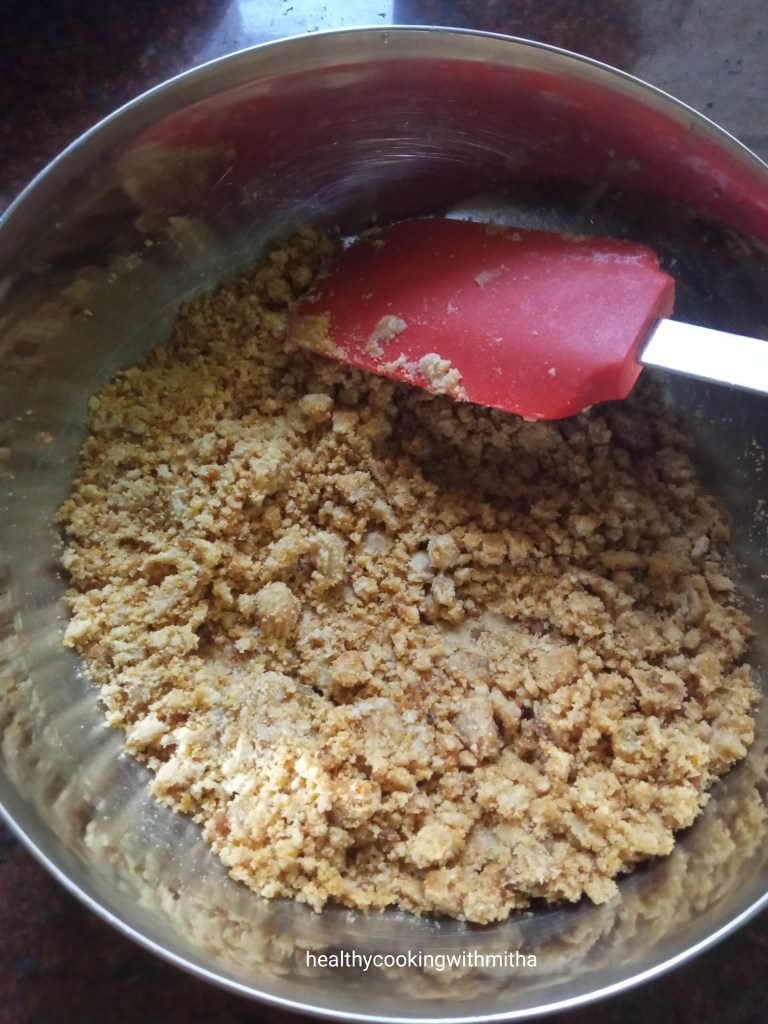
4. Continue sauteing and you will get a wonderful aroma, there will be no raw smell of the flour and the whole mixture will come together as shown below. It takes me exactly 8 mins from start to get the mixture to this stage but might vary depends on your pan and the flame.

5. Remove immediately to the bowl that you added raisins. Also add jaggery powder and Cardamom powder.

6. Mix well using the spatula when still the mixture is hot.

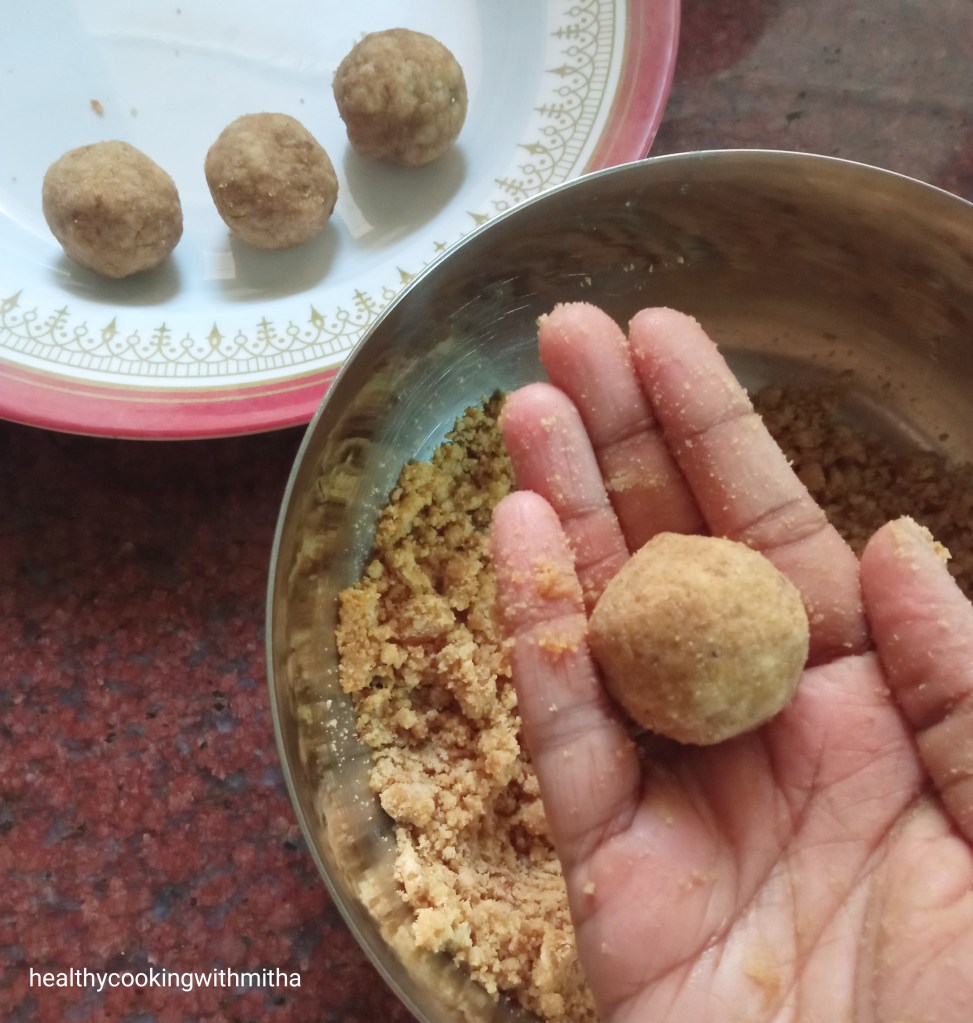
7. Now make ladoos using your hands when the mixture is still warm. If you are finding difficulty in forming the ladoos and they are breaking apart, add little ghee to the mixture and you can easily make ladoos. But the amount of ghee is perfect to make these ladoos and I don’t think more will be required.

8. Serve warm or store in an airtight container.

Notes:

* As it is very quick to make, I make only with 1 Cup of wheat flour at a time which yields me about 11 ladoos. They get finished off by my family within two days. I store it in an airtight container at room temperature.

* Be careful to saute the wheat flour in very low flame. I use electric cooking range and I keep in the flame between medium and low. It took me 8 mins of sauteing on this flame. (tip: keep your favorite songs while sauteing and you won’t even realize that you have sauteed that much 😃)

* Raisins are to taste or can be skipped but gives a good flavour to the ladoos.

* Jaggery powder can be substituted with sugar powder if your family does not like jaggery flavour.
* While binding ladoos if you are unable to form them, add ghee if needed to the mixture and also your palms to get neat ladoos.

* These ladoos are initially very soft but turn firm on keeping at room temperature for little while.

* This is how I make cardamom powder. I remove the seeds of cardamom from the skin. Crush the seeds using mortar pestle into fine powder. Use as needed. I used seeds from 2 cardamoms to get 1/4 tsp powder. (The skin can be added to tea for great flavour.)

Moong dal Kosambari | Konkani style seasoned salad

Click on the image to save the recipe on Pinterest.

I have been blogging continually for a week now and my readers must be wondering what kind of energy has got into me 😅. Actually I realized how much time I was wasting in overthinking and felt it was best if I deviate my time towards something productive. So here I am with my son sleeping in my arms completing his evening sleep while I am blogging with my favorite songs in the background on spotify instead of random browsing or feeding my moody thoughts (which are sometimes too much to handle for the sensitive me 😬).

This kosambari is my favorite accompaniment to our rice meals. It is quick to assemble, very healthy with protein rich moong dal and tastes yummy too. People from Karnataka and Konkanis know this as they have grown up eating it at home, in temples and even in weddings.

There are many variations but this is how I make kosambari. It can beat any exotic salad in terms of taste and I am sure will won’t be able to stop eating it. It’s a favorite of my family and I have to make a huge bowl of it. Even then I hardly get to eat couple of spoons of it (my son comes when I eat my dinner and finishes off my share of the kosambari too 😂).

Hope those who don’t know will try and love it. Happy and healthy cooking!

RECIPE:

Ingredients:

1/4 Cup Moong dal

3 English cucumbers ( I use them as Indian ones are rarely available here)

1 Carrot, peeled and grated

3 Green chillies or to taste

3 Tbsp freshly grated coconut

Juice of one Indian lemon

Salt to taste

For seasoning:

1 tsp Coconut oil

1 tsp Mustard seeds

Few curry leaves

A pinch of Hing powder

Step by step recipe:

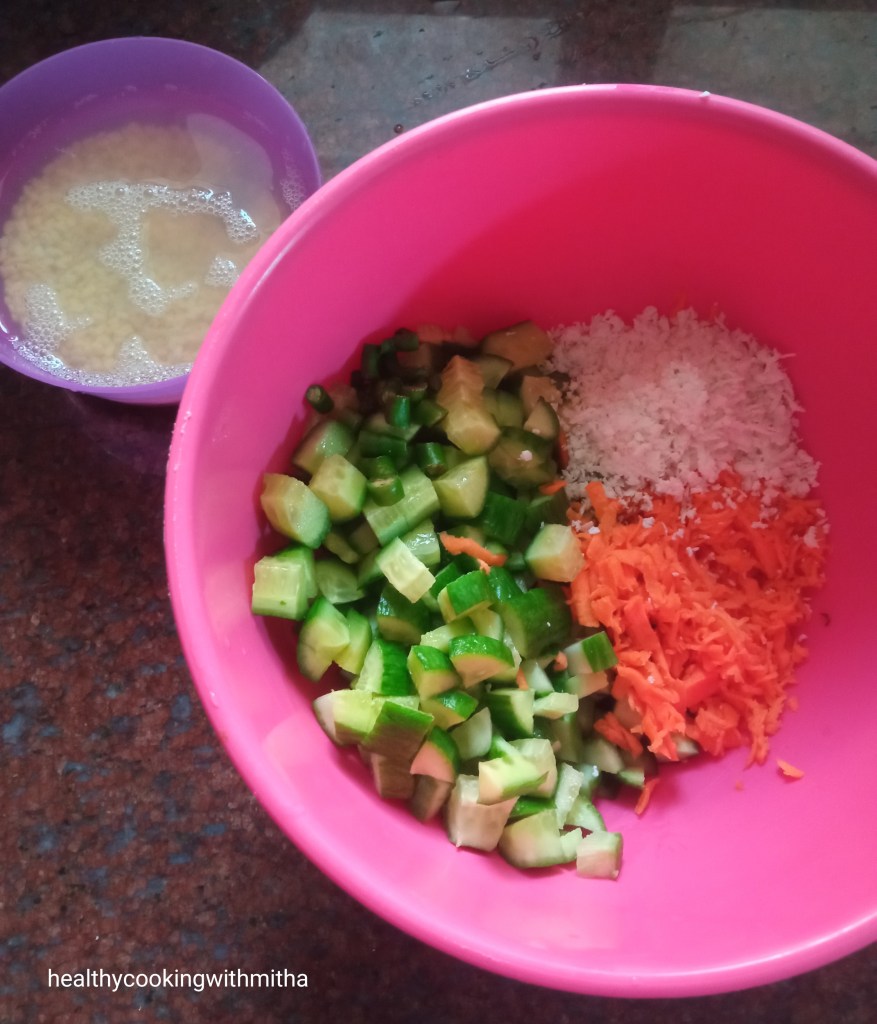
1. Soak moong dal in almost double the amount of water for about 30 to 45 mins. It will swell in size and when you bite, there will be no rawness in it. Then you can use it. Meanwhile, also wash well and chop cucumbers. Add cucumbers, grated carrot, green chillies and grated coconut in a mixing bowl.

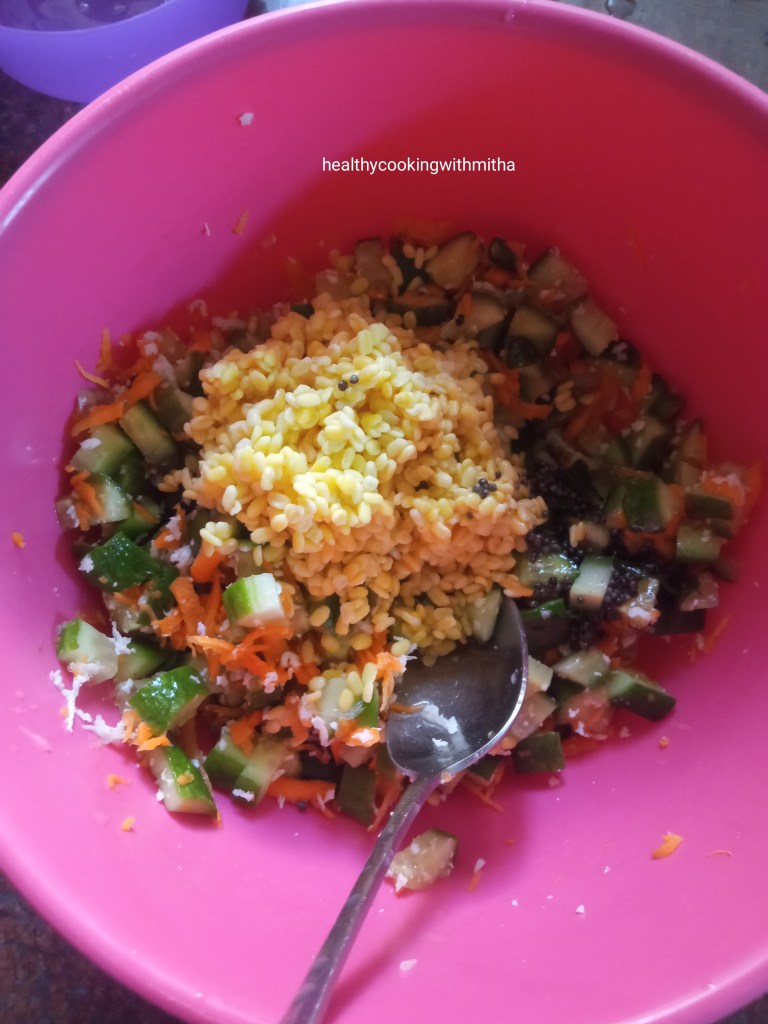
2. When the moong dal is soaked, drain water from it completely and add to this along with salt.. Also heat oil in a pan, splutter mustard seeds and fry curry leaves slightly in it. Add Hing powder too. Then pour the seasoning over this.

3. Finally add lemon juice and mix well.

4. Serve with rice meals or enjoy as it is.

Note:

* Make sure to soak the moong dal well. When you taste and see by 30 mins, you will know whether it has rawness or can be eaten. If you feel it’s still raw, soak for more time. Anyhow, by maximum one hour, it will swell well and will be ready to be added to the salad.

* You can make this with cucumber alone or carrot alone but I love mixing both as it gives a good flavour and looks good too.

* Goes well as an accompaniment with rice and rasam.

Click on the image to save the recipe on Pinterest.

Benda Uli/ Bhindi fry/ Spicy Lady’s finger fry

If there is one vegetable that I am not fond of, it is Lady’s finger. My all time favorite veggies are potato, elephant yam, beetroot, carrot ie all underground vegetables 😋. But Mr hubby hates potato and beetroot. So all these years, we have never bought beetroot and rarely use potato except for masala dosa or chapati bhaji. Husband’s food choices replace mine (Kahaani ghar ghar ki, I suppose! 😆)

Now guess which veggie is his favorite? Yes, Lady’s finger 🙄😅. So this lady makes way into our house more than quite often and he makes me eat it saying it is healthy 😬. So I have learnt to cook it in a way that I can atleast bear to eat it.

Benda Uli is commonly made at his place and the only dish he too likes with Bhindi. Though it is made little liquidy, I make it crisp so that it does not turn slimy (which I absolutely dislike). It turns out good and even my kids like it.

Hope you all try and like it as well. Happy and healthy cooking!

RECIPE:

Ingredients:

3 Cups chopped Lady’s finger / Bhindi/ Benda

2 Tbsp Coconut oil

1 medium sized Onion, finely sliced

1 medium sized Tomato, finely chopped

1 tsp Red chilli powder or to taste

Salt to taste

Step by step recipe:

1. This is how I prepare the Lady’s fingers for any curry. Wash them well under running water. Then allow it dry completely. Just keep it as such for little while and it will air dry. Chop off both ends of the Lady’s fingers and then cut into small pieces. Put in a bowl and keep aside.

Note: Ensuring that there is no water in the Lady’s fingers avoids the sliminess in the curry.

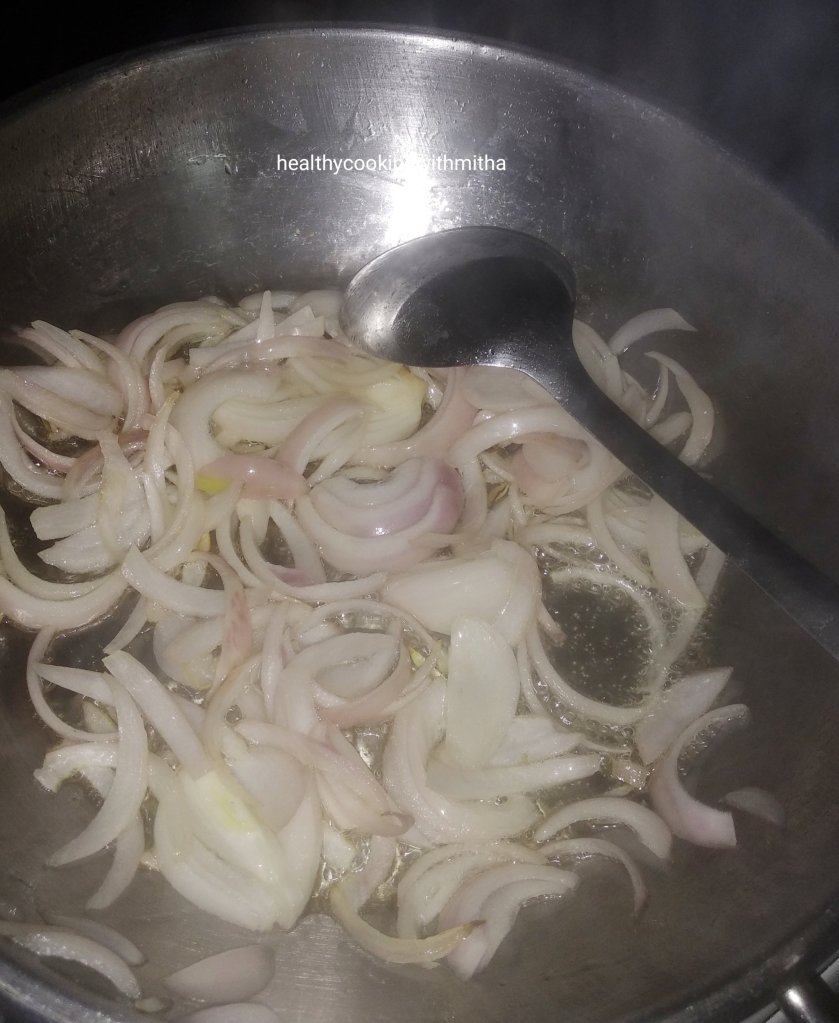
2. Now heat oil in a pan and add finely sliced onions. Fry till it turns translucent.

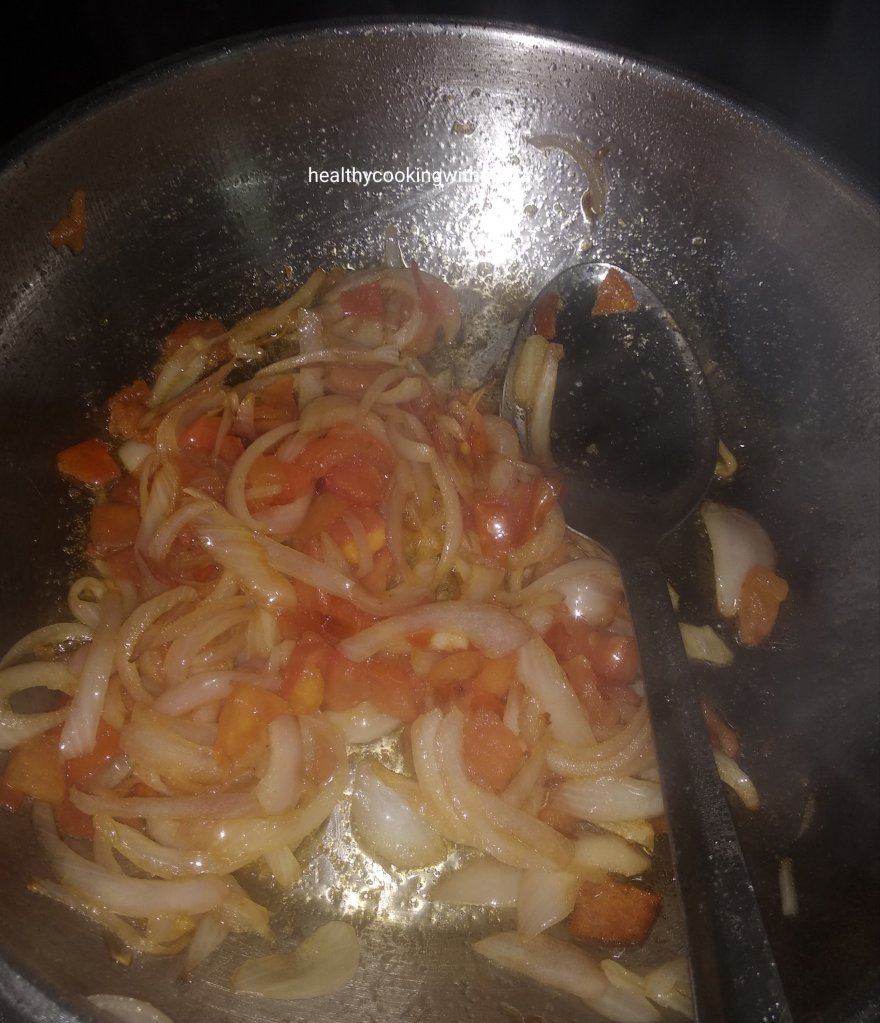
3. Now add tomatoes and fry till it turns soft.

3. Add the chopped Lady’s finger and fry it continually till it cooks. Don’t add water at all or else the curry turns slimy. It will take time but the texture of Lady’s finger will be very crispy and tasty.

5. Now add red chilli powder and salt. Mix well such that everything blends well. Cook for couple of minutes.

6. Remove from flame. Serve with rice meals.

Notes:

* Towards the end of frying, I purposely allow it to get little burnt ( to a little brownish tinge and not to black ). It gives it a very good flavour to the curry.

* For Lady’s finger, the most important part is preparing the vegetable. Wash first and then allow it to dry off completely. This ensures that slimes don’t form while cooking the Lady’s finger.

* Usually Benda Uli is made little liquidy but I prefer this method of cooking it (water free) as it gives crispy and tasty curry.

* Red chilli powder is to taste.

Rava Bhakri /Rullanva Doddaka/ Instant Semolina savory pancakes

I am a huge fan of our age old amchi (Konkani) dishes. They are not only easy to make but very healthy and super delicious too. Also, I am a firm believer that breakfast should be the most filling meal as it gives us energy for the day and keeps us away from snacking often.

This Rava Bhakri is exactly that. Very filling and super tasty too. It’s my go to breakfast when I have forgotten to soak for dosas or idlis. My kids call it “Rullanva bobbo” and demand it whenever they feel hungry. So this “bobbo” becomes their snack too when they come tired after playing. And the best part is, it hardly takes 10 mins from start to finish to make this.

Now that’s how I love my dishes. Less time in the kitchen, yet healthy, kid friendly and delicious. Most Konkanis know this recipe but sharing for those who don’t know. Hope you all try it too. Happy and healthy cooking!

RECIPE:

Ingredients:

2 and 1/2 Cups Semolina (wheat rava, upma rava, sooji)

Approx 3 Cups Water

1/4 Cup Wheat flour (Atta)

1/4 Cup freshly grated Coconut

1/4 Cup Yogurt/ Buttermilk (optional)

2 to 3 Green chillies

1 inch Ginger piece, grated

1 Tbsp Sugar

Salt to taste

Ghee or coconut oil to cook the dosa

Step by step recipe:

1. Take Semolina, wheat flour, sugar, salt and coconut in a mixing bowl.

2. Add yogurt, water, Ginger and green chillies. Mix well and make a lump free batter of thick consistency. (It took me 3 Cups water for 21/2 cups rava. Might vary depending on the brand of rava.)

3. Now heat a dosa pan and add a ladle of dosa batter. Spread it into a thick dosa.

4. Cover and cook till the surface cooks. Add ghee or oil on top.

5. Flip and cook for a minute.

6. Serve hot with butter and pickle.

Notes:

* Rava absorbs a lot of water very quickly. But it varies with the brand of rava. So best is to add water one cup at a time in the beginning and then add little by little to make a batter thicker than dosa batter consistency.

* This batter can be made before hand and refrigerated. I make it at night and refrigerate for breakfast the next day as it saves a lot of time in the morning. Just that the rava absorbs all the water. So it needs and addition of about a cup of water to bring it back to pourable consistency.

* The addition of yogurt or buttermilk is optional but gives a nice tangy flavour to it.

* You can also grind the coconut along with Ginger and green chillies. Then add to the batter but I love the bite of green chillies. So I don’t do that way.

* I don’t even need pickle with this. Butter is an excellent accompaniment to this bhakri.

* You can also add an mashed overripe banana to this batter. Tastes really delicious!

* You can also add grated cucumbers to this to make Instant Cucumber dosas or Thoushe Bhakris.

Banana flower/ Bondi Chutney & Bondi Upkari

Banana flower is very healthy especially for our digestive system and kidney function. So I always try to include it in our meals at least once a week. This chutney is my favourite which my mother used to make regularly.

As good as it is for health, it is also lipsmackingly delicious . We enjoy it with our rice meals and also with dosas. Here’s sharing how my Amma used to make this chutney and also the upkari.

Do try it and you will definitely love it. Happy and healthy cooking! ❤️

RECIPE:

Ingredients:

1/2 a medium sized Banana flower/ Bondi (I took the other half for upkari)

1/2 Cup fresh or desiccated Coconut

2 tsp Oil

1 tsp Mustard seeds

1 tsp Cumin seeds/ Jeera

A sprig of curry leaves

1 tsp Tamarind paste

3 dried Red chillies or to taste

Salt to taste

Step by step recipe:

1. First of all, remove the outer layers of the banana flower along with the small white flowers inside. Just two or three layers will do till you get the inner firm banana flower. Chop it finely and immediately add to a bowl with water.

Note: I got 5 Cups of chopped banana flower in total. Took 2 cups for chutney and 3 cups for upkari.

2. Heat a pan with oil and add mustard seeds, cumin seeds and curry leaves.

3. When mustard seeds splutter, add the drained chopped banana flower to it. Fry well and cook with very little water till it turns soft.

4. Now add coconut and fry till it turns light brown in colour.

5. Allow it to cool. When it cools down, grind it along with red chillies, Tamarind and salt to a smooth paste adding water little by little as needed as it’s a thick chutney.

6. Remove in a bowl and serve with rice meals.

Notes:

* For the upkari or stir fry, Heat oil in a pan and add finely chopped garlic. Fry till garlic turns light brown in colour. Add the drained chopped banana flower and cook till it turns soft adding salt and red chilli powder as it cooks. Garnish with grated coconut on top. {On days that we don’t eat garlic especially during fasting days, I add Hing or asafoetida instead to the seasoning and it tastes delicious too.}

* While discarding the outer layers of the banana flower, discard the two or three hard and outermost ones. Rest are consumable.

* Immediately add the chopped banana flower to water or else it will turn black.

* Cook the banana flower well or else the chutney will have a raw flavour.

* This chutney is thick and can be enjoyed with rice meals or even with dosa.
* If refrigerated, it can last well for two days.