Vaingana Bajji | Konkani style mashed brinjal

After my last post of Vastad rotti (pan fried version of Mangalore Buns), I was reminded of another Konkani delicacy which I used to literally beg my grandmother to make. It is this Vaingana bhajji. She used to make with green brinjals (or gulla in Konkani/Kannada) and it tasted so heavenly that I could eat it as it is without rice.

Since we hardly get green brinjals here, I use purple ones for making Bajji. Also traditionally, the brinjal is roasted over gas or wood fire and then mashed after removing skin. If you have the option, then you can do it too. But since we have an electric cooking range, I boil it in water and mash it. My grandmother did this way too and as Amma says, this is much easier (mothers always want less work for their kids and Amma told me to try this way 😁). Life became easier after that and Bajji became our regular dish when we got fresh brinjals.

We love simple meals and this is an accompaniment which is very flavorful yet very basic. Hope you all try and love it too. Happy and healthy cooking!

RECIPE:

Ingredients:

1 large Purple Brinjal or 2 medium sized Green Brinjal or 3 small purple brinjals (about 2 cups chopped)

1 medium sized Onion, finely chopped

2 to 3 green chillies, finely chopped

1/2 tsp Hing or Asafoetida powder

2 tsp Tamarind paste

1 Tbsp Coconut Oil

Salt to taste

3 Tbsp chopped coriander leaves

Step by step recipe:

1. Take chopped brinjals in a vessel.

2. Add little water and cook till it turns very soft. Water should be absorbed too.

3. Mash the brinjal very well using a masher.
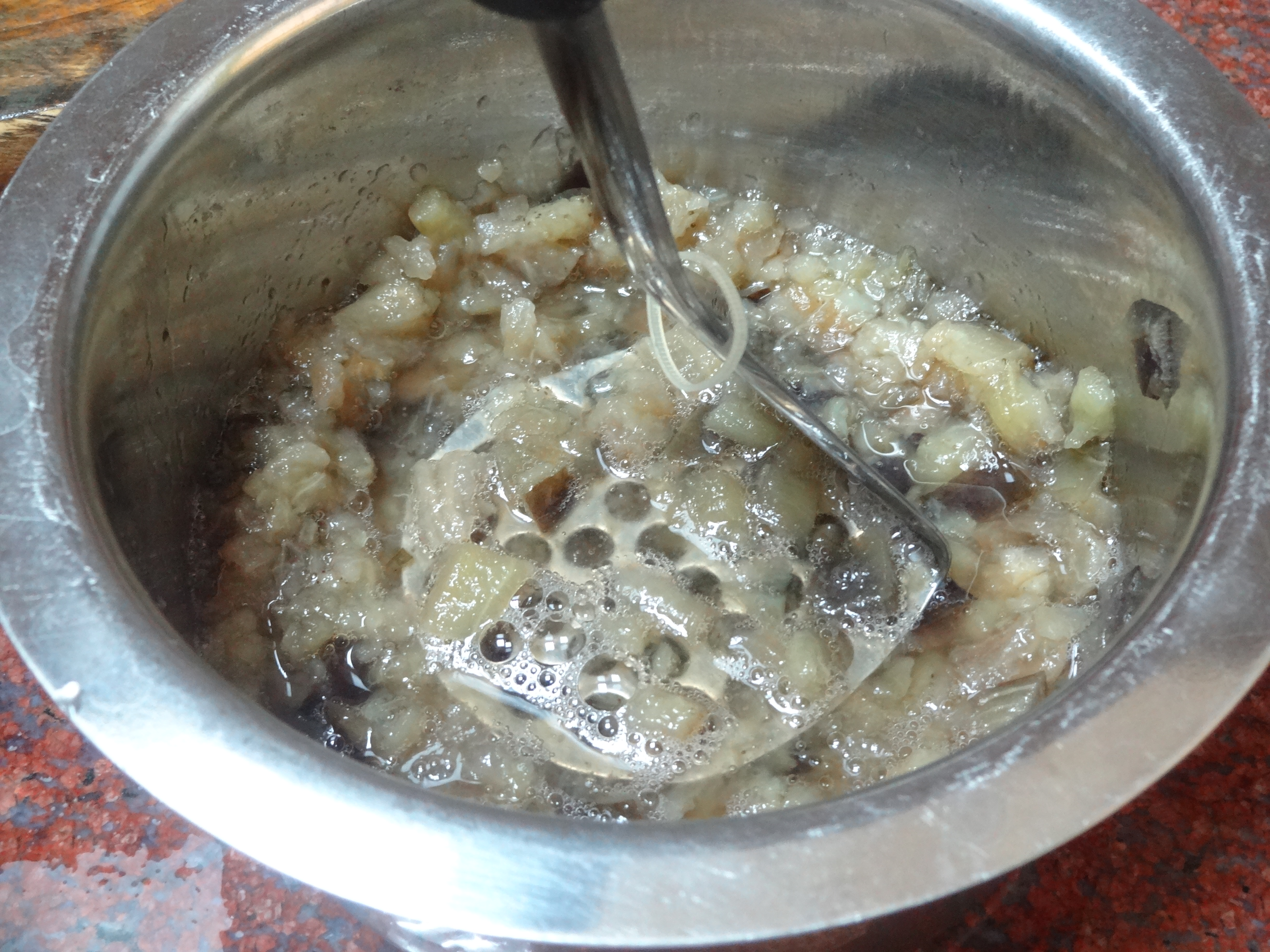
4. Now add chopped onions, green chillies, tamarind pulp, hing, salt and coconut oil.

I have used pink salt or rock salt or kaala namak here. Hence the colour pink.

5. Mix well and garnish with coriander leaves.

Serve immediately as an accomplishment with rice meals.

Notes:

* I have made it with all varieties of brinjals and it tastes great with any variety of them.

* Traditionally bhajji is made by roasted over gas or wood fire but my grandmother made this version too and I make this because I don’t have gas stove here (nor wood fire 😅).

* Don’t add a lot of water while cooking the brinjals and make sure the water is absorbed well and brinjal is cooked well too.

* You can skip onions if following satvik diet but onions does add a wonderful bite.

* I usually make this with our Matta rice congee and it tastes heavenly with it.

* With white rice and rasam, bhajji makes an excellent accompaniment.

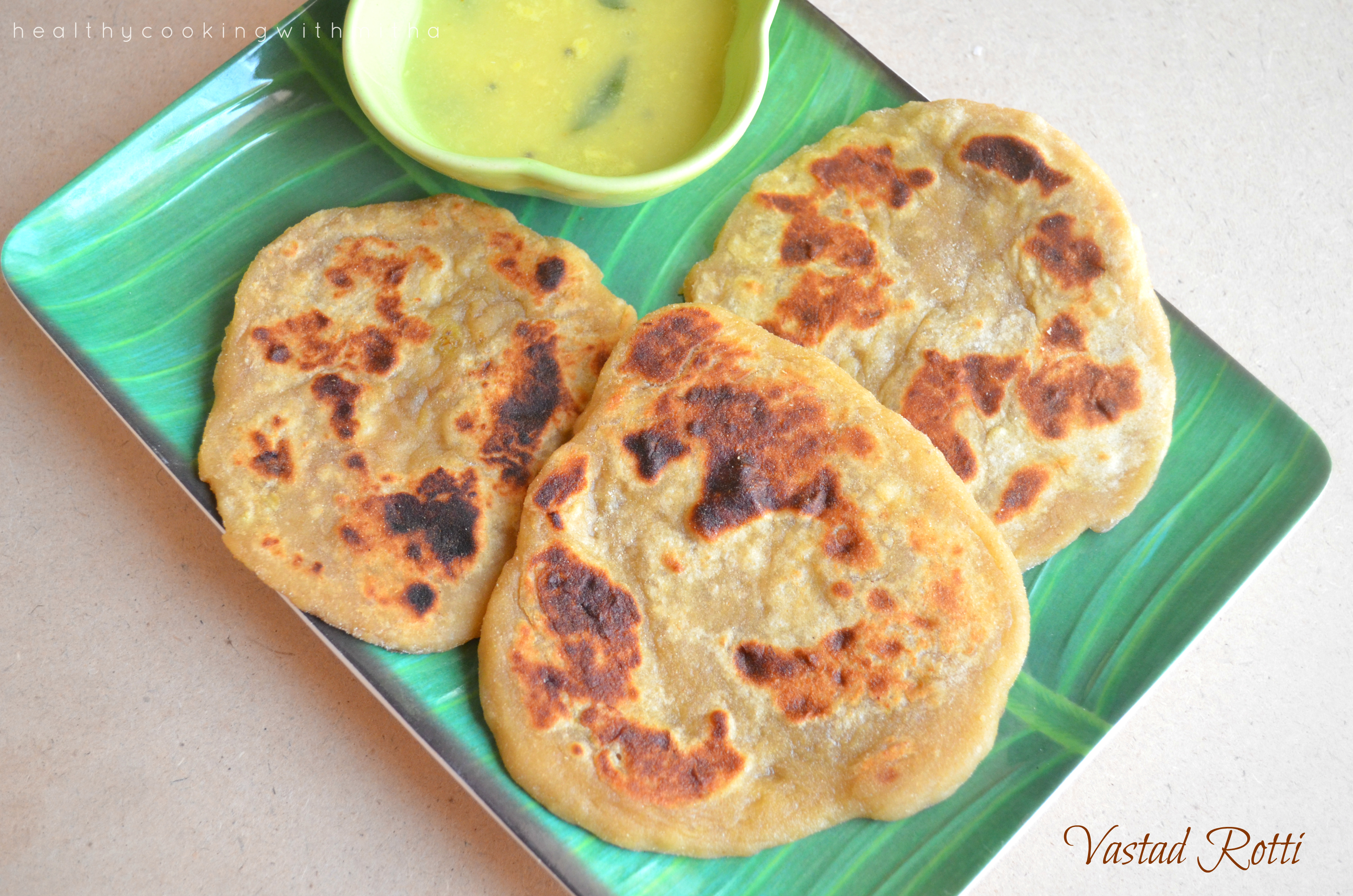
Vastad rotti | Wheat Banana flatbread

Click on the image to save the recipe on Pinterest

I am sure if you are checking this recipe, it must be either due to the amazement of the unique name “Vastad rotti” or have savoured this delicious snack made by your grandmother and just wish to recreate it in your kitchen.

Anyhow for all of you, Vastad rotti is nothing but tava fried version of the famous Mangalore Buns. My grandmother made these rottis as evening snack when she did not want to deep fry the leftover buns dough again. They tasted so delicious that I loved it more than buns itself.

After marriage, when I tried it for the first time, my husband did not know about it but to my amazement, he too loved it very much. So now whenever there are leftover bananas, he asks me make these rottis. In fact, sometimes he brings bananas only for this. Such is the love for these cute small Vastad rottis. 😍

Hope you all try and love it too. Happy and healthy cooking! ♥️

RECIPE:

Ingredients:

3 Cups Wheat flour (or as required)

1 Cup mashed bananas

1/2 Cup Curd or Yogurt

1/4 Cup Powdered Jaggery or Sugar

2 Tbsp Besan/ chickpea flour

1 tsp Cumin seeds/ Jeera

A pinch of pepper powder

Salt to taste

1/2 tsp Baking soda (optional)* check notes

Step by step recipe:

1. Take mashed bananas in a large bowl. Add besan, jaggery or sugar, cumin seeds, pepper powder, salt and baking soda ( if adding).

This is an old picture. I add powdered jaggery now.

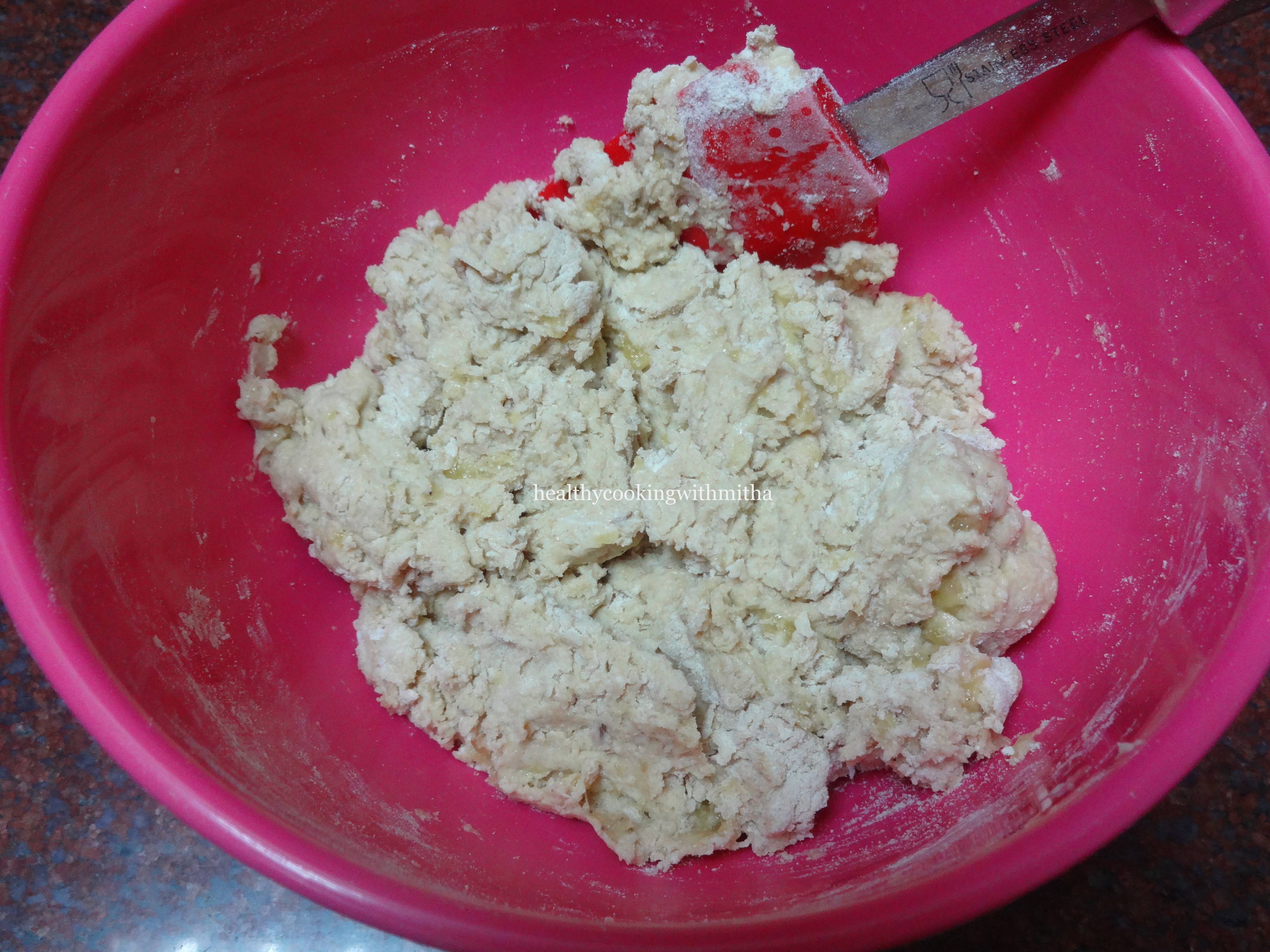
2. Add curd and mix well using a spatula.

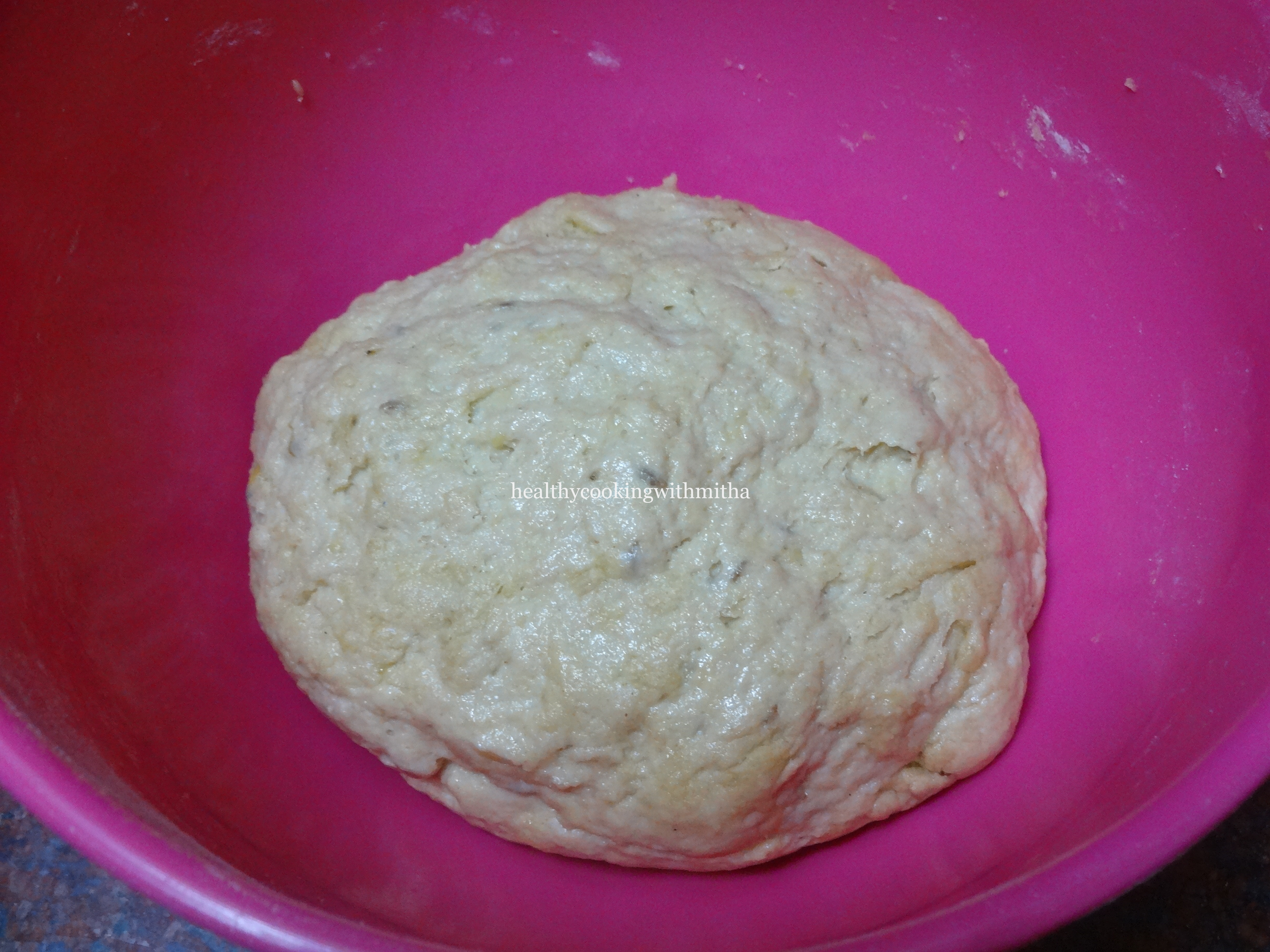
3. Now slowly add wheat flour 1 Cup at a time and keep mixing till it forms a dough. Knead with hands lightly.

4. Coat the dough with oil and cover and keep overnight or for 6 to 8 hours to ferment at room temperature in a warm place.

5. When making vastad rottis, make equal portions of the dough.

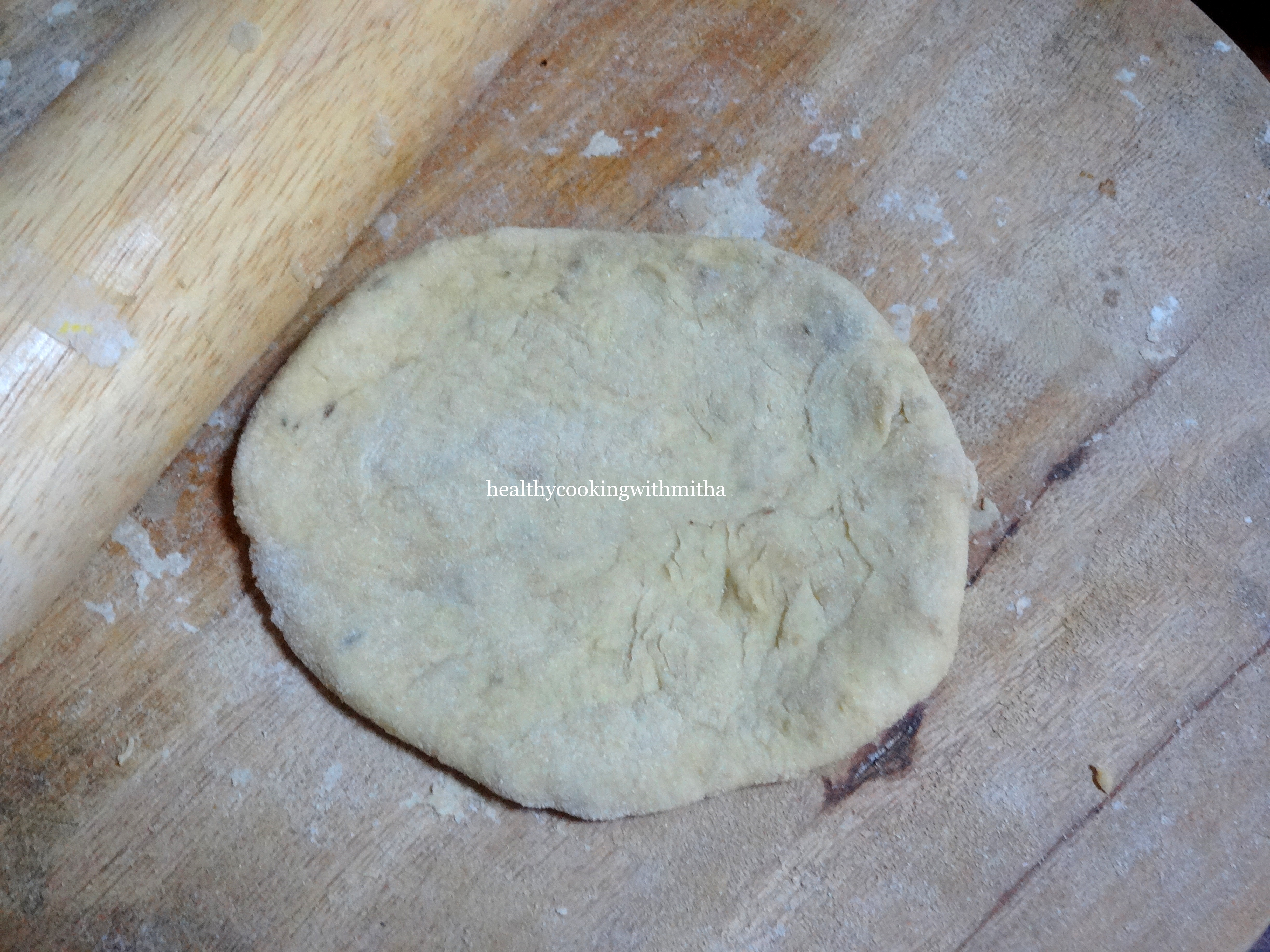
6. Roll like you roll out puri into a thick circle. Use dry flour if needed.

7. Heat a tawa and place the rolled roti on it. Look at it puff up and form tiny bubbles on the surface.

8. Add ghee. Flip and cook the other side too.

9. Serve hot with chutney or dalitoy ( Konkani style dal).

Notes:

* Actually the measurements of this recipe can vary a lot depending on the variety of bananas, water content in curd and quality of wheat flour. So please go with the step by step recipe and follow accordingly.

* You can also make with leftover bananas even if you have only couple of them. Not necessarily 1 Cup mashed bananas are required.

* Add curd along with other ingredients and see how much wheat flour is needed to get it to form a dough.

* Please do not add water while forming this dough. The moisture should come only from bananas and curd.

* I skip baking soda sometimes and even though there is a difference in texture, taste is almost the same. With baking soda, the texture is flaky like a paratha and without it, the texture is like a thick chapati.

* After fermentation of the dough, the dough might leave water and turn very sticky. Just add more wheat flour and form a manageable dough.

* Roll the dough into a thick circle and cook well on medium flame. On high flame, the rotis can turn black due to the presence of bananas in it.

* You can use powdered jaggery or sugar in the dough. Does not make much difference.

Other Konkani breakfast recipes that you can try:

Urad Moong dal Idli | No rice idli

Urad Rava Idli | No rice idli

Batat Phovu

Kobi Pohe | No onion Pohe with cabbage

Chane Usli – Godu Phovu

Muga Dali usli| seasoned moong dal

Idli Usli | seasoned leftover idlis

Pejje polo | cumin flavoured dosa

Surnali | Sweet and spongy dosa

Magge Surnali | using Mangalore cucumber

Horsegram Idli

Instant Cucumber idlis | Thoushe mudho

Instant Cucumber Bhakri

Instant Rava bhakri

Undi with Piyava Gojju

Kharbas dosa

Mushti polo

Click on the image to save the recipe on Pinterest

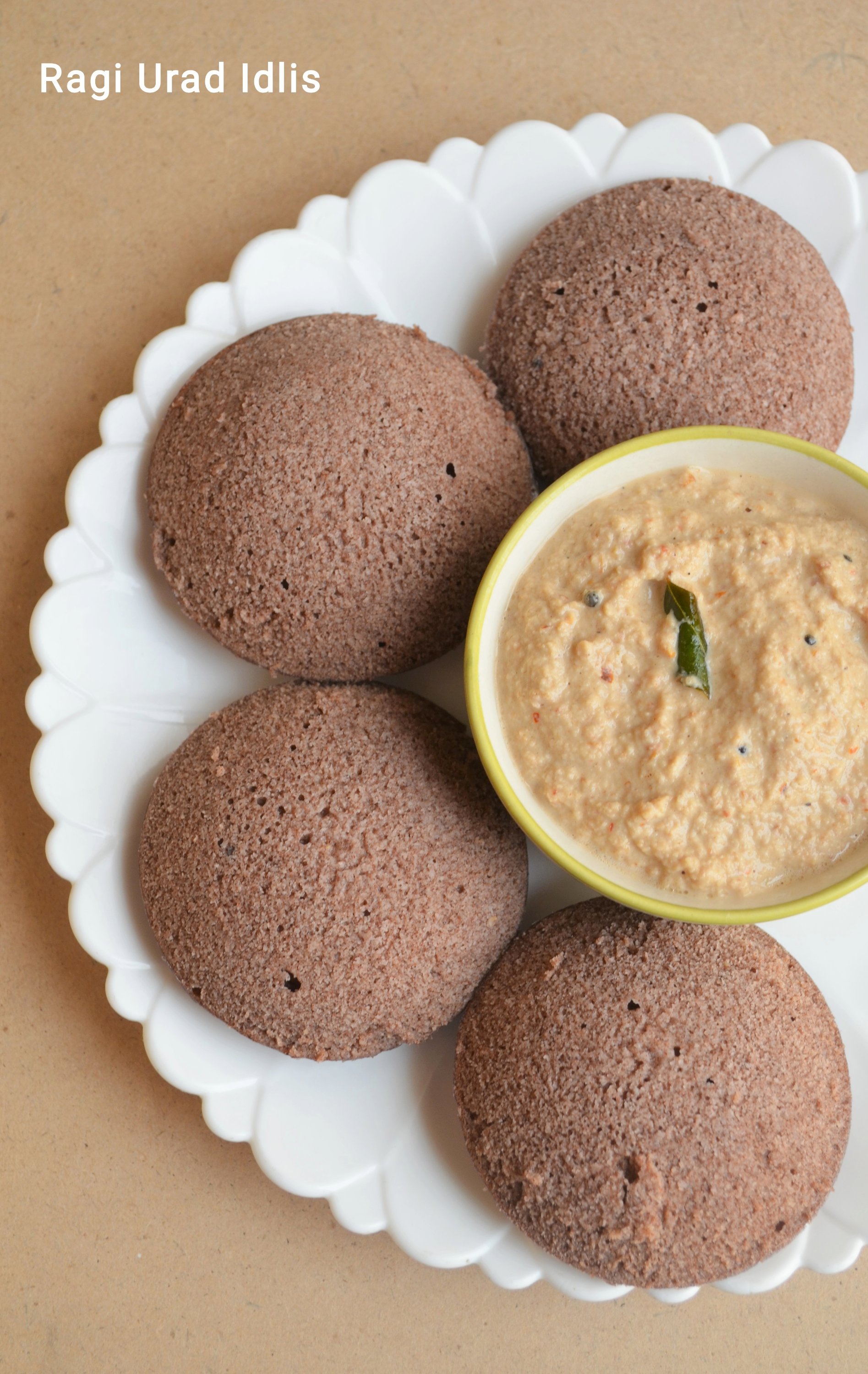
Ragi Urad Idli | No rice idli

Click on the image to save the recipe on Pinterest

I have already posted Instant Ragi idlis that I make always. Even though it comes out soft, it has Eno fruit salt as an ingredient and I like to use it as less as possible. So those Idlis are kept for days when I forget to soak for idlis and dosas but still need to make a healthy breakfast for the family.

Ragi Urad Idlis are the ones I make always and it turns out soft and fluffy naturally without the need of Eno or soda. In fact the batter ferments so well that I am always scared if it will overflow and take great care to keep it in a very wide bowl with a plate underneath.

My kids love these Idlis very much and call it “chocolate” Idlis. The day I make them, they ask for it and eat it the whole day. So I steam and keep the whole batch for their idli demands. It remains soft even after 12 hours of steaming them. Such is the magic of naturally fermented foods.

Sharing the recipe which I have been following for years. Hope you all try and love it too. Happy and healthy cooking!

RECIPE:

Ingredients: { Makes about 26 Idlis }

4 Cups Ragi flour/ finger millet flour/ nachni ka atta

1 Cup Urad dal

1/2 Cup thick or thin Poha/ flattened rice

1 tsp Methi / Fenugreek seeds

Salt to taste

Step by step recipe:

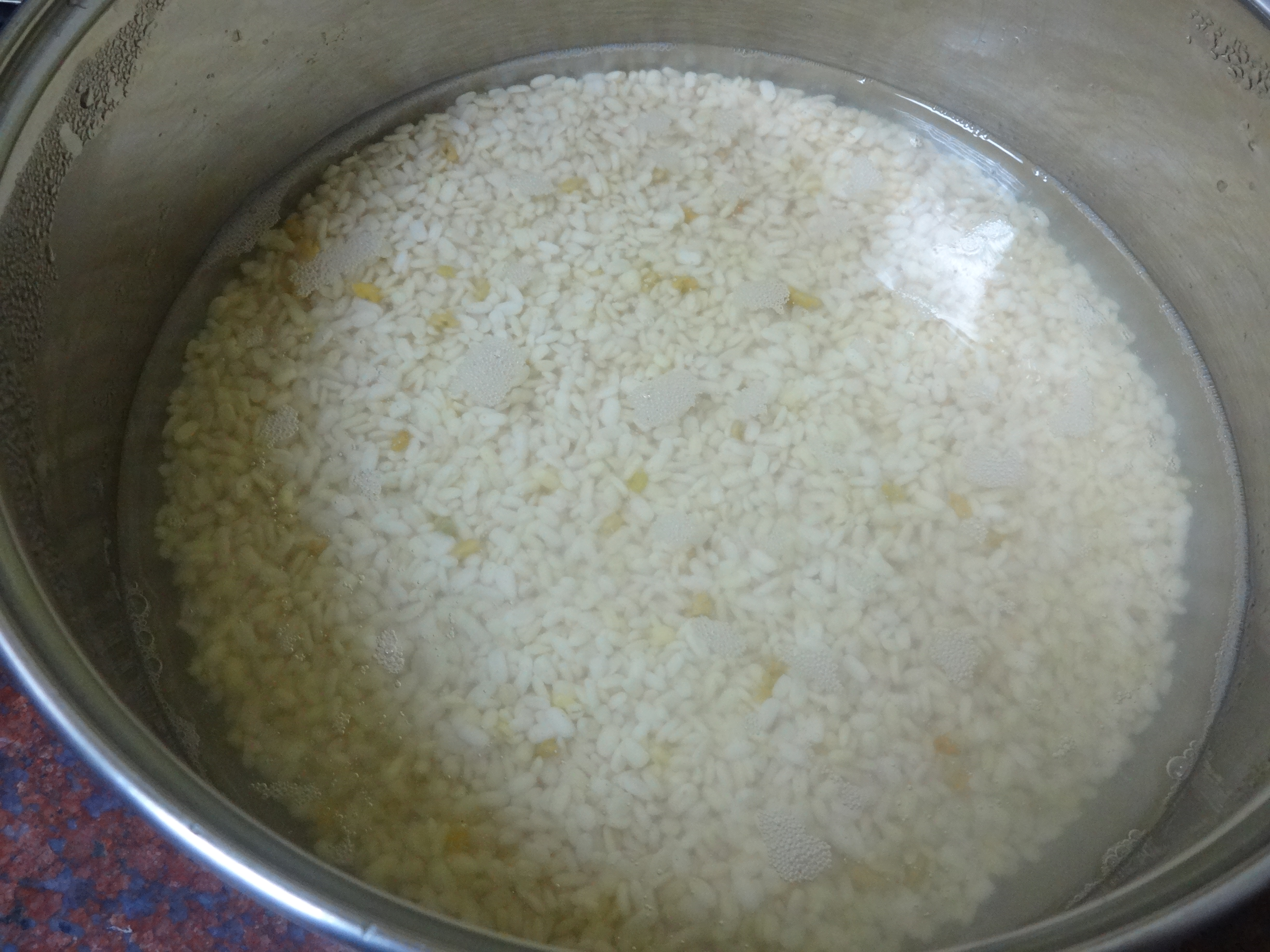
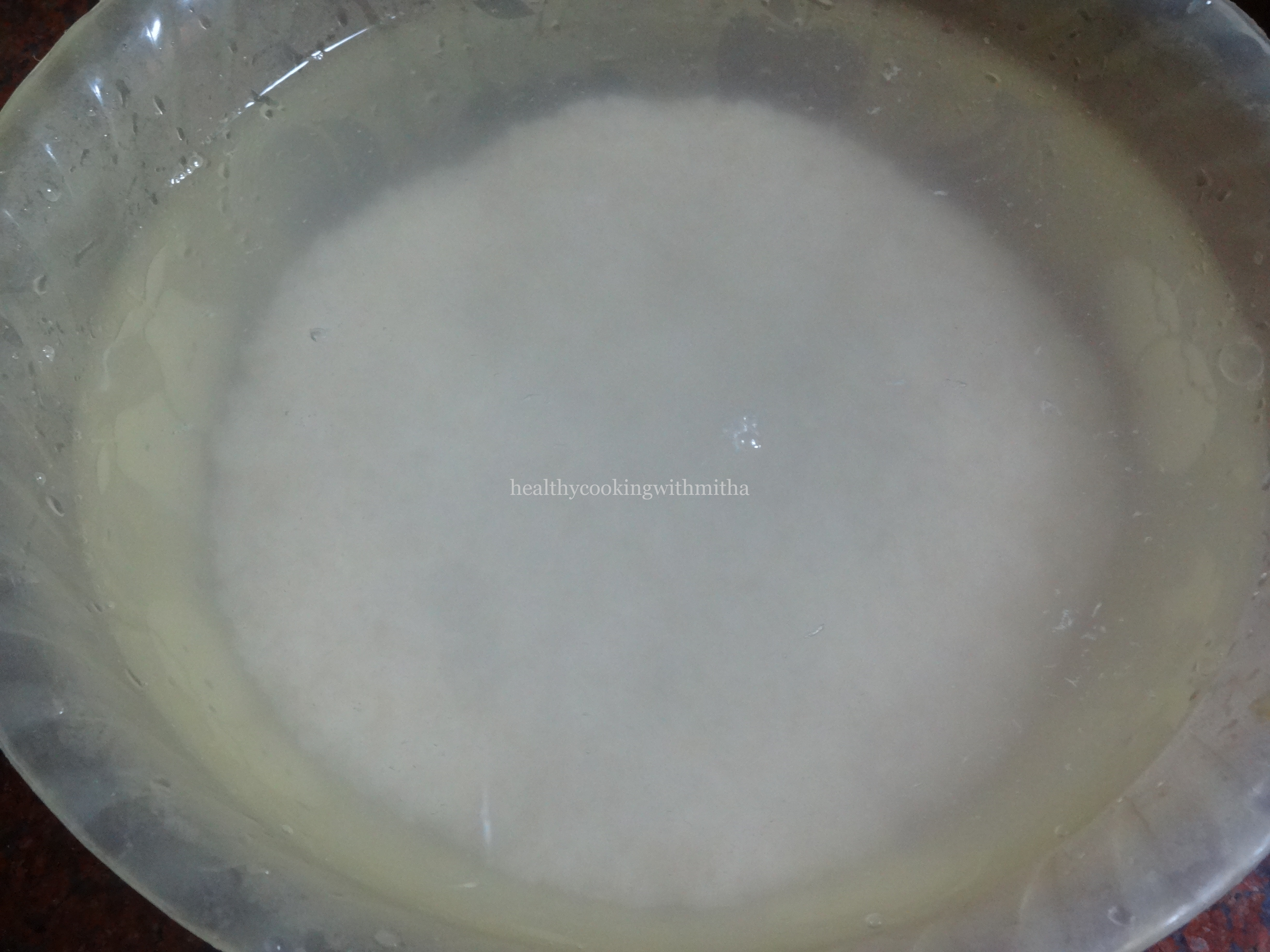
1. Wash well and soak urad dal with methi for 3 to 4 hours.

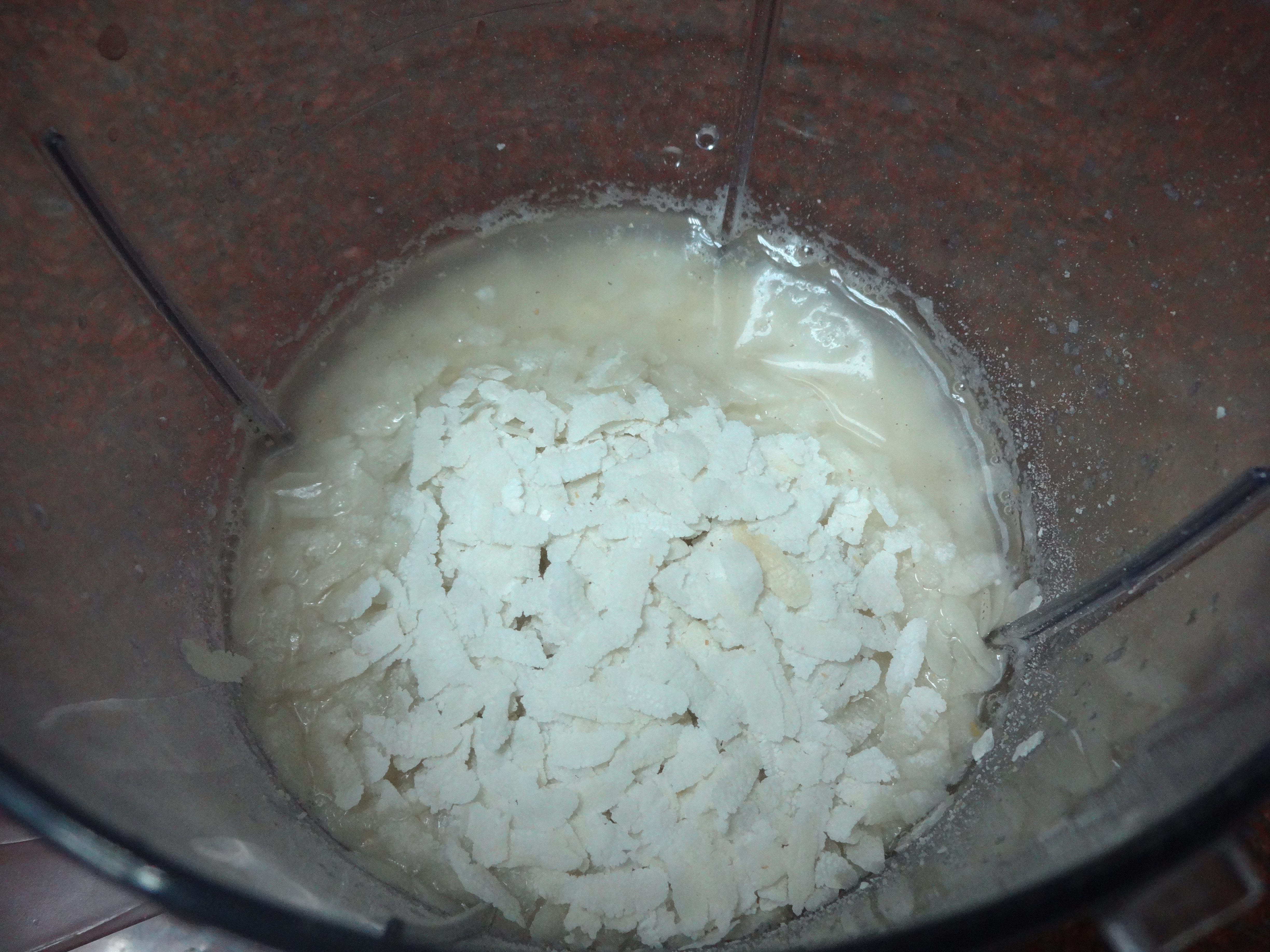
2. Drain the water and add the soaked urad dal and methi along with Poha and grind to a smooth batter. Pour into a large bowl.

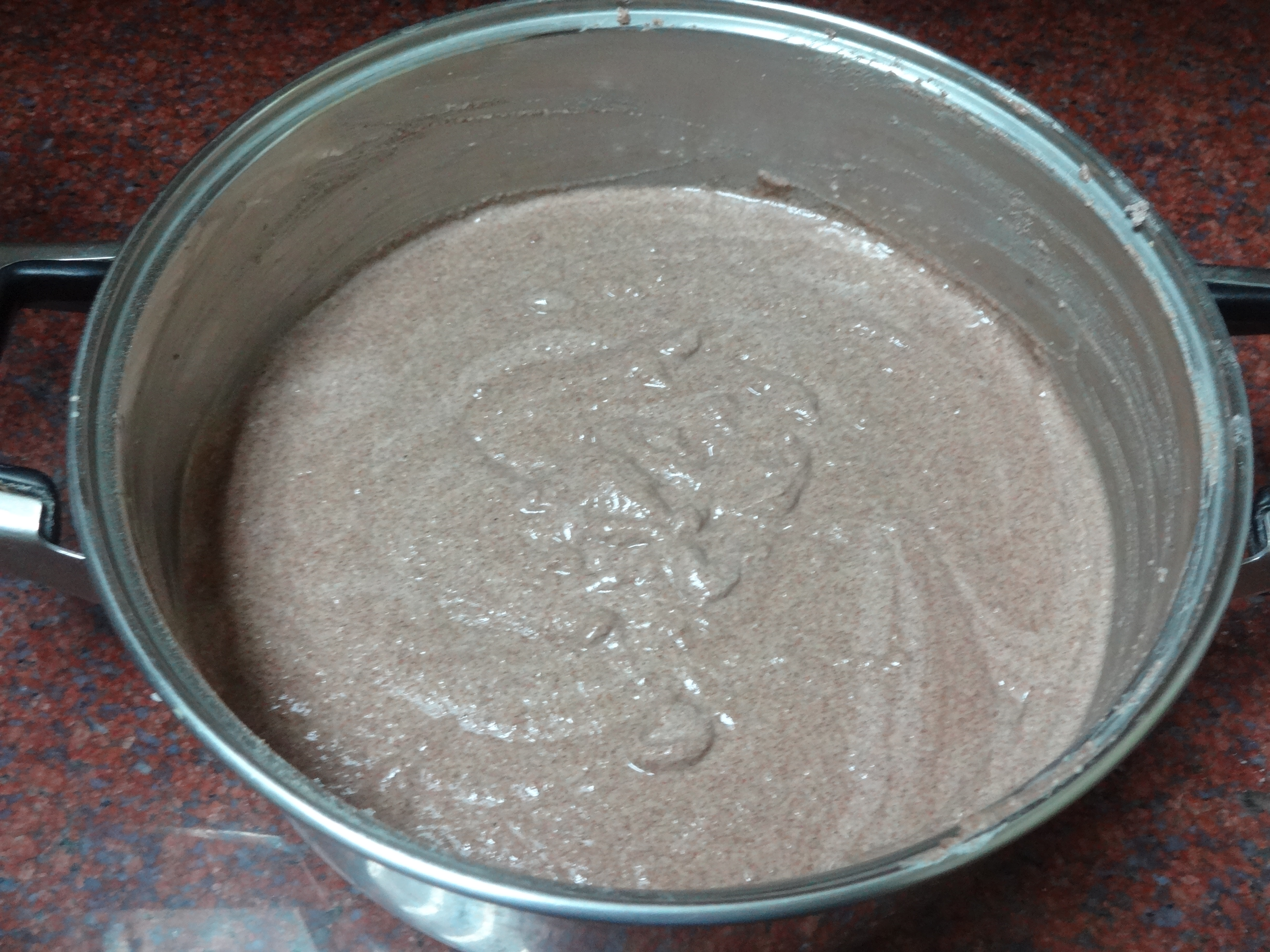
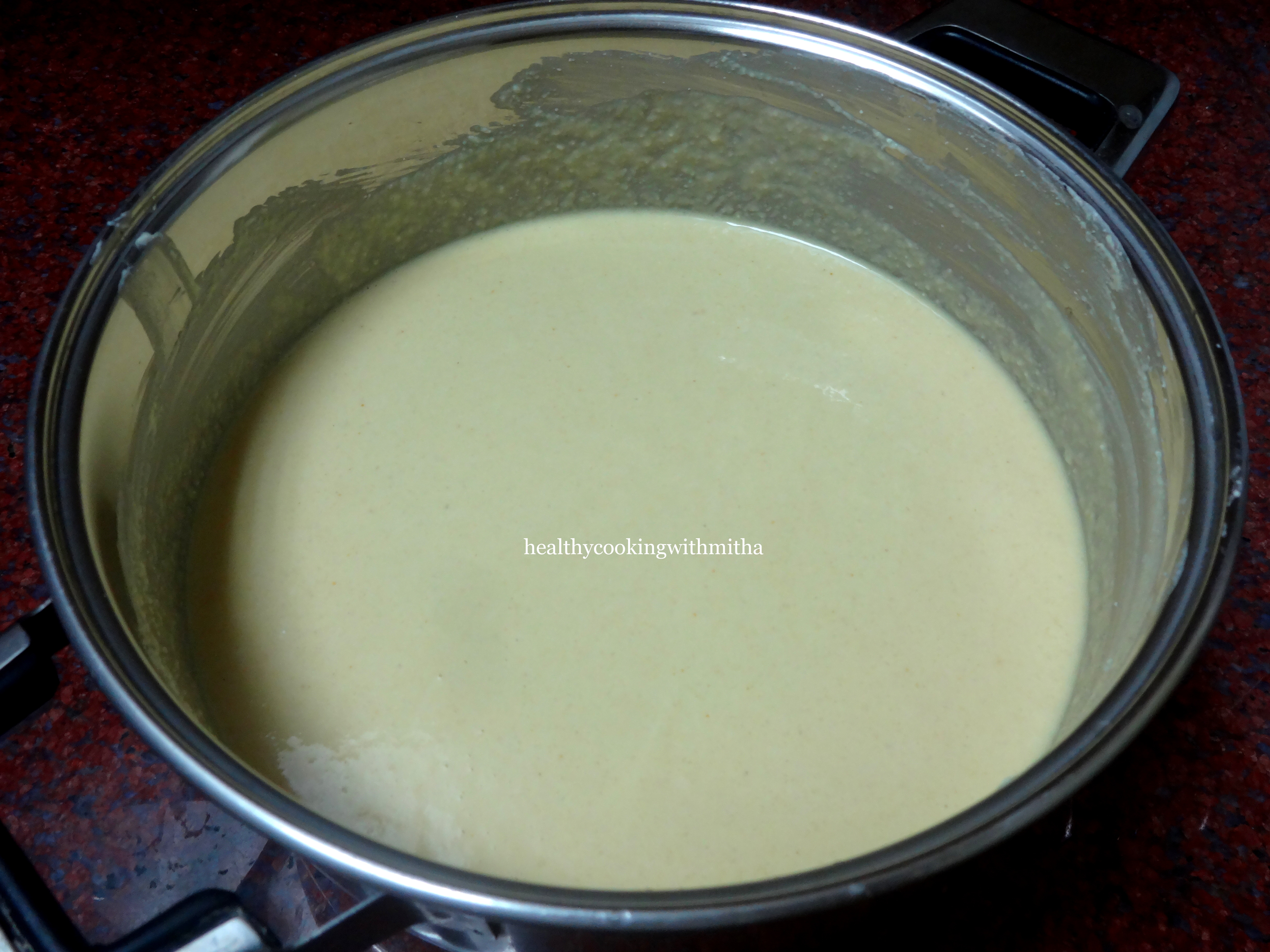
3. Add Ragi flour and salt. Whisk well or mix with hands to remove lumps.

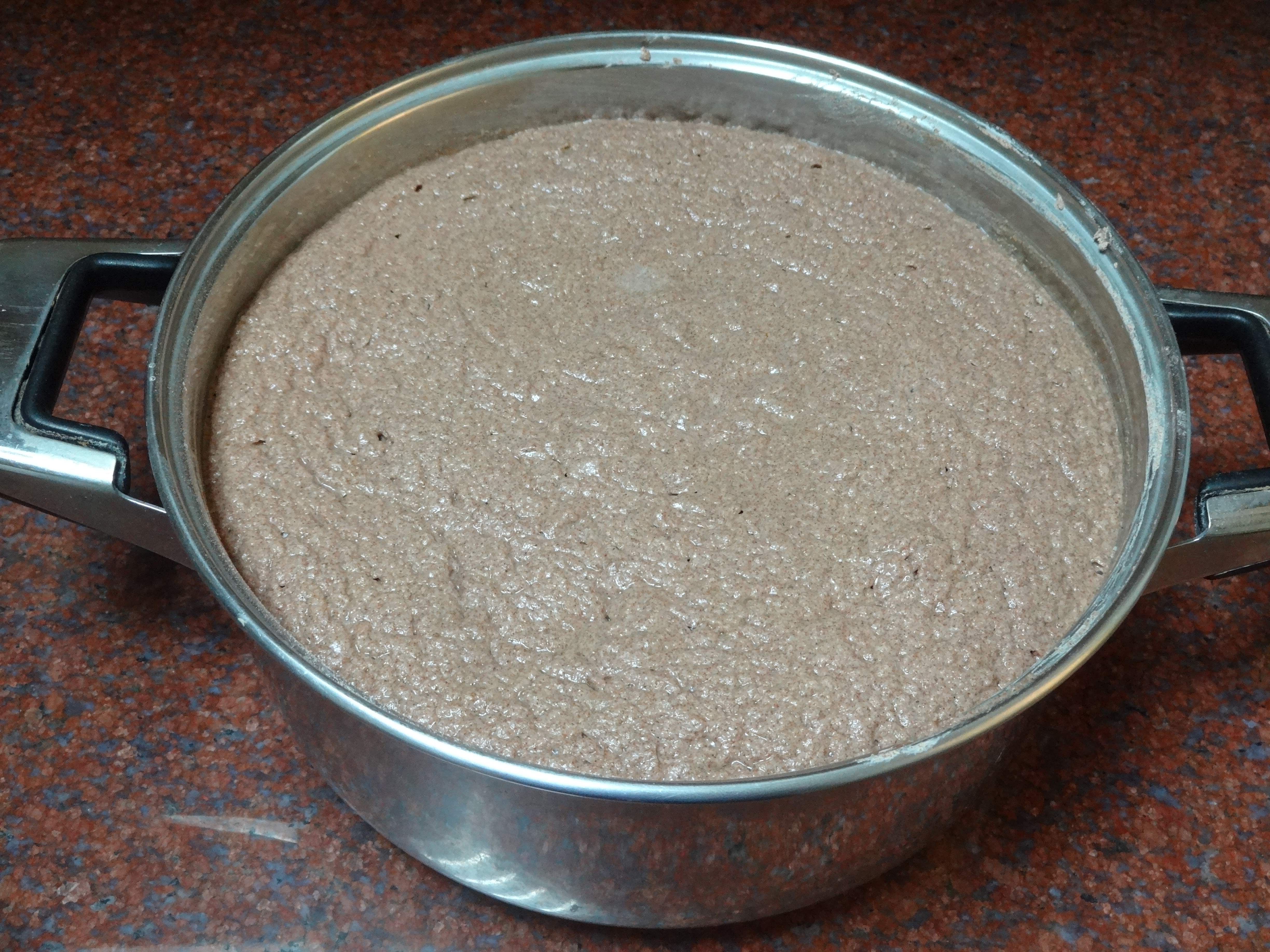
4. Keep this batter to ferment overnight or for atleast 8 hours.

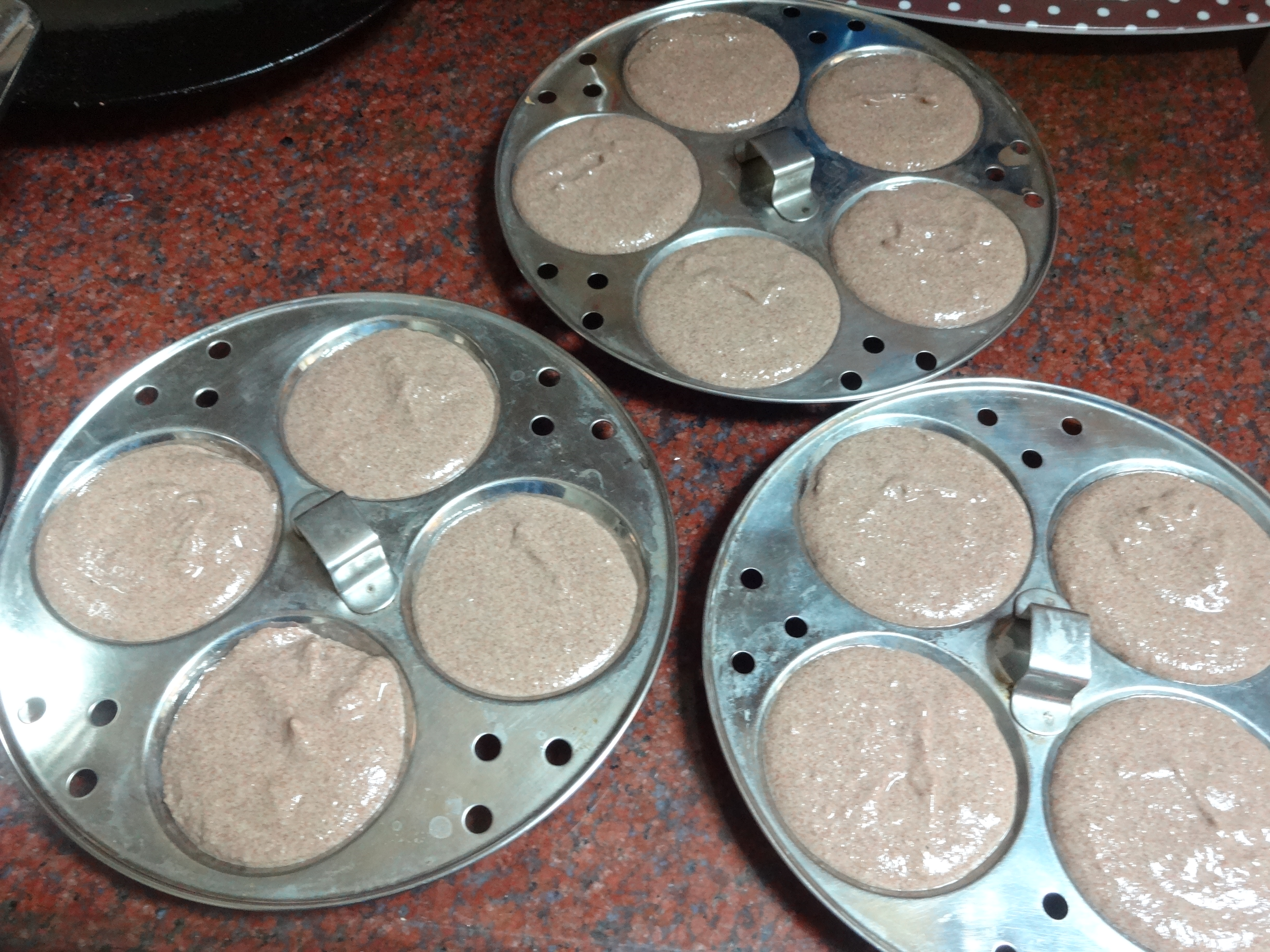
Love how much this batter rises. More than thrice. So do keep it in a large bowl. Else batter might overflow outside the vessel.

5. Add in idli moulds. Steam for 20 mins or till done.

Notes:

* When you add the ragi flour, make sure to whisk really well and the batter consistency should be slightly thicker than dosa batter consistency. So don’t add much water.

* Please remember that this batter rises very well. Atleast thrice its size. So keep it to ferment in a large bowl. Also keep a plate underneath to catch any overflow just in case.

* These Idlis taste the best with Peanut Onion Chutney.

* Dishes with Ragi that I make always:

Instant Ragi Idlis

Instant Ragi Rava Dosa

Ragi Set Dosas

Ragi Jaggery ladoos

Ragi Ela Ada

Ragi Butter cookies

Eggless Ragi Chocolate Cake

Ragi Malpua

* All my idli varieties: Variety Idli Collection

Click on the image to save the recipe on Pinterest

Peanut Onion Chutney

Since we always make dosas or idlis for breakfast, chutneys are a must and even though our regular ones are either simple ginger chutney or Tomato chutney, this peanut chutney is also our favourite.

It has a unique flavour, comes out thick even without coconut and lasts well for a day without spoiling. So I give it in my husband’s lunch box at work when he takes Idlis in it.

My kids also love this chutney and my two year old dips Idlis in it himself and licks the chutney clean. It’s his all time favourite.

Here’s sharing the recipe. It’s very easy with very few ingredients. Hope you all like it too. Happy and healthy cooking!

RECIPE:

Ingredients:

1 Cup Peanuts

1 medium sized Onion

3 to 4 Red chillies

1 tsp Oil

Salt to taste

For seasoning:

1 tsp Oil

1/2 tsp Mustard seeds

Few curry leaves

A pinch of Hing/ Asafoetida

Step by step recipe:

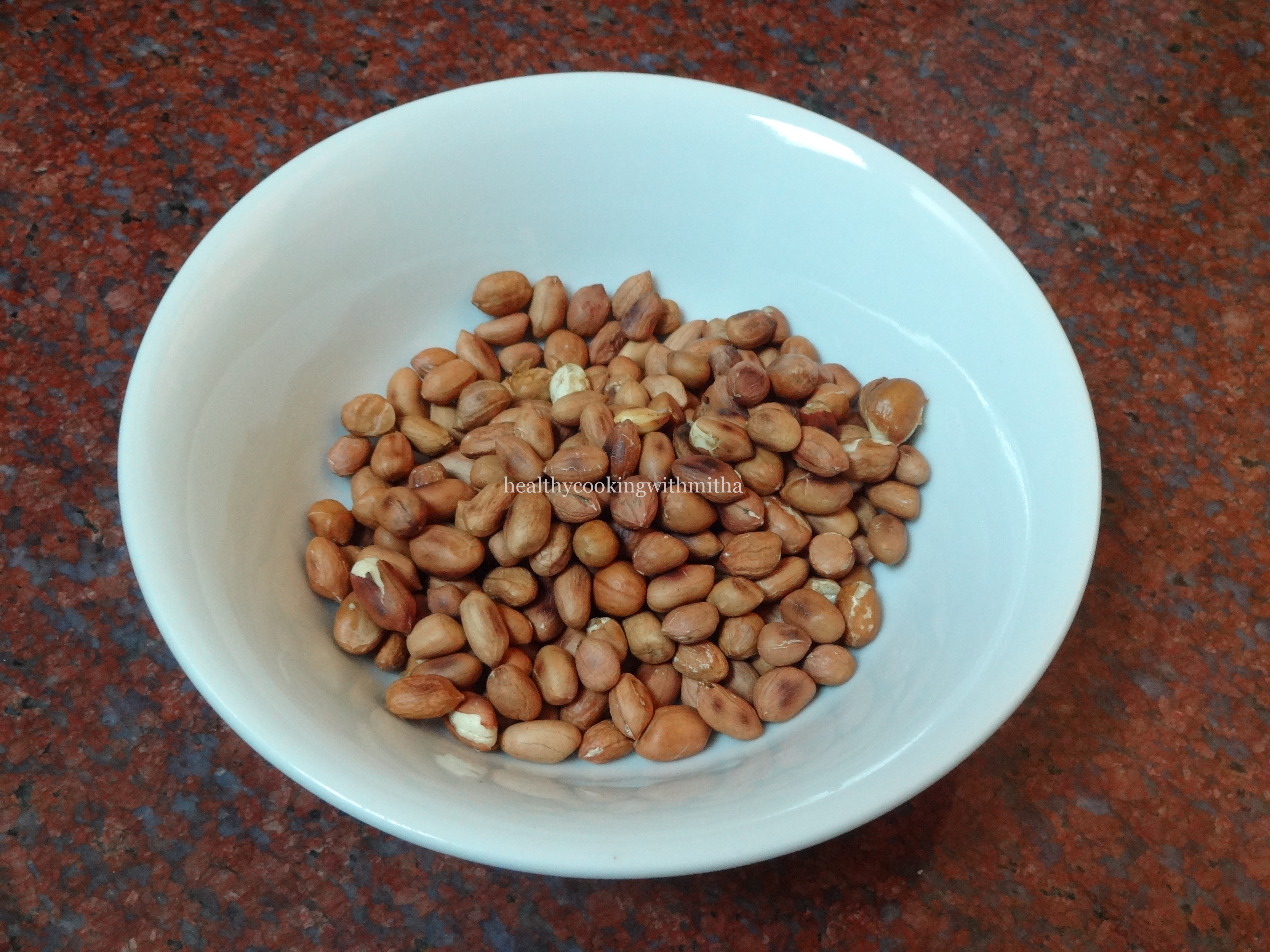
1. Dry roast peanuts (without oil) in a pan on medium flame till they change colour and brown. Be careful not to burn it. Keep aside.

2. Fry onions and red chillies in 1 tsp Oil till the onions turn translucent. Allow it to cool.
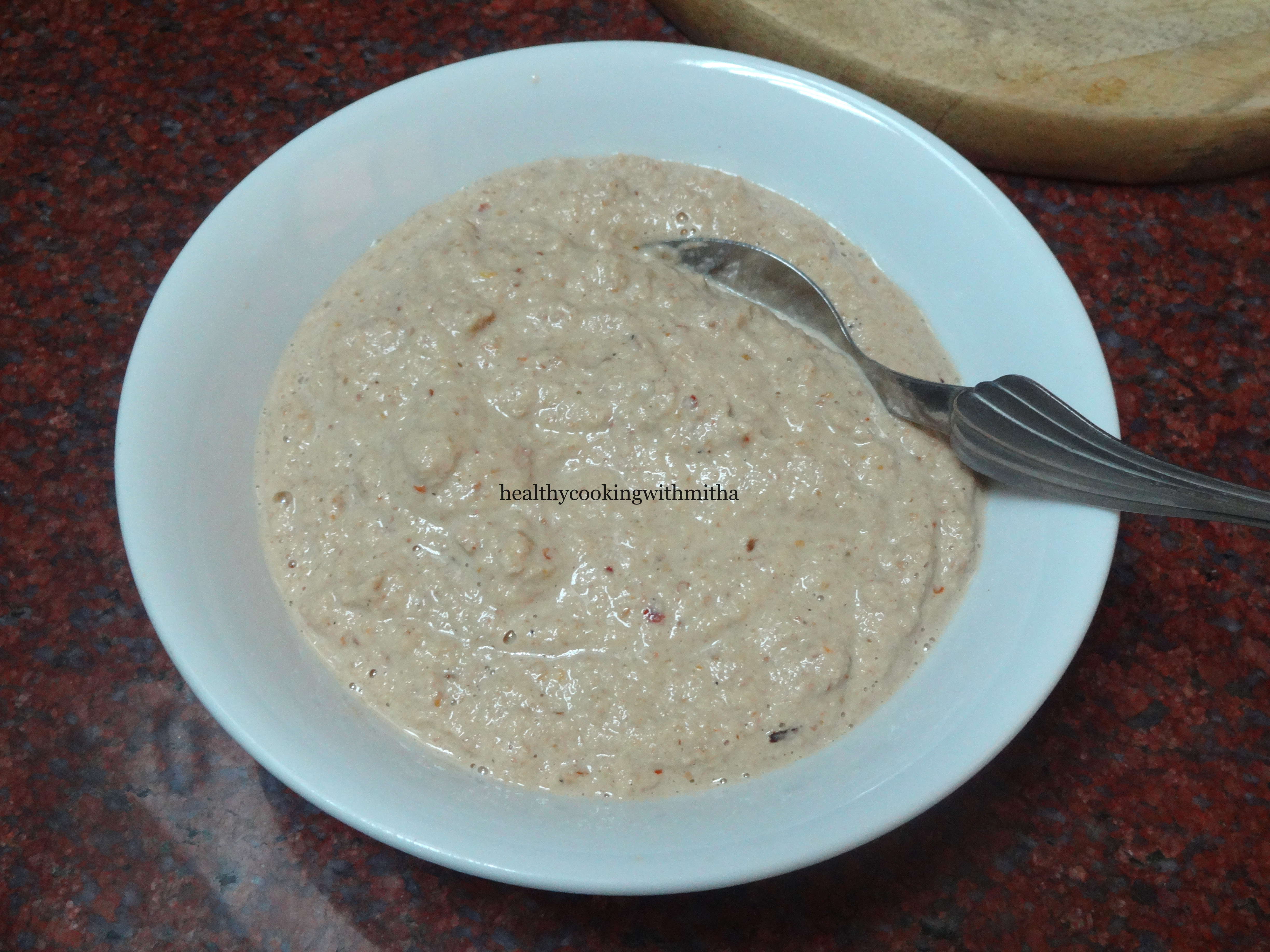
3. Now grind the onions, red chillies with roasted peanuts, salt and water to a smooth paste. Pour into a bowl.

4. Now heat oil in a pan, splutter mustard seeds, add curry leaves and hing. Fry for few seconds and pour over the chutney.

Notes:

* The peanuts should be roasted in medium flame till the rawness goes away and turns brown. Else the chutney will have a raw flavour. So make sure it’s roasted well.

* Hing in the seasoning gives a very good flavour. So don’t skip it.

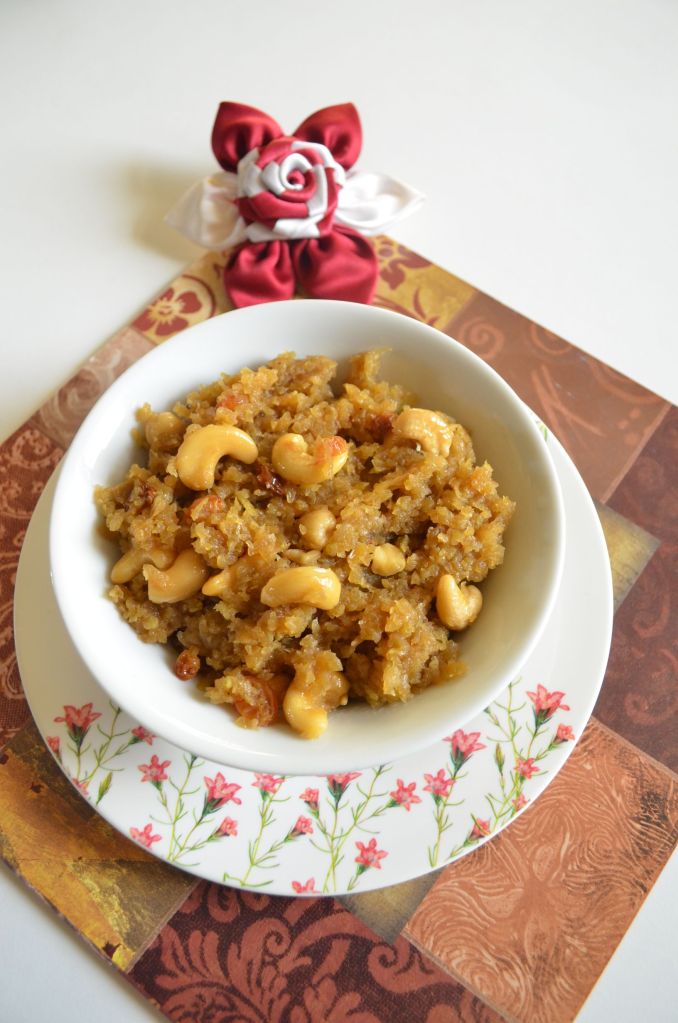
Bottlegourd Halwa / Gardudde Halwo/ Lauki Halwa

We have a ritual of making sweets every weekend to enjoy post dinner and I love to try different healthy desserts. This bottlegourd halwa was just an experiment as I was not sure if the kids will like it or not.

But to my pleasant surprise, they loved it a lot and my daughter asks it to be made every weekend. And what better that she enjoys a vegetable without making a face at it. Feels very happy when the family enjoys it.

If you are a Konkani, you might have already tasted this gardudde halwa sometime in your life. It is a famous dessert for special functions and occasions. Hope you all can make it at home and enjoy too just like how we do. Happy and healthy cooking.

Here is a picture of bottle gourd for those who don’t know which vegetable it is.

RECIPE:

Ingredients:

1 medium sized Bottlegourd/Gardudde/ Lauki/ Sorekai/ Chorakka (around 2 cups when peeled and grated)

3/4 Cup Jaggery

3 Tbsp Milk ( You can skip milk to make plain halwa)

2 Tbsp Ghee

1 Tbsp chopped Cashews

1 Tbsp Raisins

1/4 tsp Cardamom powder (optional)

Step by step recipe:

1. Wash well, cut the ends, peel and cut the bottlegourd into long slices. *Save the peels for a delicious upkari. Check notes at the end.

2. Grate the bottle gourd using a grater.

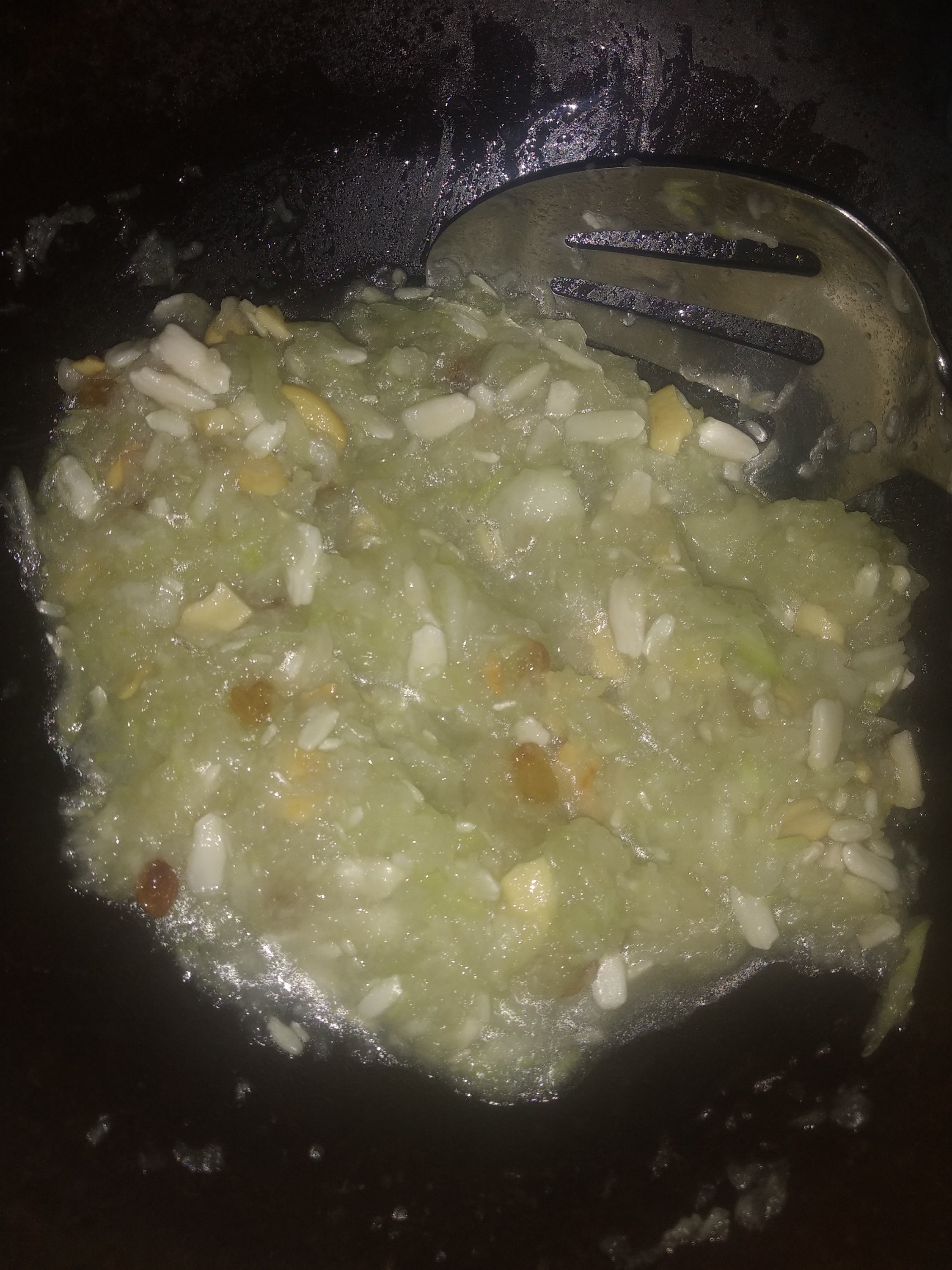
* If the bottlegourd is old and the seeds are huge, the seeds need to be discarded, else if the bottle gourd is fresh like in the above picture, you can grate along with the core and use the seeds too.

3. Heat ghee in a kadhai (I use iron kadhai to make this halwa). Fry cashews till it turns slightly brown and till raisins puff up.

3. Add grated bottlegourd and fry for few minutes till the bottle gourd changes colour.

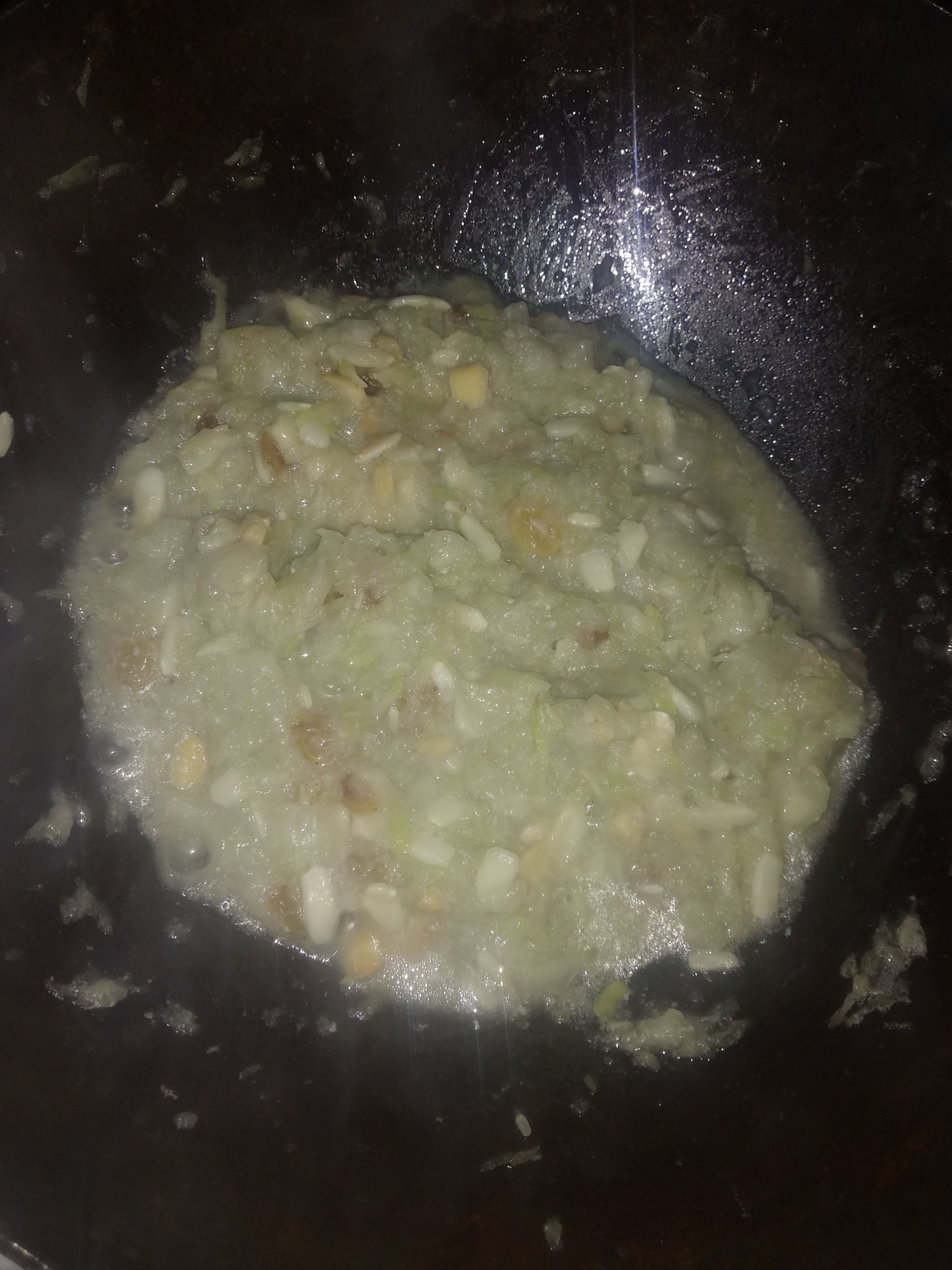
4. Add milk and cook till milk evaporates.

See how the milk has absorbed. Add jaggery only now.

6. Add jaggery (either powder or melted jaggery) and cook till the mixtures leaves the sides of the pan. Add cardamom powder. Mix well and remove from the flame.

Notes:

* For 2 Cups of grated bottle gourd, 3/4 Cup of jaggery turns out perfectly sweet for us. You can reduce or increase as per your taste.

* As mentioned above, if the bottlegourd has huge seeds, you will have to discard it while fresh bottlegourd can be grated along with the core.

* Please don’t discard the bottlegourd peels. Just chop the peels into small pieces. And make upkari with chopped potatoes. (season oil with mustard seeds, hing, green chillies and add peels and potatoes. Add salt and little water. Cook till they turn soft. Add grated coconut on top.) Turns out delicious.

* Fry well and let it cook well with milk before you add jaggery. Once you add jaggery, it won’t cook much. So do a taste test if it is cooked well before adding jaggery.

* Also allow the milk to absorb fully before adding jaggery, else the jaggery can curdle the milk.

* I sometimes skip milk to make plain bottle gourd halwa. It tastes delicious too.

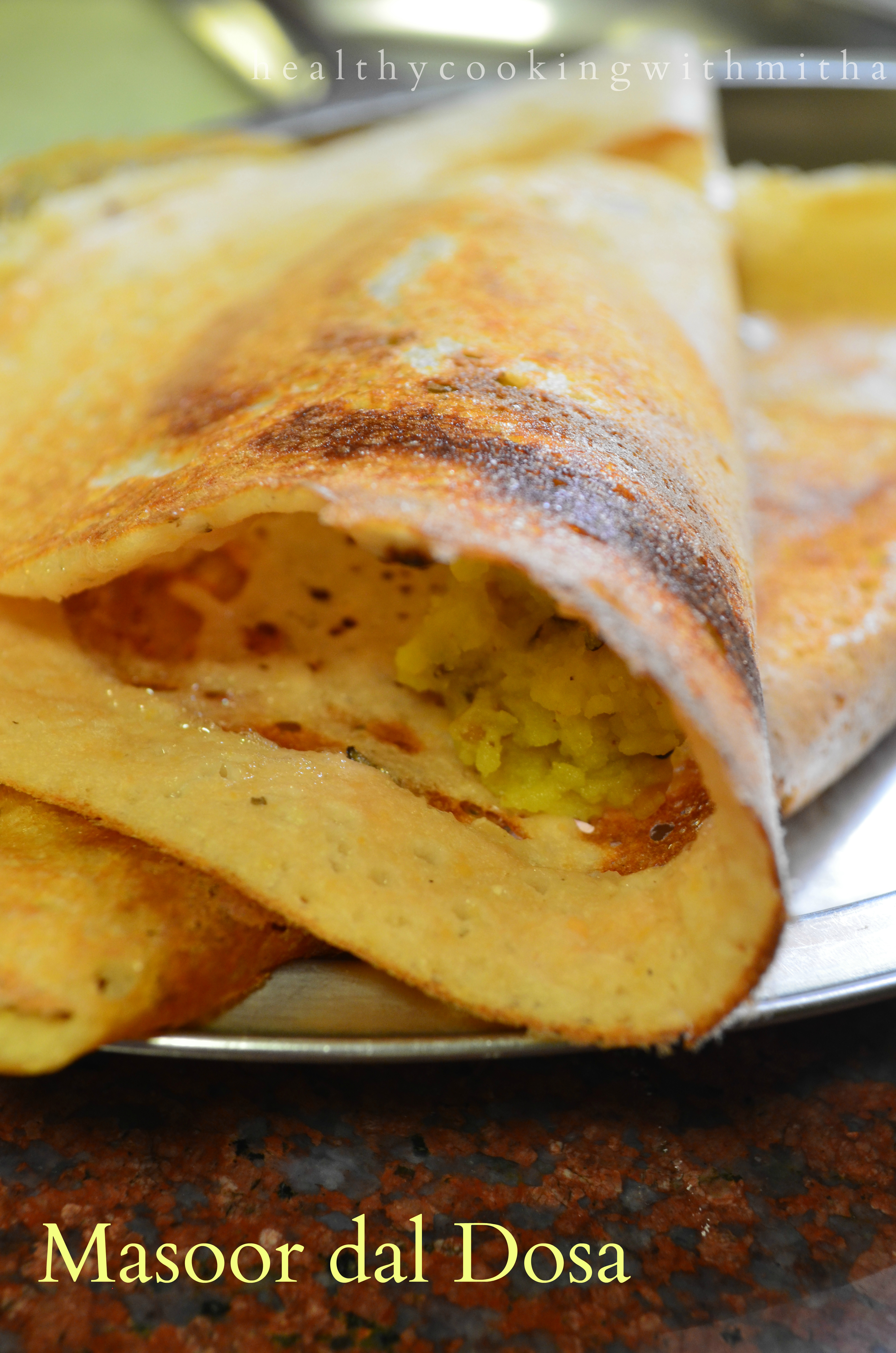
Masoor dal dosa

This is my 13th dosa variety and I am happy to add this delicious dosa to the collection. You can check all my dosa recipes here.

I got this wonderful recipe from a dear friend Priya R Shenoy many years back. We loved it so much that I buy Masoor dal only to make this dosa. Also since there is no rice in this dosa, it is perfect for people who want to avoid carbs and follow a high protein diet.

You can make dosas as soon as you grind the batter or ferment the batter overnight. Both ways the dosa tastes very good. Hope you all try and like it too. Happy and healthy cooking!

RECIPE:

Ingredients:

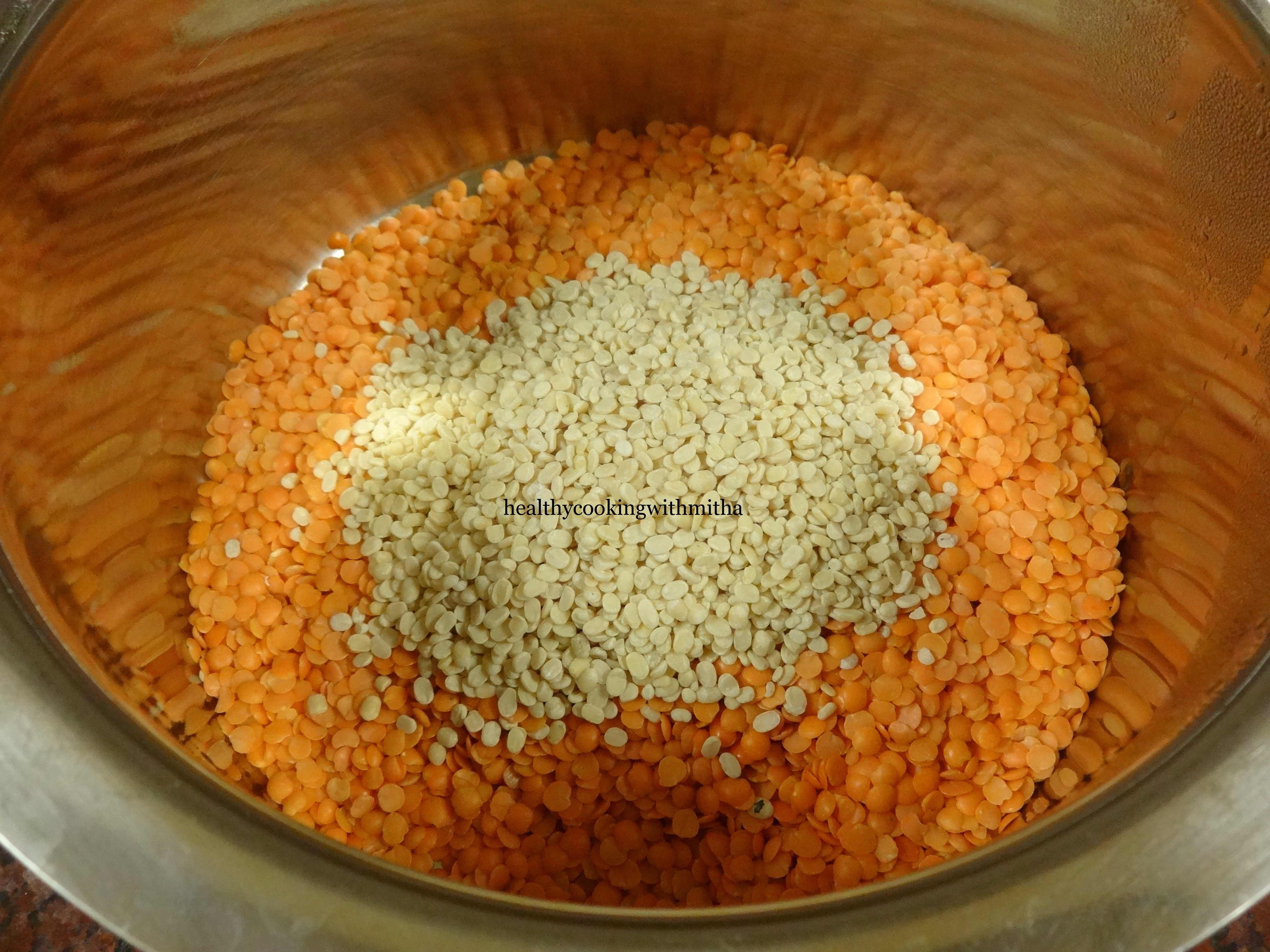
1 Cup Masoor dal (the split orange variety)

1/2 Cup Urad dal

1 inch Ginger piece

1/2 tsp Peppercorns (optional)

Salt to taste

Oil or ghee to cook the dosa

Step by step recipe:

1. Wash well and soak urad dal and masoor dal together for about 4 hours.

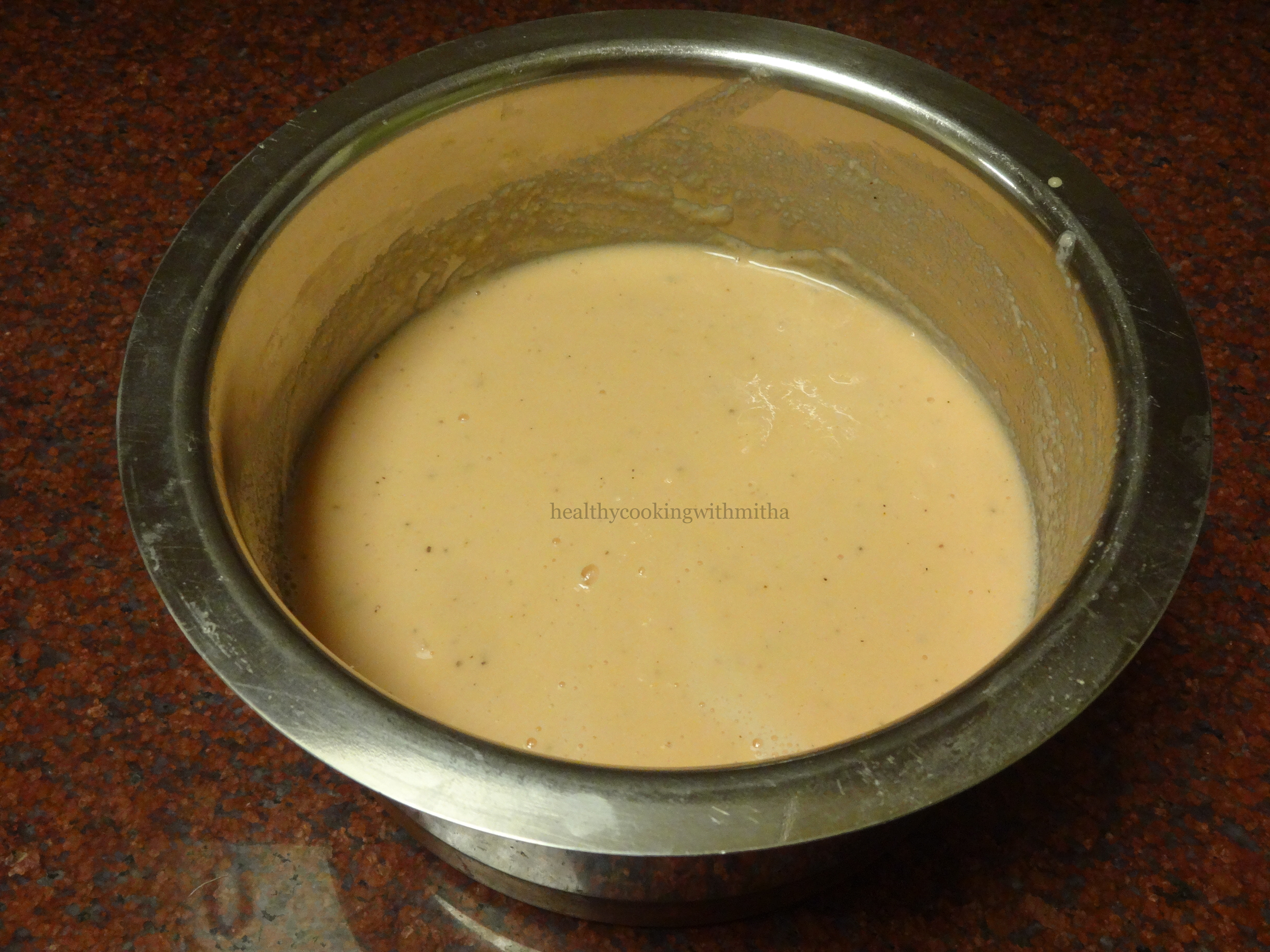
2. Add the soaked and drained dal in mixer grinder and grind to a smooth paste.

3. Now add ginger, peppercorns and salt. Grind to a smooth paste and pour into a large bowl.

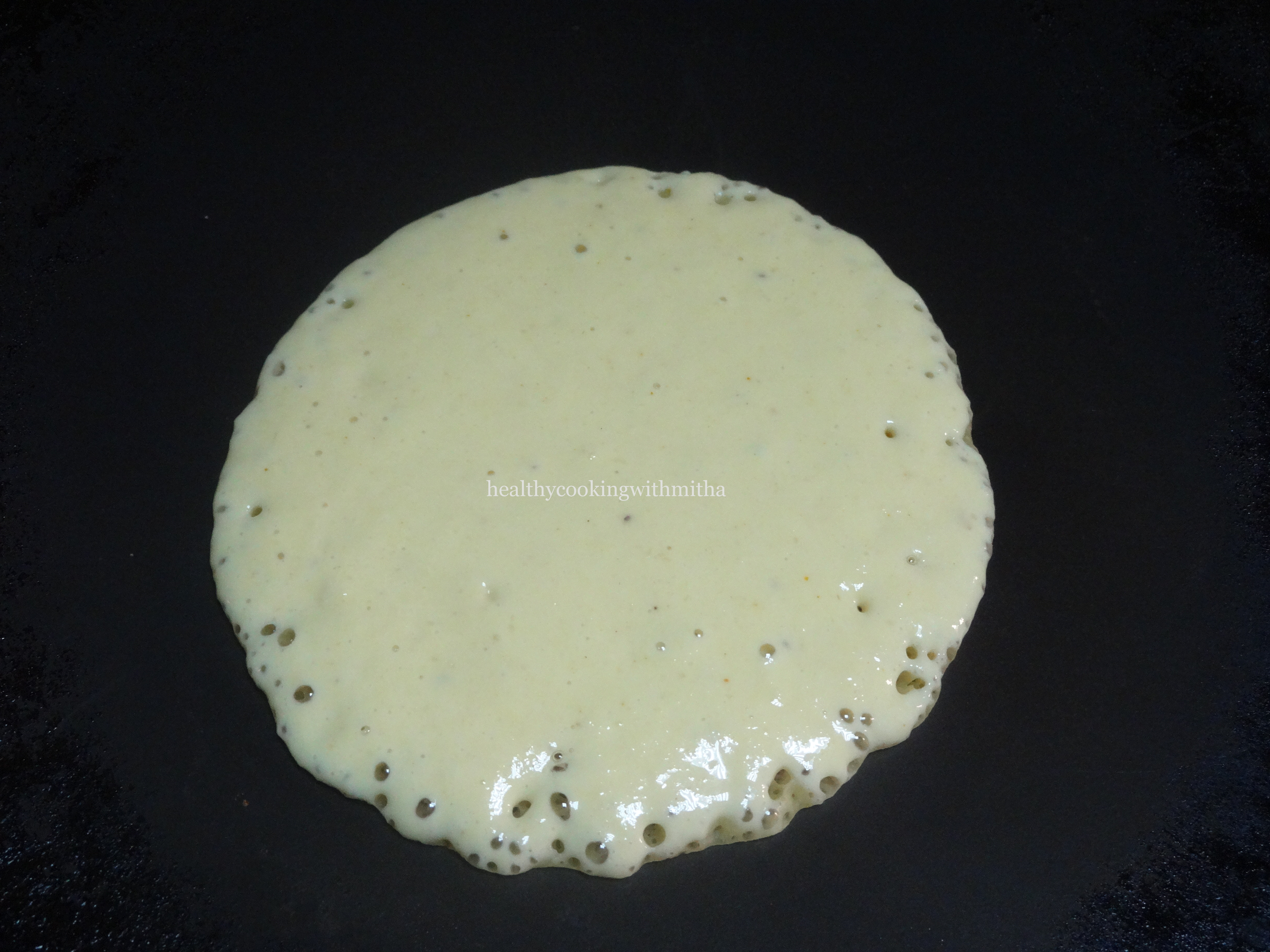
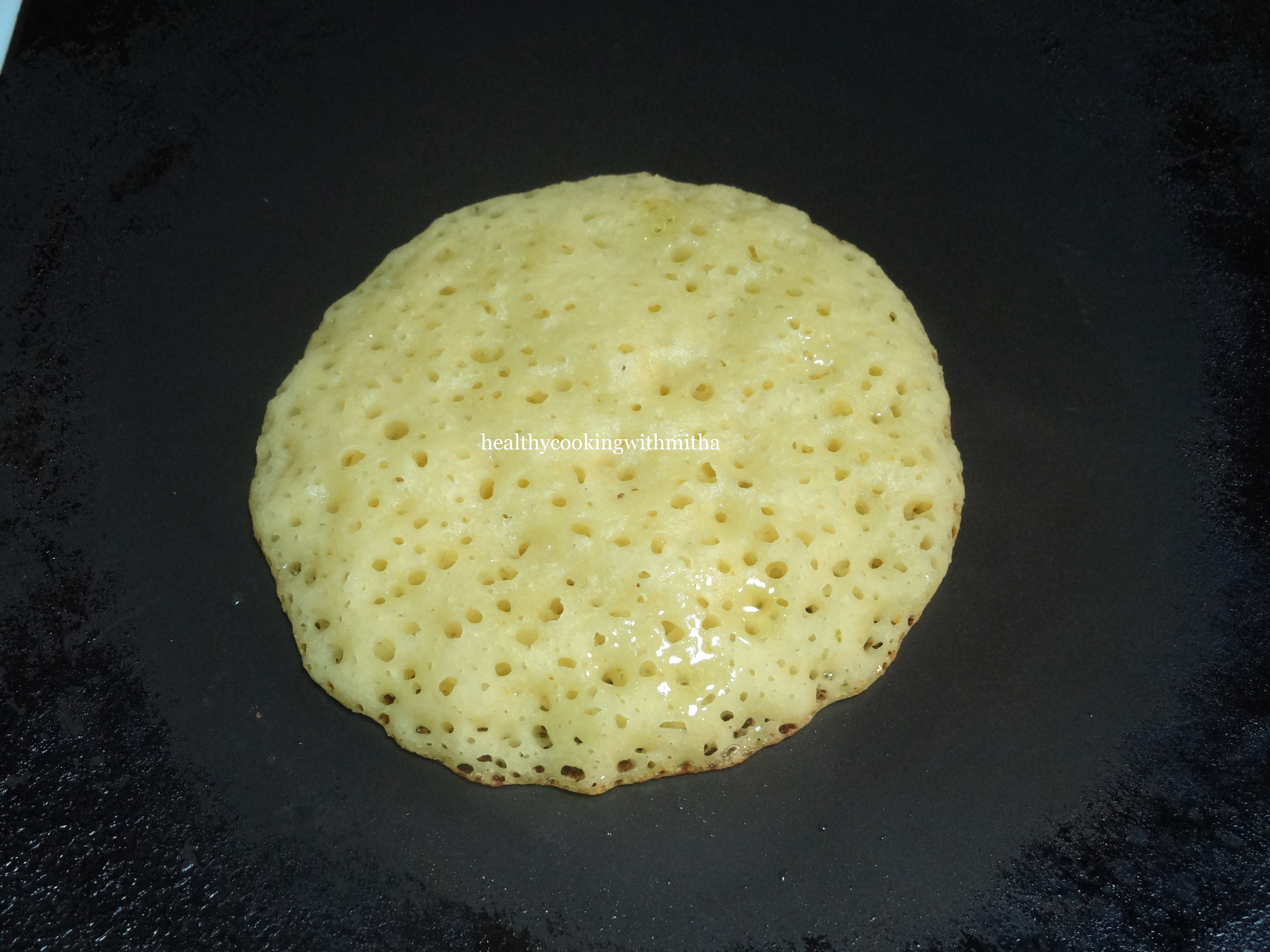
4. Now you can prepare dosas instantly. Heat a tawa and add a ladle full of batter in a circle.

5. Cover and cook till the surface cooks and the underside turns brown.

Serve hot with a chutney of your choice!

Note:

This dosa requires no fermentation but I do ferment it overnight if I am making for breakfast the next day. It increases the nutritional content of the dosa.

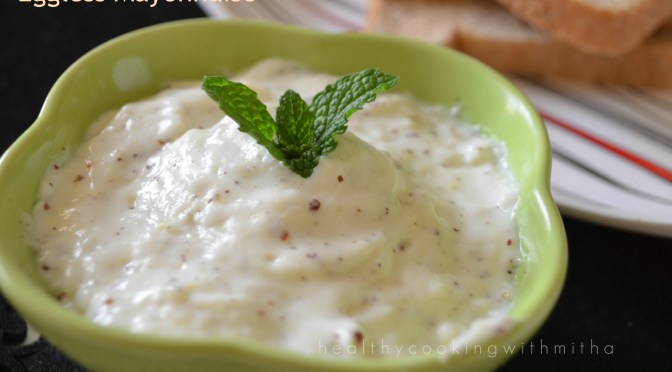
Eggless Mayonnaise

We are special kind of vegetarians. Don’t know how many of you are like us. We don’t eat eggs as such but eggs in cakes and other store bought foods is okay for us 😅. Many of our friends tease us for it as we are not strict vegetarian nor a perfect “eggetarian”. Somewhere a mix of both and hence fall in a unique category 😂.

So since we fall in this unique category, we don’t mind mayonnaise inside our sandwiches from cafes (as eggs are not visible to the eyes, you see 🙈).

But while making at home, I make this eggless Mayonnaise with my Whole wheat bread and it makes a delicious combination. Though this mayonnaise is not very healthy due to corn flour in it (corn flour is a refined flour and does not have nutrition), I make it as it’s far better than store bought ones which have loads of preservatives in it. Anyhow when making a sandwich with wheat bread and vegetables, the nutrition level raises.

Hope you all try and like it too. Happy and healthy cooking!

RECIPE:

Ingredients:

1 Cup Milk (to be used as 1/2 + 1/2 Cup)

3 Tbsp Corn flour

2 Tbsp Olive oil

1 tsp Sugar

1 tsp Vinegar

1/2 tsp Mustard seeds

1/4 tsp Pepper powder

Salt to taste

Step by step recipe:

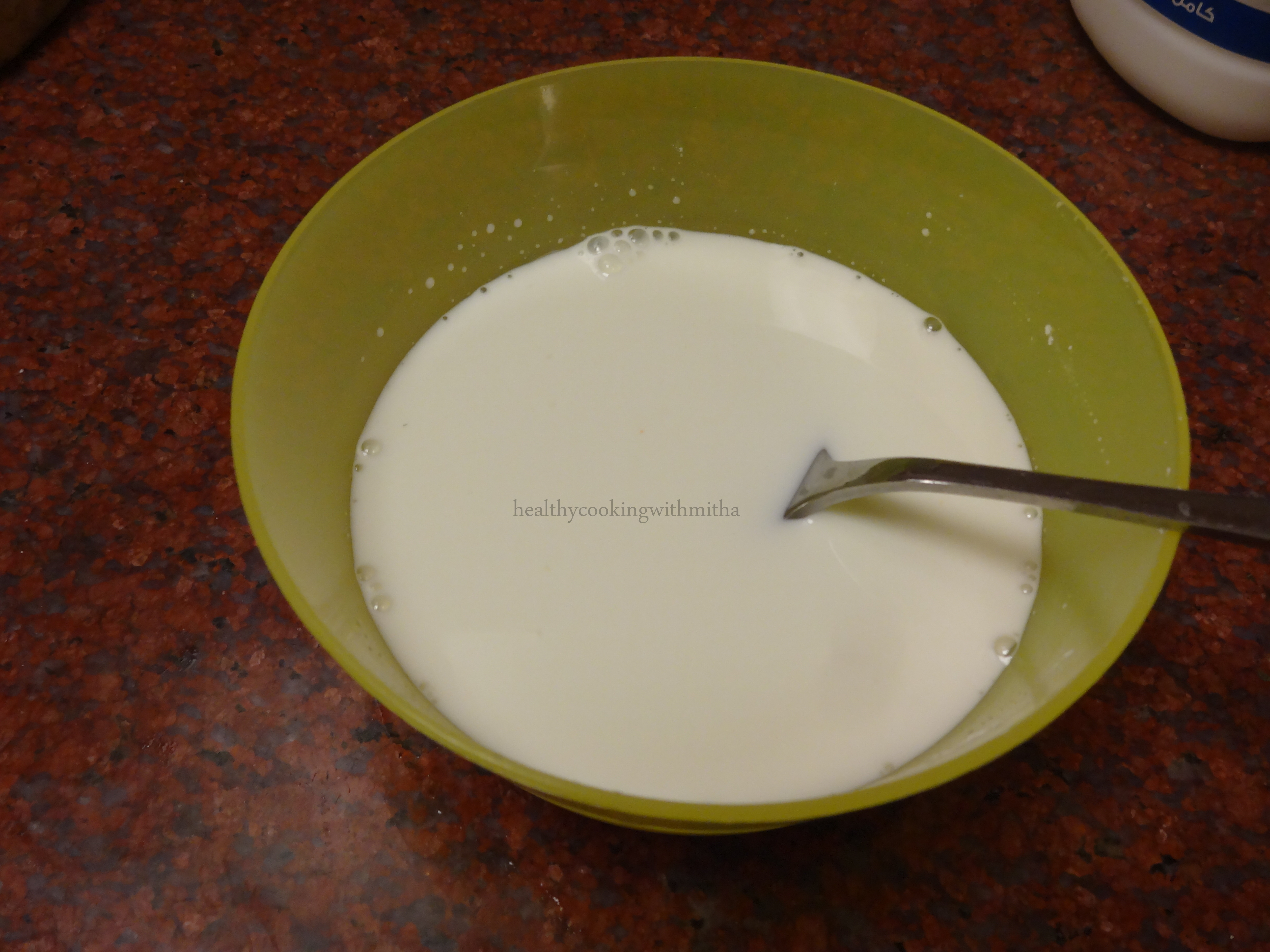
1. Take 3 Tbsp corn flour in a bowl. Add 1/2 Cup milk and whisk well to form a lump free mix. Keep aside.

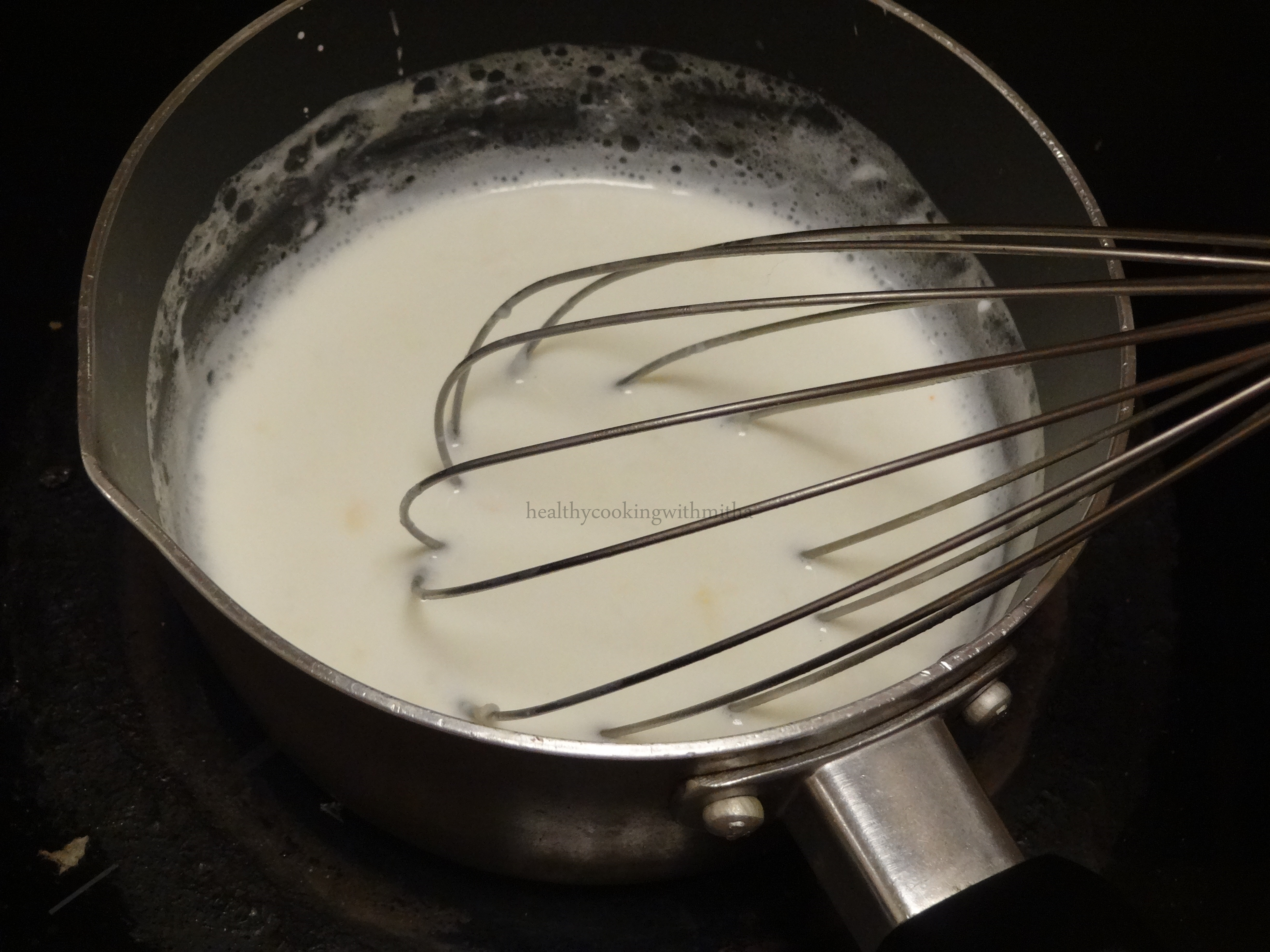
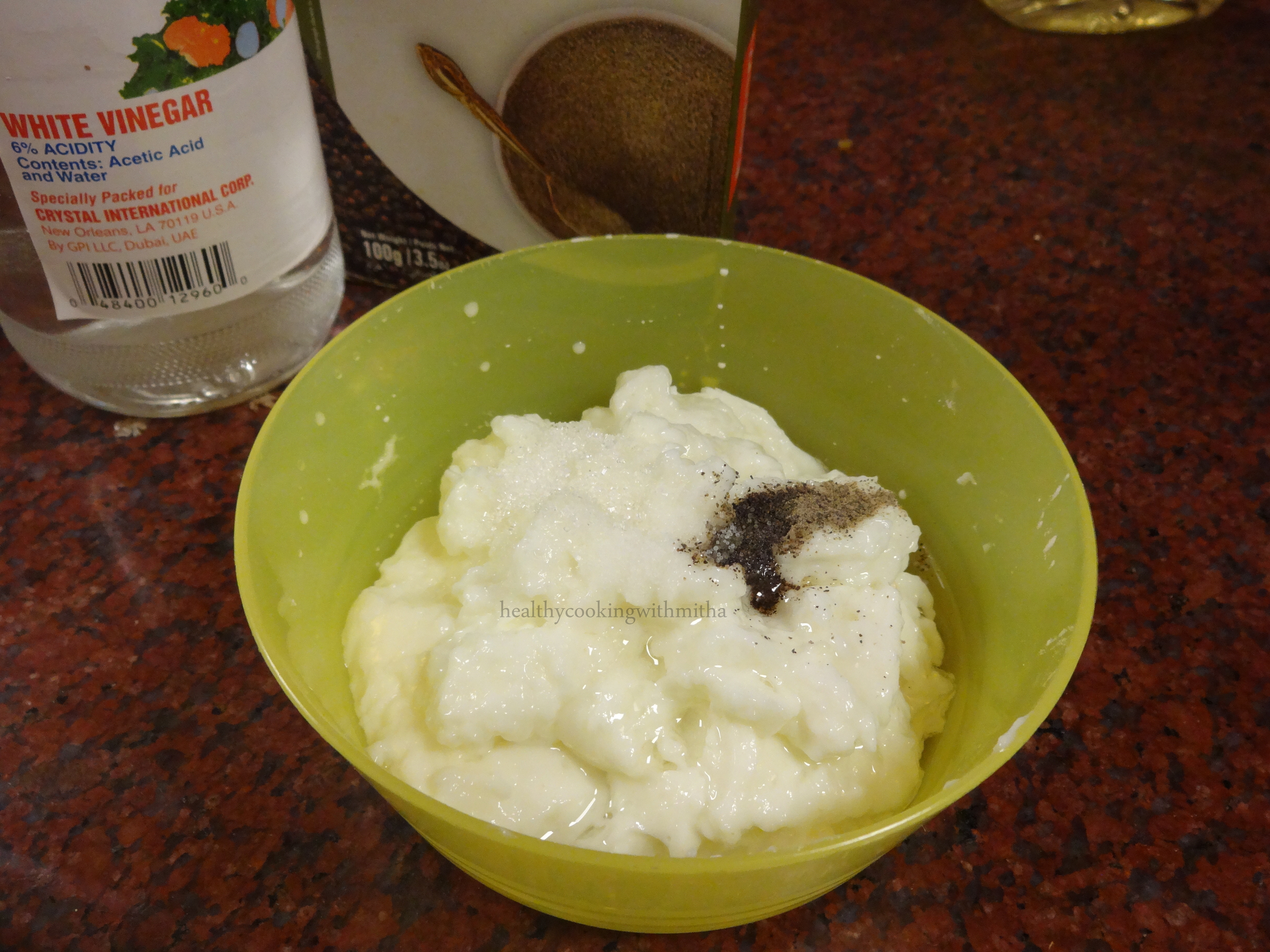
2. Now heat 1/2 Cup milk in a pan. When it turns hot, add the corn flour mix. Whisk continually.

Note: Be sure to stir the mix before adding as corn flour tends to settle at the bottom.

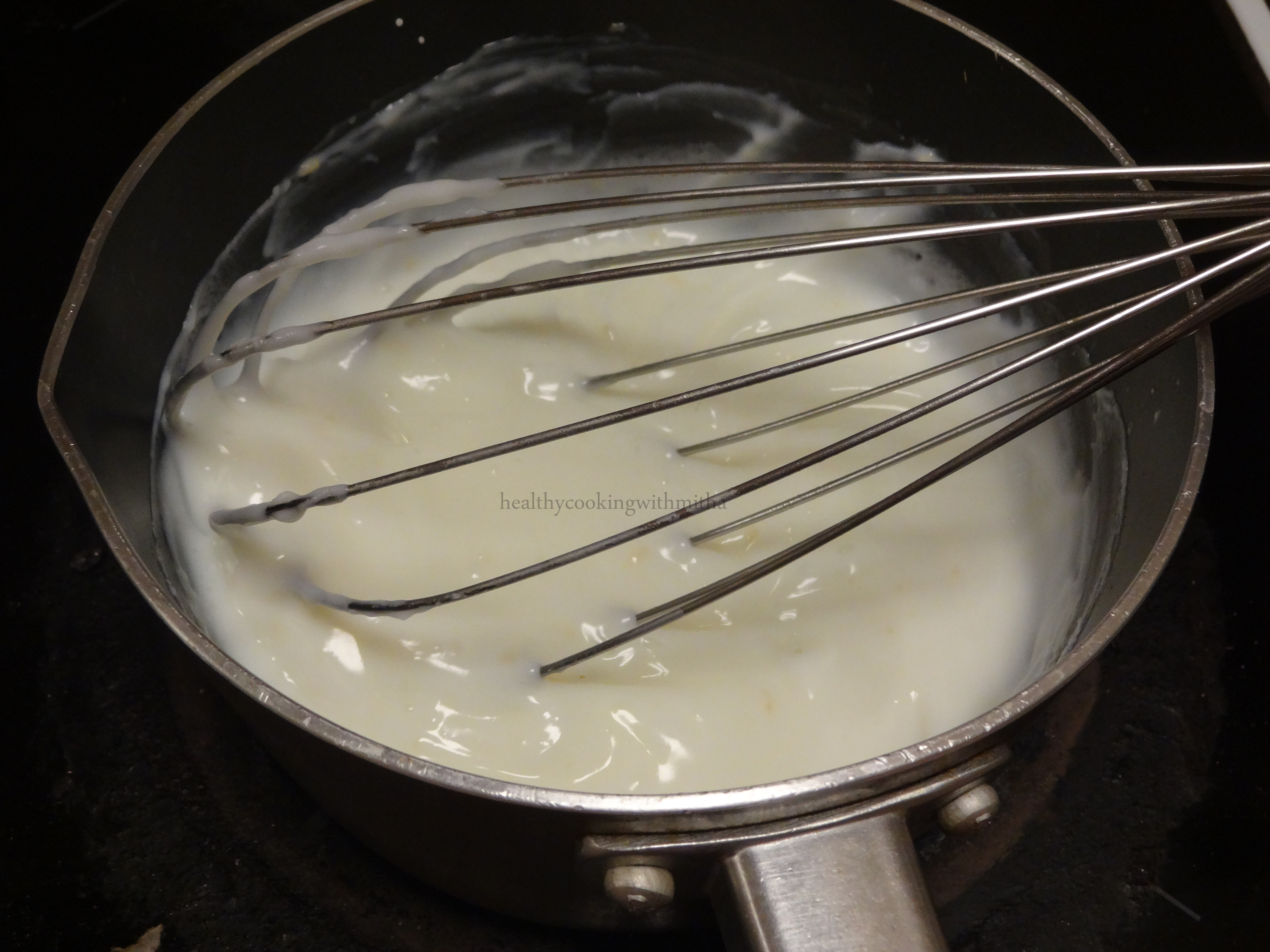
3. Whisk well for about 5 mins. It will get thick. When it turns thick and glossy like as shown in the picture, it is done.

4. Now remove and allow to cool. Grind in a mixer for few seconds. (to ensure that there are no lumps and the mayonnaise is smooth in texture.)

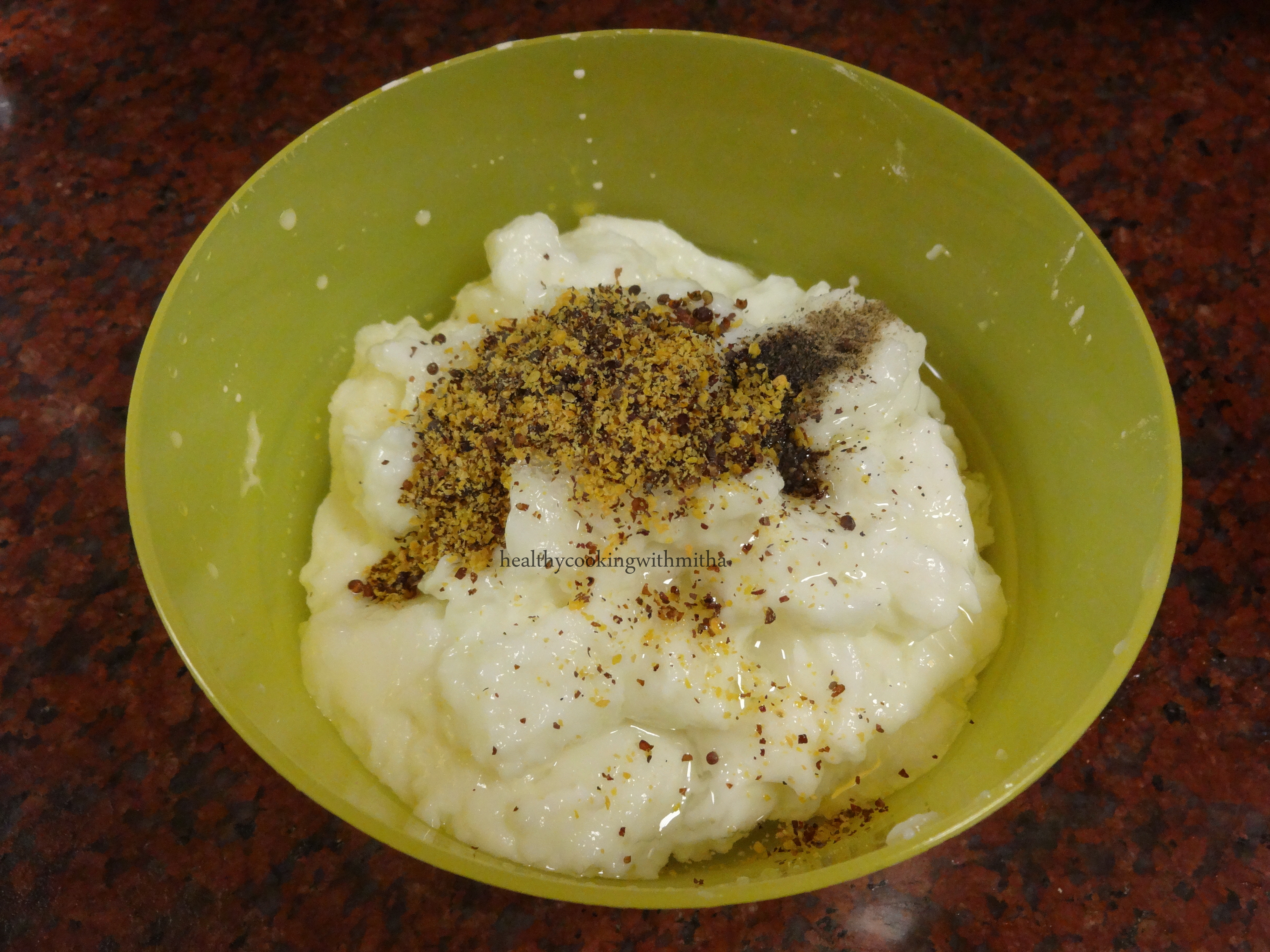
5. Now remove in a bowl and add sugar, salt, pepper powder, vinegar and olive oil.

6. Crush mustard seeds using a mortar and pestle.

7. Add it to the mayonnaise.

8. Mix well. Done!

Notes:

* Mustard seeds powder can be substituted with store bought mustard sauce.

* I add coconut oil instead of olive oil sometimes.

* Be sure to whisk the corn flour well with milk both times to avoid lumps.

* Grinding ensures smooth texture of the mayonnaise. So I would suggest you to not skip it.

* This tastes really similar to store bought mayonnaise which has egg in it or even the veg mayonnaise which has released in market. But sans any preservatives and is much healthier.

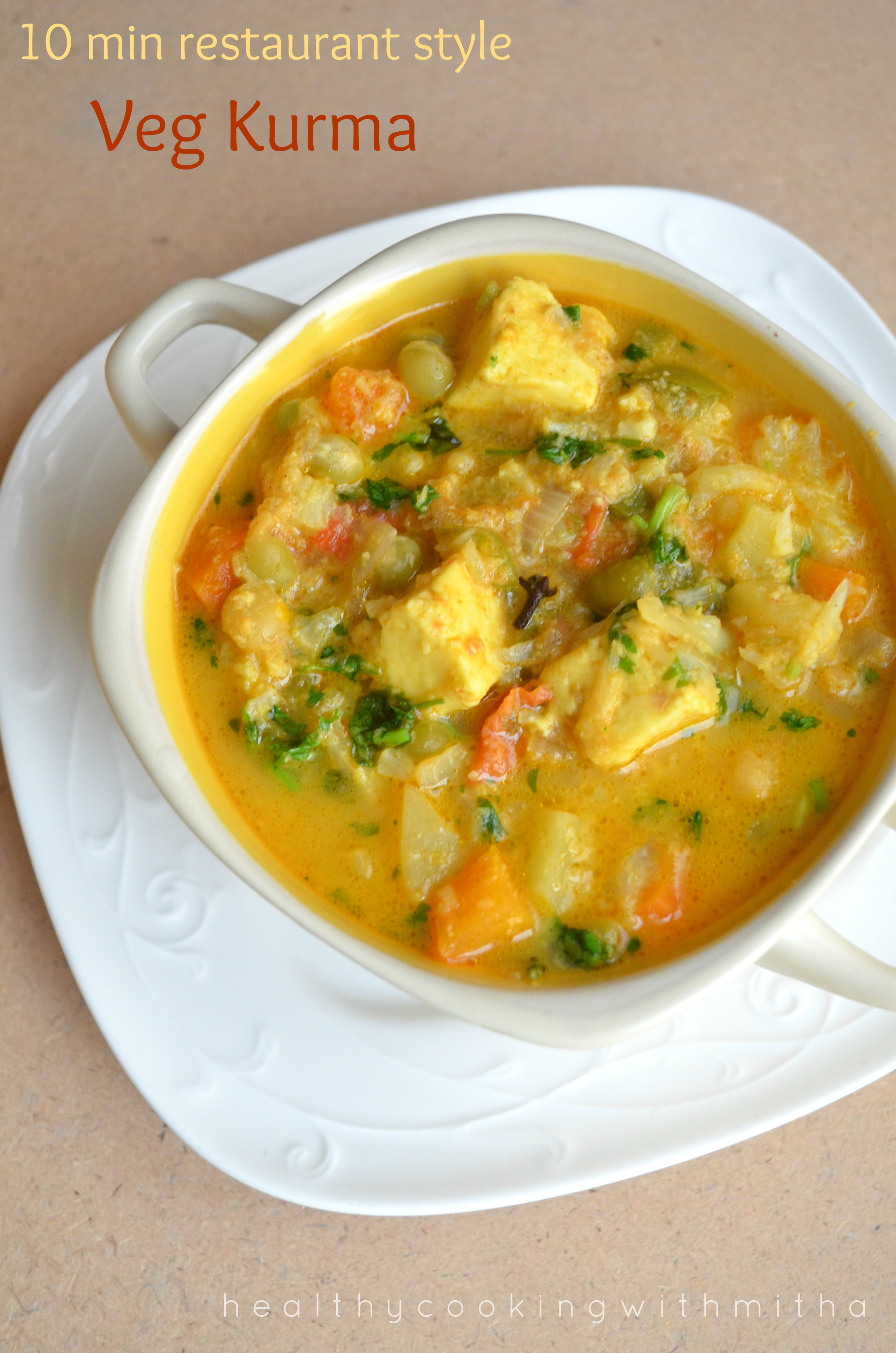
10 min Restaurant style Veg Kurma

I have tried many Kurma recipes in the past but once I tried this one, I did not have to try any other. It comes out too delicious for words. Although this technique was new to me, I found that cooking with almost zero additional water in the pressure cooker makes the Kurma taste amazing.

Whenever I make this Kurma, the husband comes to know through the aroma and he asks if it’s Kurma that is cooking 😂. You have to try it to know. I have made it for many get togethers and people love it a lot.

Best part of this curry is once the chopping is done, it hardly takes 10 mins. No sauteing or cooking for long time. I make this specially during weekend now when I don’t want to spend the whole day in the kitchen.

Hope you all try and love it too. Happy and healthy cooking!

RECIPE:

Ingredients:

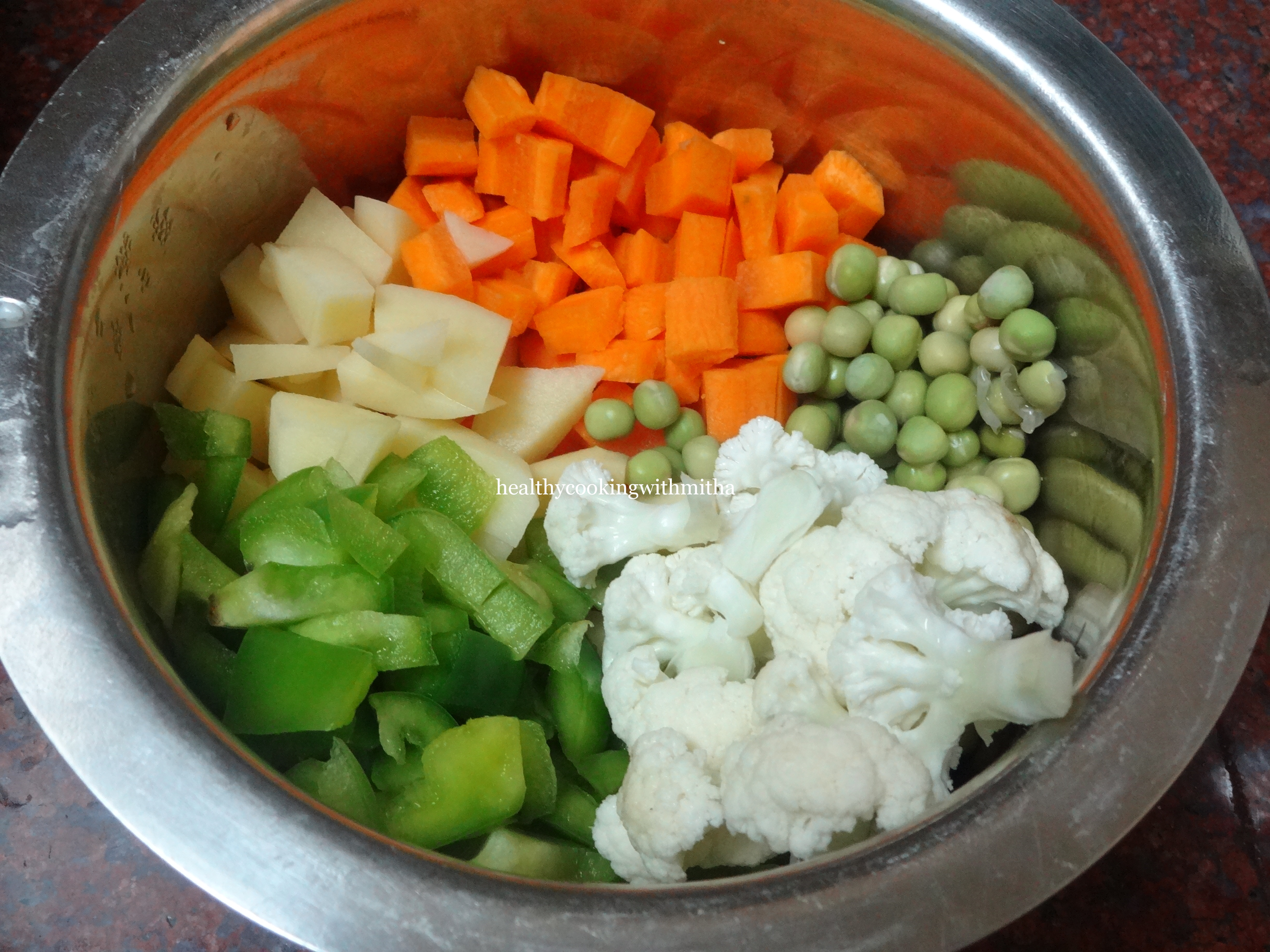
About 3 Cups mixed Vegetables (Potato, peas, carrots, capsicum, cauliflower)

1 Cup Paneer cubes

2 Tbsp Coconut oil

1 Tbsp Ghee

2 green chillies

1/2 inch Cinnamon stick

3 Cloves

2 Cardamon pods

1 large Onion, finely chopped

1 large Tomato, finely chopped

1/2 Cup Milk

2 Tbsp Coriander leaves, finely chopped

For the masala paste:

1/4 Cup Yogurt/ Curd

1/4 Cup freshly grated or desiccated Coconut

5 to 7 Cashews

3 to 4 cloves of Garlic

1 inch Ginger piece

1 tsp Red chilli powder

1 tsp Garam masala powder

1 tsp Coriander powder

1/2 tsp Turmeric powder

Salt to taste

Step by step recipe:

1. First add all the ingredients mentioned in the masala paste and grind to a smooth paste without adding water. Don’t forget to add salt too. Keep aside.

2. Keep the vegetables ready as well.

3. Now take a 2 liter or 3 liter pressure cooker. Don’t keep it on the flame. Add ghee and oil in the cooker. Also add cloves, cardamom and cinnamon stick along with green chillies. Bay leaf too if you have.

Note that I have not yet kept the cooker on the flame or stove top.

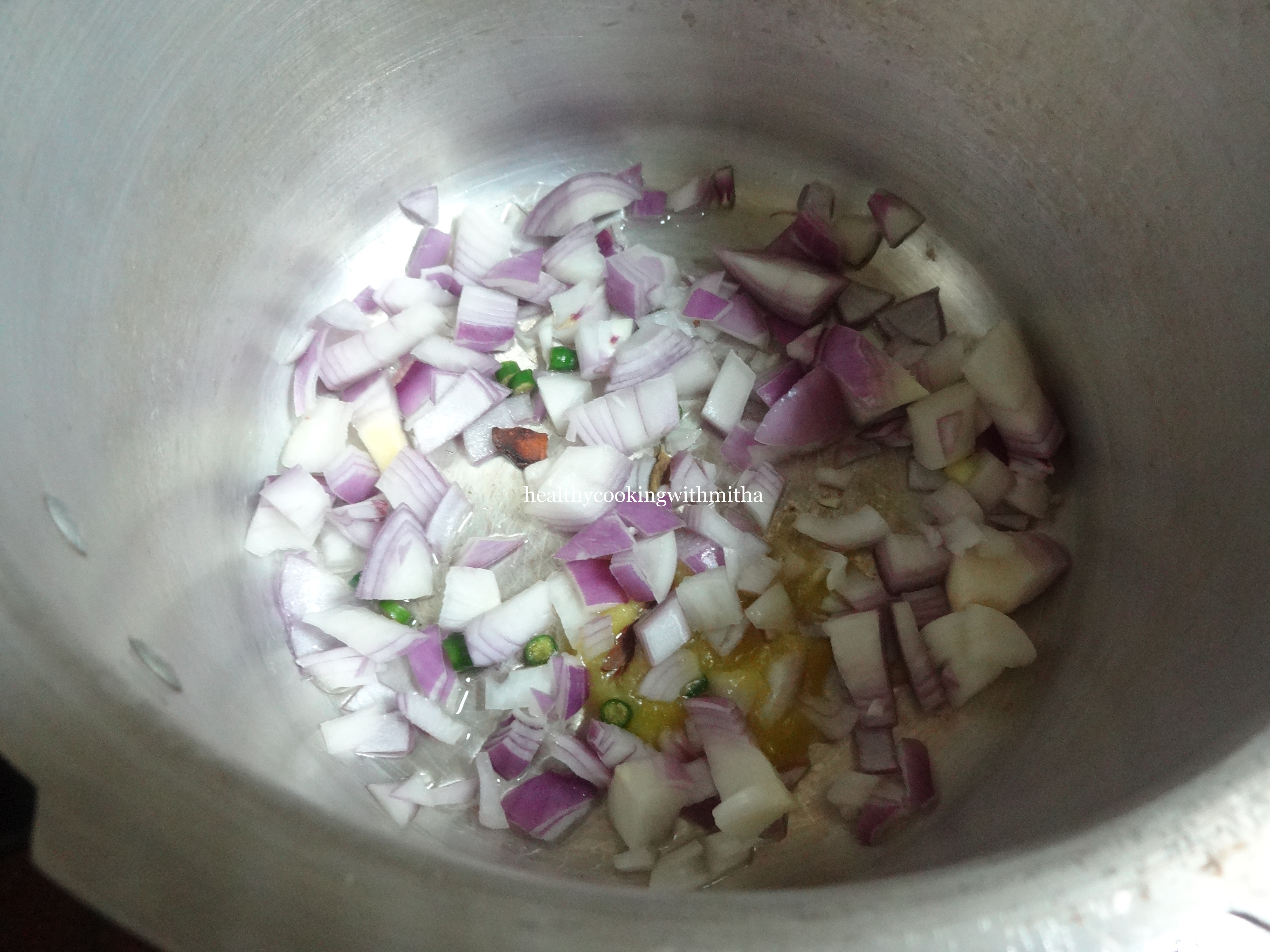
4. Now layer finely chopped onions evenly.

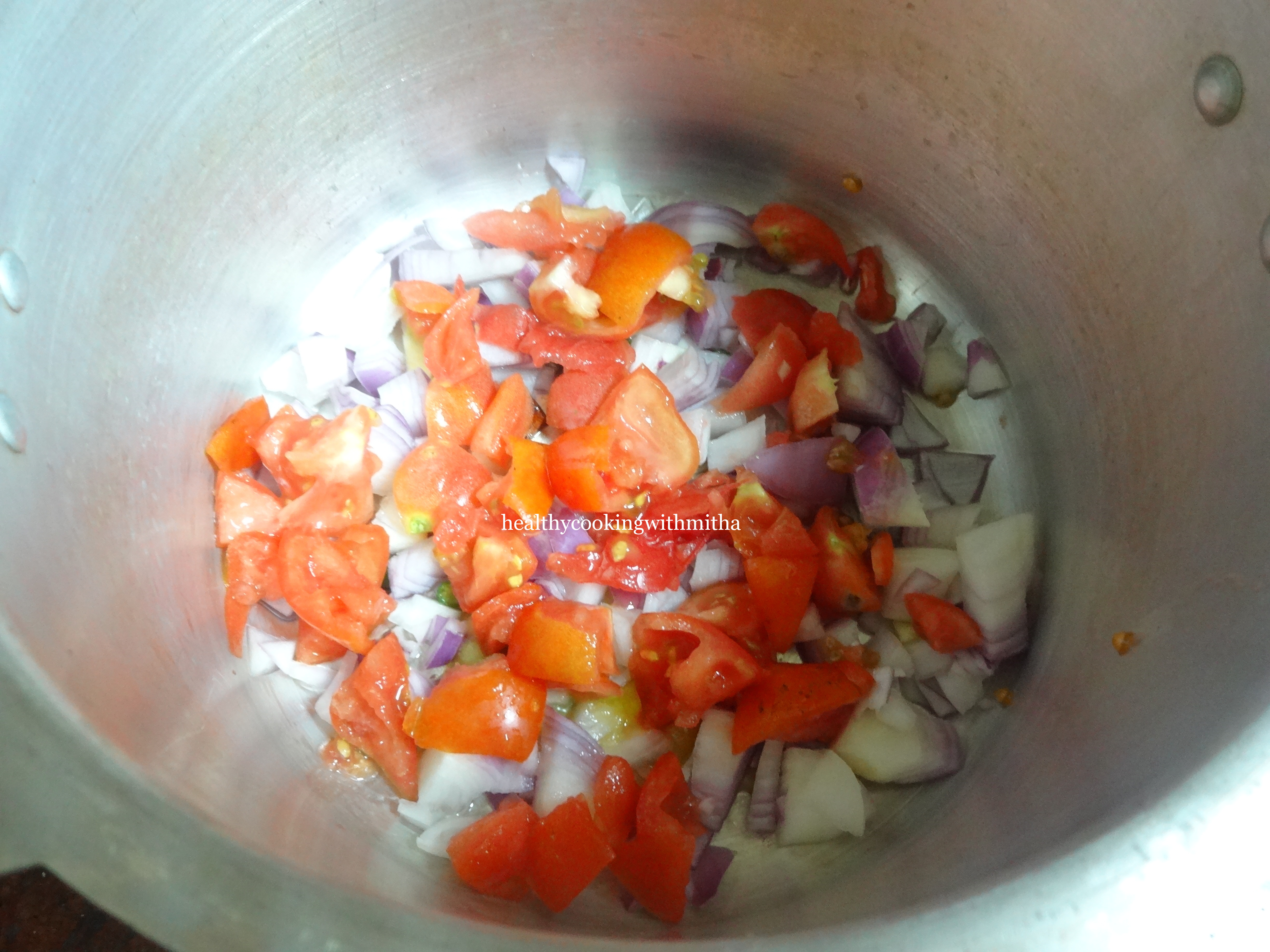
5. Layer tomatoes evenly too.

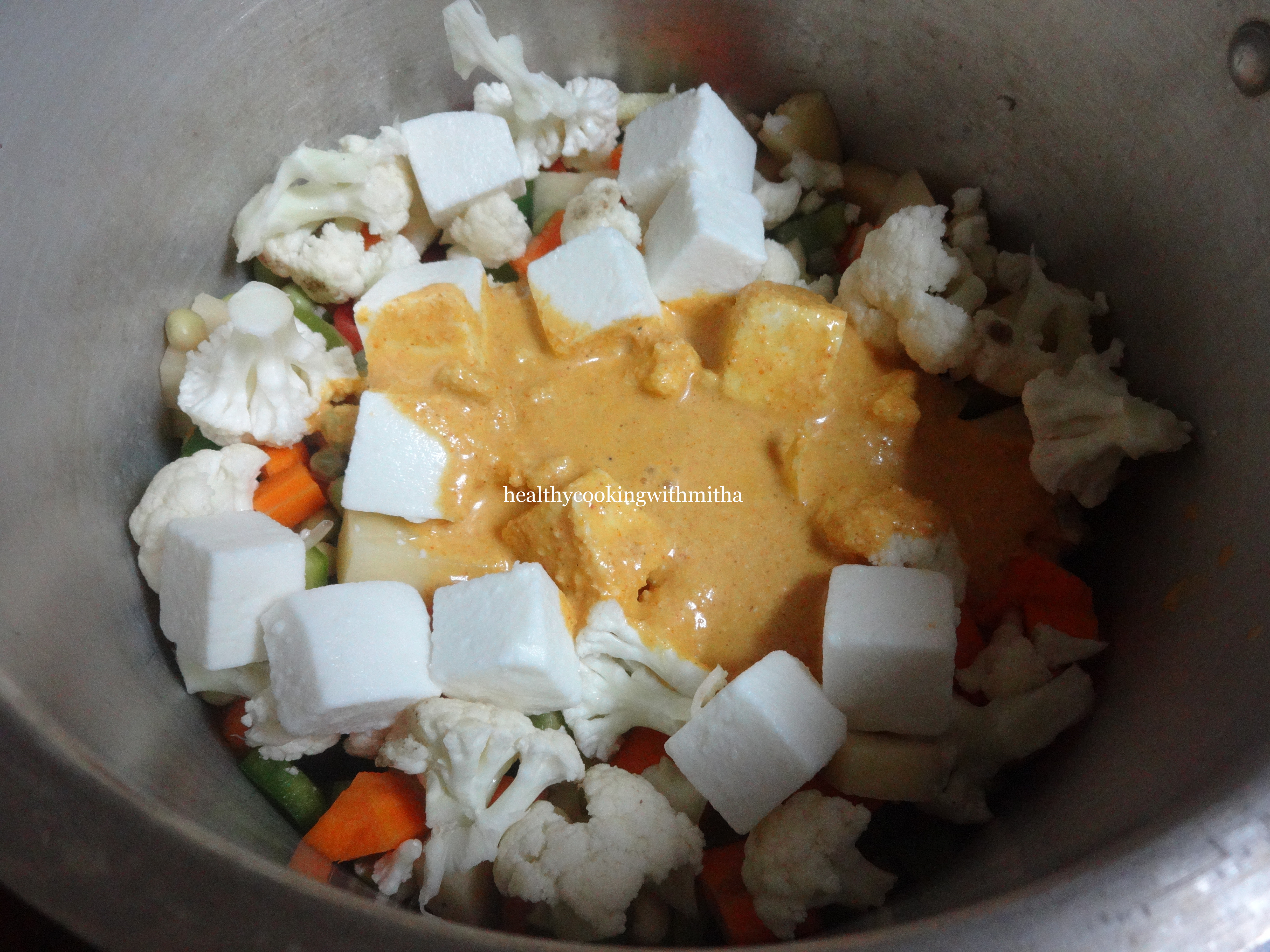
6. Layer the veggies after this.

7. Add paneer cubes layer over this.

8. Now add the masala paste as the top layer.

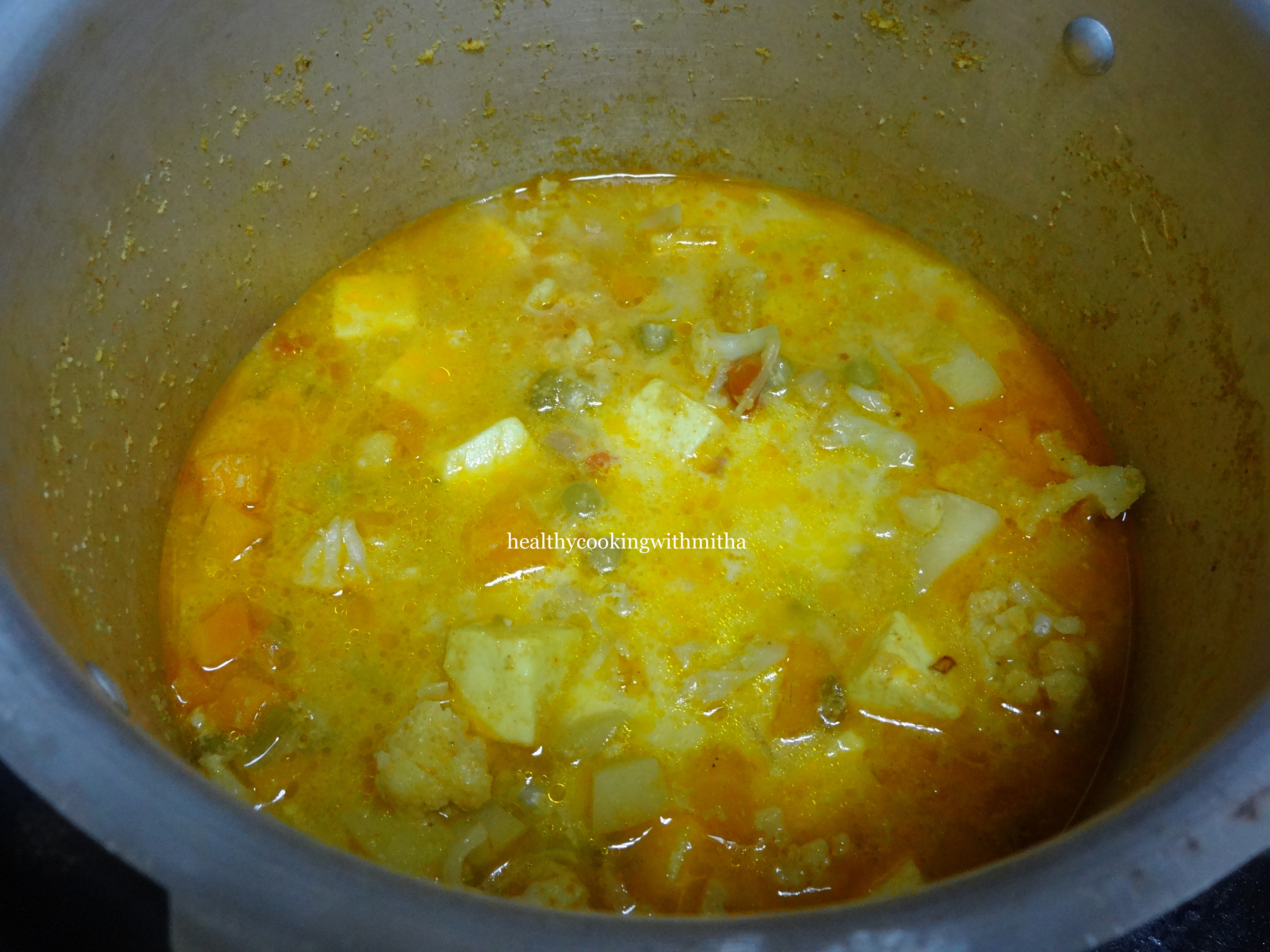
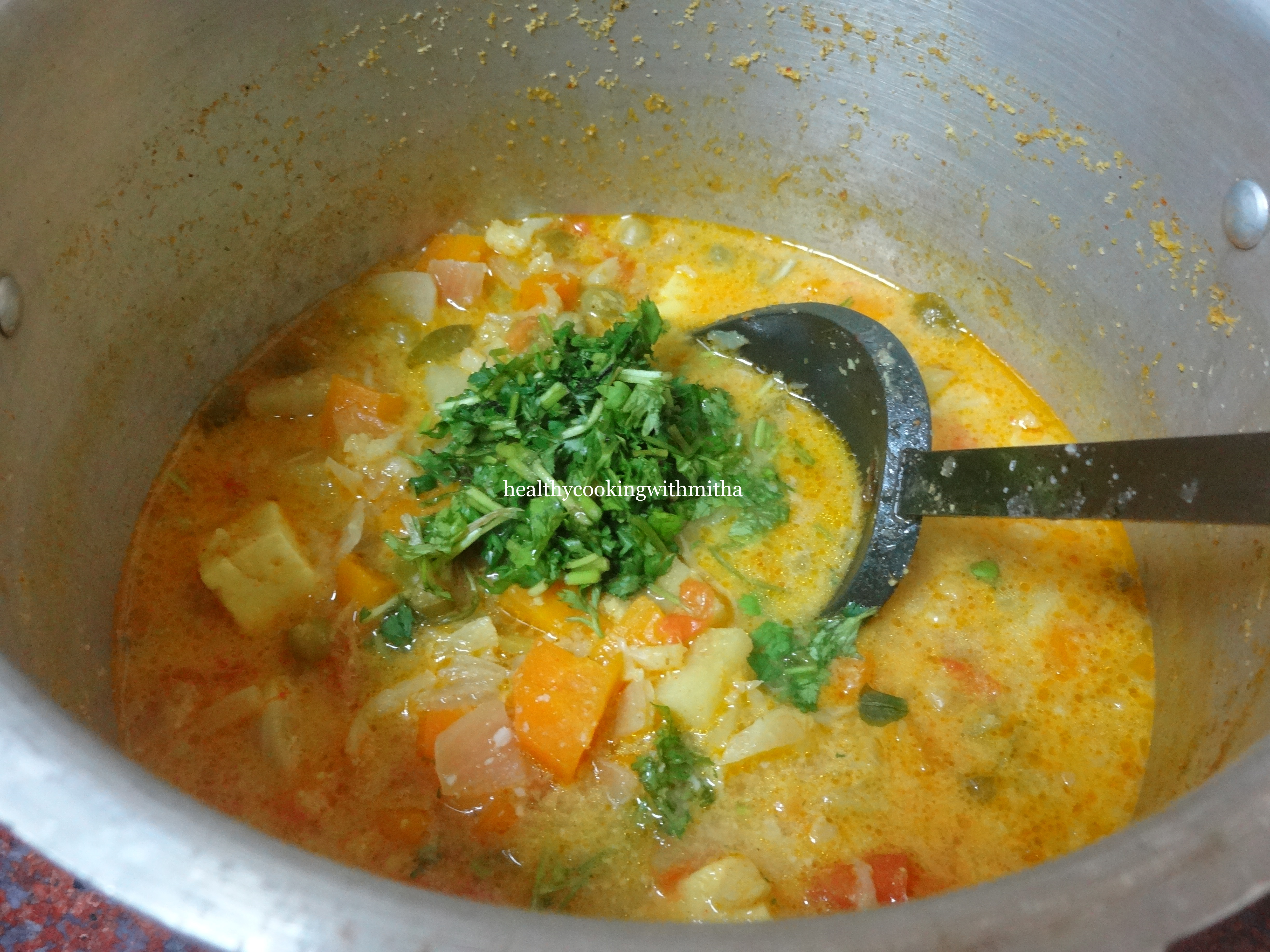
9. Now pressure cook the above layers on medium flame for 7 mins or till 3 whistles. There is no need to add water while cooking. The juices in the vegetables will release water and that’s what makes this Kurma tasty.

10. Allow it to cool down by itself. Now add milk and cook for about 2 mins.

11. Garnish with coriander leaves and serve hot with rotis or rice.

Notes:

* OPOS is a patented technique owned by Mr.Ramakrishnan. It is a copyrighted term. I have adapted this recipe from this site and since she used this technique for making this Kurma, I followed the same. I have no intention of owning this technique. The full credits to this technique goes to Mr Ramakrishnan Sir only.

* If you don’t know to use a pressure cooker, you can saute tomato and onions in the seasoning and cook the veggies with the masala while following all the steps in a kadhai.

* In the original recipe, it says to keep on high flame for 5 mins but it sometimes burnt my Kurma. So I keep the flame on medium for 7 mins. It works well for me.

* In case your veggies don’t cook when you open the cooker, cook after you add milk for 5 more mins.

* Don’t forget to add salt in the masala paste itself. It makes a huge taste difference if you add later.

* Also don’t add water at all while grinding the masala paste. The yogurt does the job well and you can see it while grinding.

* Paneer is optional. I add because we love it. You can also add any combination of veggies that you have.

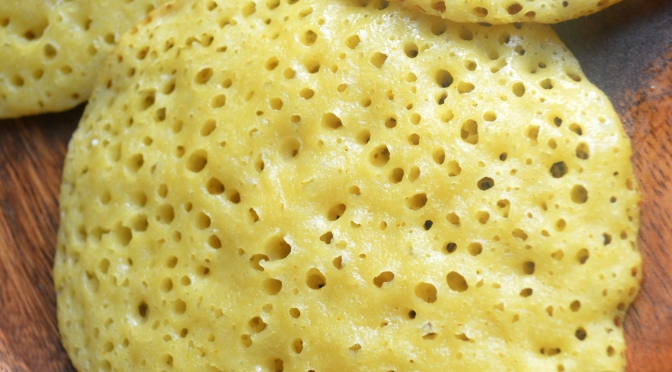
Magge Surnali | Mangalore cucumber sweet dosa

I have already posted the basic version of Surnali / sweet and spongy dosa. This version is like an upgrade to it by adding Mangalore cucumber. The addition has so many benefits like:

* The dosa turns out very soft and porous as you can see from the pictures.

* The aroma that the mangalore cucumber gives out is simply heavenly.

* You are adding a vegetable in your diet even without your knowledge. (This is the main reason I make these dosas atleast once weekly. Kids love it and they don’t realise they are eating a vegetable hidden in it 😁)

There was one more reason last year why I made this dosa too often. My husband loves gardening had planted these Mangalore cucumbers from seeds that he got from the core of store bought ones and we had a yield of about 50 of them from our kitchen garden. Yes 50!!!! Here is a picture of some of them.

Since they have a very good shelf life, I kept it as such on counter top and it lasted us a good 6 months. Looking at them everyday made me so happy. ♥️

Sharing the dosa recipe for all of you to try and enjoy too. Happy and healthy cooking!

RECIPE:

Ingredients:

2 Cups of peeled, cored, cubed Mangalore cucumber / Magge/ Velarikka

2 Cups Raw Rice (Any variety of white rice)

1/2 Cup grated coconut ( fresh/ desiccated)

1 Cup Beaten rice/ Poha

1/2 Cup Curd

3/4 Cup Jaggery

1 tsp Turmeric powder

Salt to taste

Ghee to cook the dosa

Recipe:

1. Wash well and soak the raw rice for 2 to 4 hours.

2. Take the peeled, cored, cubed mangalore cucumber and grind to a fine paste.

3. Now add soaked rice along with Poha, jaggery, coconut, curd, turmeric and salt to a smooth paste. Add buttermilk instead of water while grinding for spongier surnalis. Pour into a steel vessel. Mix well with hands to start fermentation.

5. Keep aside covered for 8 to 12 hours or overnight.

6. Take a ladle full of the batter and pour a thick dosa. Add ghee on top.

7. Cover and cook on low flame till the dosa cooks. (This dosa requires low flame to cook. Else it will turn black due to jaggery in it.)

8. Remove and serve hot with butter.

Notes:

* Any variety of white rice ranging from Sona masoori to short grain white rice (used for eating) works well to make this dosa.

* You could substitute curd with buttermilk.

* Ensure the batter is a slightly thick ( not very thick) smooth paste and not watery to get perfect surnalis.

* The amount of jaggery is to taste. You could increase or decrease as per your taste. You can also skip jaggery and make plain dosas with Mangalore cucumber.

* I substitute Mangalore cucumber with watermelon rind ( the white part) sometimes and it tastes delicious as well.

For regular Surnali without Mangalore Cucumber, you can try this recipe:

Surnali

For more Dosa recipes, check my Dosa Corner page.

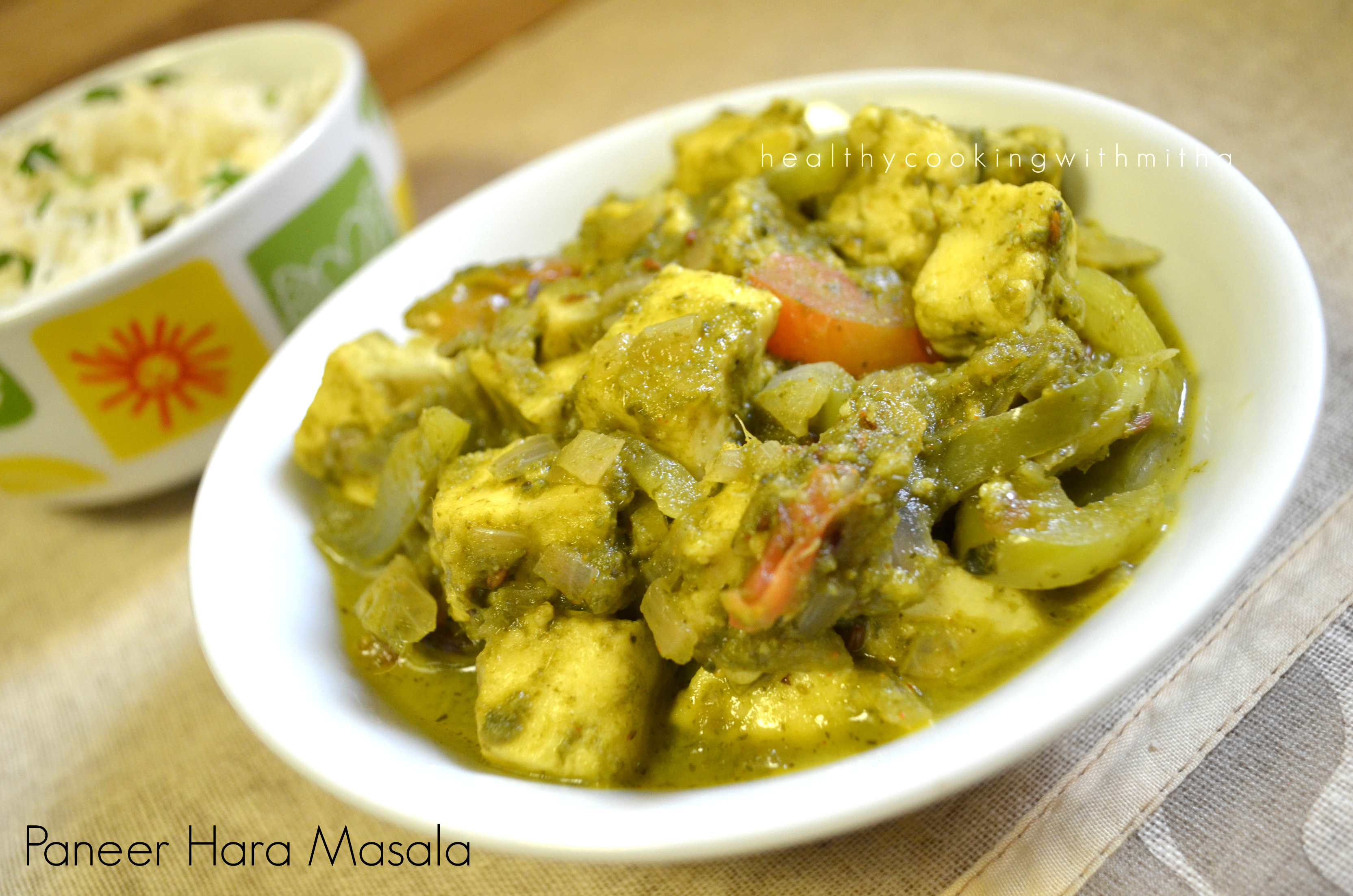
Paneer Hara Masala

Paneer is the star at my house and we all love paneer very much. But during both my pregnancies, I could bear to even smell it. And right after I delivered, my paneer love is back again. Weird right? 😁

The funniest part is both my kids are huge fan of paneer. So I ask them always, what happened when you were inside me? Why didn’t you like it then? 😂😂 I know I sound crazy 🙈

Anyhow this paneer Hara masala was an experiment with using the same masala that I use for Amma’s Carrot pulao since we love the aromatic masala paste. And it turned out super delicious. So was born paneer “Hara” masala, Hara meaning green in hindi.

Sharing this easy recipe with all you. Happy and healthy cooking!

RECIPE:

Ingredients:

200 grams Paneer cubes

1/2 Cup thinly sliced Capsicum

1/2 Cup roughly chopped Tomato

1/2 Cup finely chopped Onion

1 tsp Red chilli powder

1/2 tsp Garam masala powder

1 tsp Jeera/ cumin seeds

Salt to taste

1 Tbsp Oil/ Ghee

For the masala paste:

1/2 Cup Coriander leaves

1/4 Cup mint leaves

3 green chillies

3 cloves of Garlic

1/2 inch Ginger

Step by step paste:

1. Add the ingredients mentioned in the masala paste and grind to a smooth paste. Keep it aside.

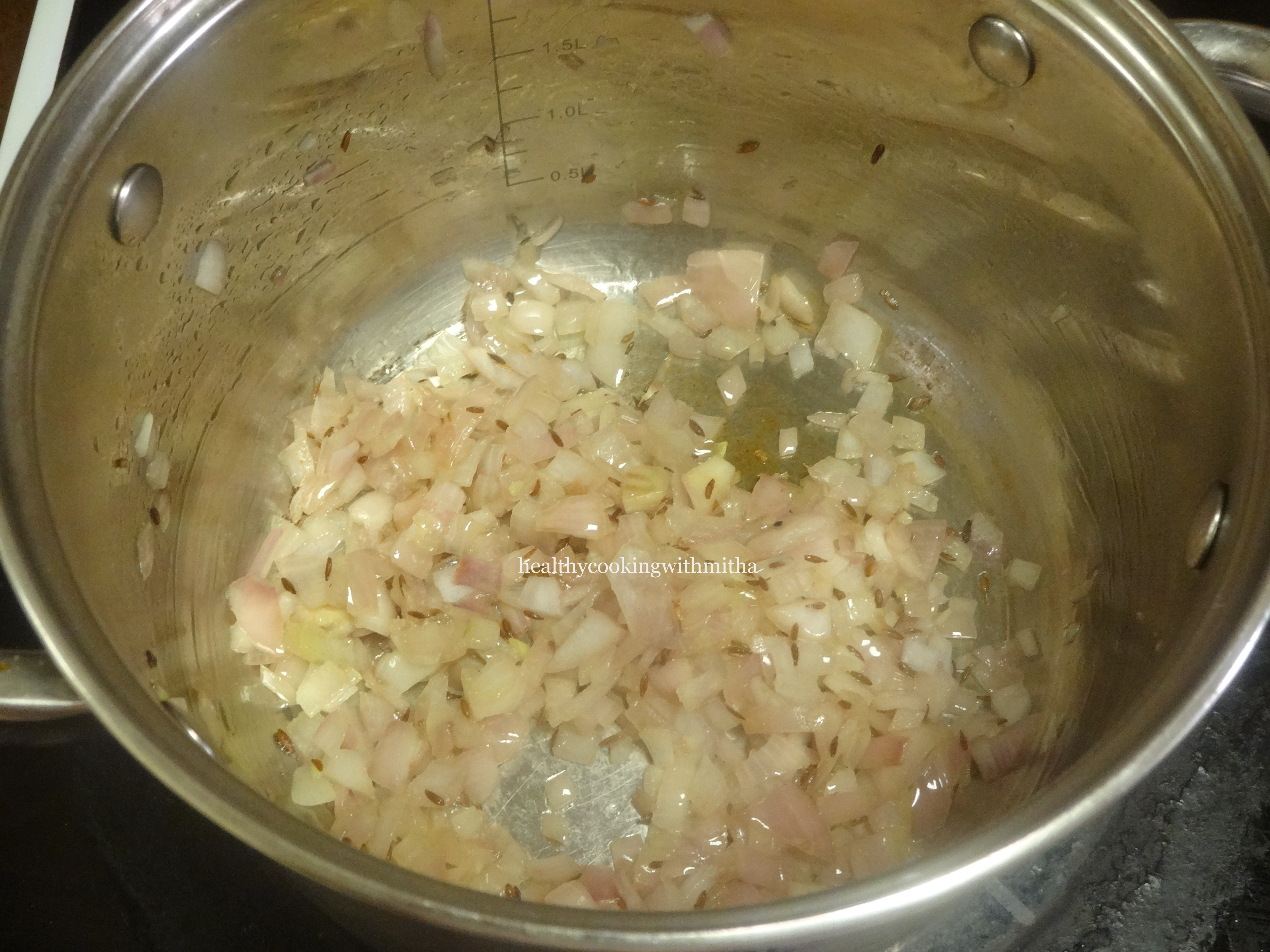
2. Heat oil in a pan and add Jeera. Add chopped onions and fry till it turns translucent.

3. Add the ground masala paste and cook for few minutes till it turns dry.

3. Now add capsicum and tomatoes and mix well.

4. Now add red chilli powder and garam masala powder. Also add salt.
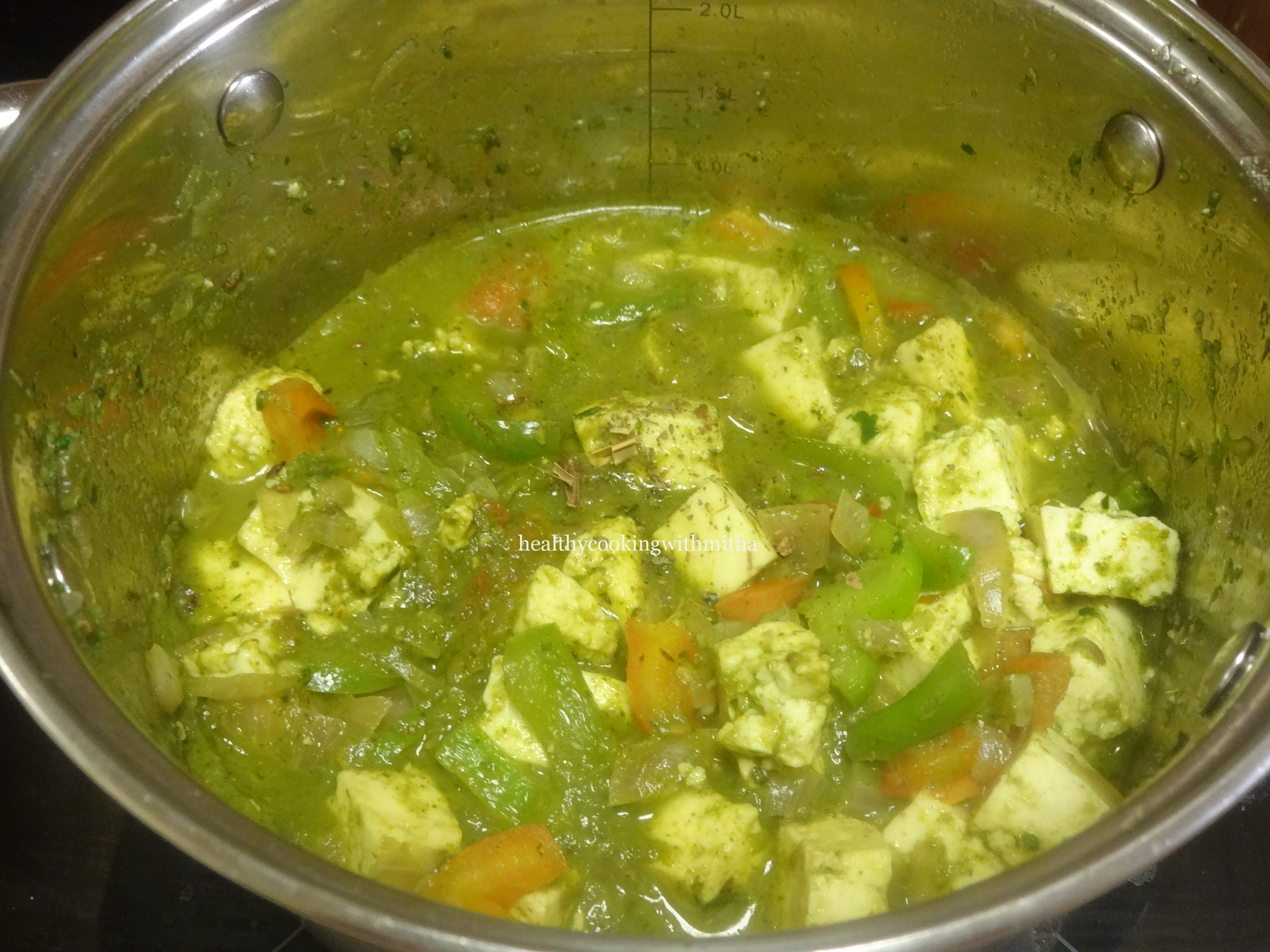
5. Add paneer cubes. Mix well. Cover and cook for 10 mins on medium flame.

6. Serve hot with rotis or rice.

Notes:

* You can skip mint leaves if you don’t have.

* If you like a slight crunch of capsicum, don’t cook it completely. If you don’t like it, you can cook till it turns soft or even skip it.

* Paneer can be substituted with mushrooms or cauliflower.

Join me in my journey with a foodie husband and hungry kiddos while I make them eat healthy!